Last year, during the autumn equinox, I decided to start this website and blog. It has been already one year that I posted my first blog: How the Search for Tree Spirits Started. I am starting […]
Tag: sustainability
Changing the Stories We Live by #1: Appreciating Rain
Stories are the secret reservoir of values: change the stories that individuals or nations live by and you change the individuals and nations themselves (Ben Okri). A friend recommended me the free on-line course Ecolinguistics, […]
Fireworks, Bamboo and the Height of Japanese Summer
After Summer solstice (and my bestie from Norway left), the weather changed very dramatically in Nagoya, Japan. In the last week of June, I felt myself suffocating in the evenings. The temperature and humidity started […]
Wood weaving & forest bathing in Nagano, Japan
Last weekend, I co-organised a trilingual forest retreat weekend in Nagano, Japan I helped to organize. Yes, trilingual 😃. At some point I was mixing Japanese, Spanish and English 😅. On the program we had wood weaving, yoga, […]
Birch cake and the colonization of Hokkaido’s nature and Ainu
Last month, my Norwegian friend and I explored Hokkaido, the northernmost bigger island of Japan, for almost ten days. I waited almost two years to visit this place, as I always imagined this friend to […]

Meeting Japan’s curse spirits during a Forest Bath
Several weeks ago I experienced a first forest bath in one of the 62 certified forest therapy bases in Japan. You can read and see photographs in this blog: Forest therapy Taking Root. What I […]
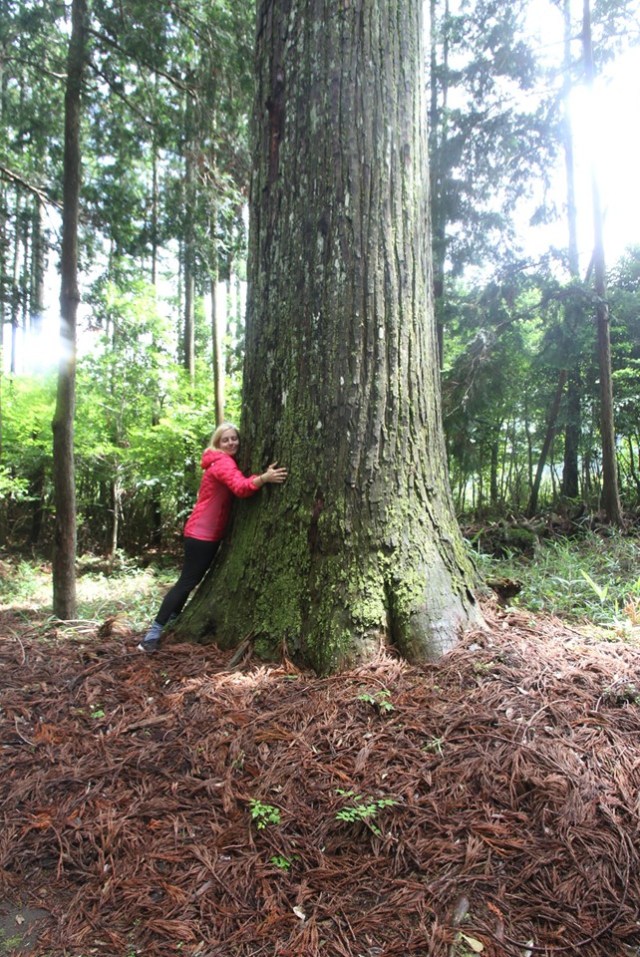
Forest Therapy Taking Root
Our hectic society gives us little or no rest, so we often get overworked and overtired. Since the 21st century, forest therapy has been prescribed as a medicine for city dwellers to deal with stress […]
Norwegian Birch Bark
When my Norwegian friend told me about the journey of a two year old Viking heir to the Norwegian throne through mountains and forests by “birch benders” (his own translation of Birkebeinar), I was intrigued. Birch benders are a rebellious party in Norway from the 12th century which was so poor that they had to make their shoes of birch bark. By doing a bit of research I learned more about the Norwegians’ relationship to winter, the mountains and cross-country skiing and birch trees. I know in other cultures, like the Celtic and Russian, the birch has special roles and meanings, but I do not know that much about the relationship between Norwegians and the birch.

The best skiers
I learned more about the “Birkebeinerrennet” or “Birkebeiner Ski Race”, which is Norway’s most traditional cross-country ski race running every year from Rena to Lillehammer. It has been held annually since 1932, and commemorates a trip made by the birch benders (I use the name of my friend) to save an infant which could claim the Norwegian throne, as they did not like the current Norwegian king. The two best skiers were selected to undertake this dangerous journey. All participants of the current ski race carry a backpack weighing at least 3.5 kg, symbolizing the weight of the then-one-year-old king.

Birch wood
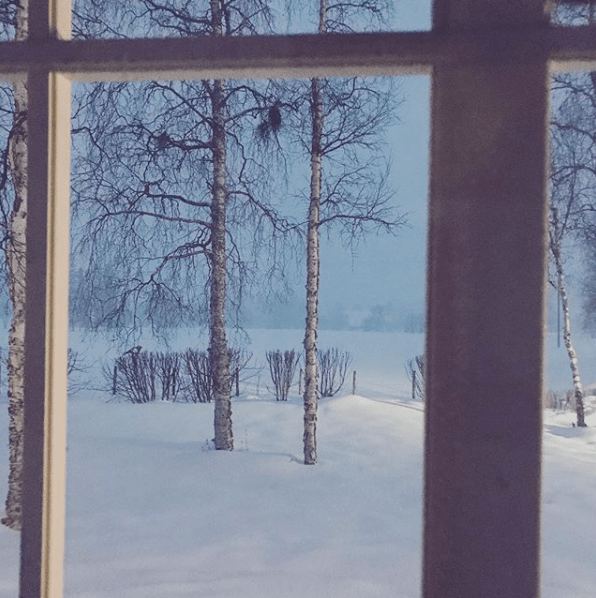
The birch plays a central role in northern Norwegian life. I saw it being used for fire, but also the postwar houses are made from “this White Lady of the Wood”. So you see the birch in this picture in two forms ;). In Tromsø, I bought some tea infusion mix of black tea with birch bark .
Birch water
In the region of Norway, the birch trees start to show green leafs, which is a sign that we soon can tap the healthy birch water. Birch sap is collected only at the break of winter and spring when the sap moves intensively. Birch sap collection is done by drilling a hole into its trunk and leading the sap into a container via some conduit (a tube or simply a thin twig): the sap will flow along it because of the surface tension. The wound is then plugged to minimise infection. Some years ago, a friend and I also tapped birch sap from birches in Belgium, and it was really refreshing. It is good for skin and hair. In a Norwegian book about outdoor and cuisine I found also instructions how to tap birch sap.
Back to the birch benders
As my friend explained to me a couple of times, Norwegians are mostly “humble hard working decent human without making too much of a fuzz.” Before they found all the oil reserves, Norway was not a wealthy nation and people were relatively poor and had to survive in severe conditions, being sync with the strong seasonal changes and deal with the ingredients and other resources they found in their land (which explains why their traditional meals are often simple). Birch was one of their resources, and they are very grateful for it, and learned to manage it in a resource efficient way. When people are poor, like birch binders, they can be often very innovative in finding new ways of underutilized resources like birch bark.
For me, while I witness how the temperature increase makes the snow on the tree branches heavier so the snow falls and reveals all the green, to experience the end of winter and observe spring and other new beginnings, retelling the story of birch benders is reminding us to the courage of two good skiers being resource efficient (especially now in this ecological crisis we should return to a higher use of biobased materials) to dethrone a king. For me, that king of current time is the dominating paradigm of profit-oriented of economic growth and exploitation.
Ecofeminism in 2019
In European countries such as Sweden, Belgium and the United Kingdom, the current climate movement is attracting enormous interest, and it is perhaps not by chance that it has female (and even teenage !) frontrunners […]
Why do Thai Tree Spirits like Red Fanta ?
Some time ago, when the animals were still talking, I lived in Thailand. Ok, it was only 1.5 year ago that I left Thailand for Japan. I was blessed to became a friend of a […]
 Stories from the Wood Wide Web