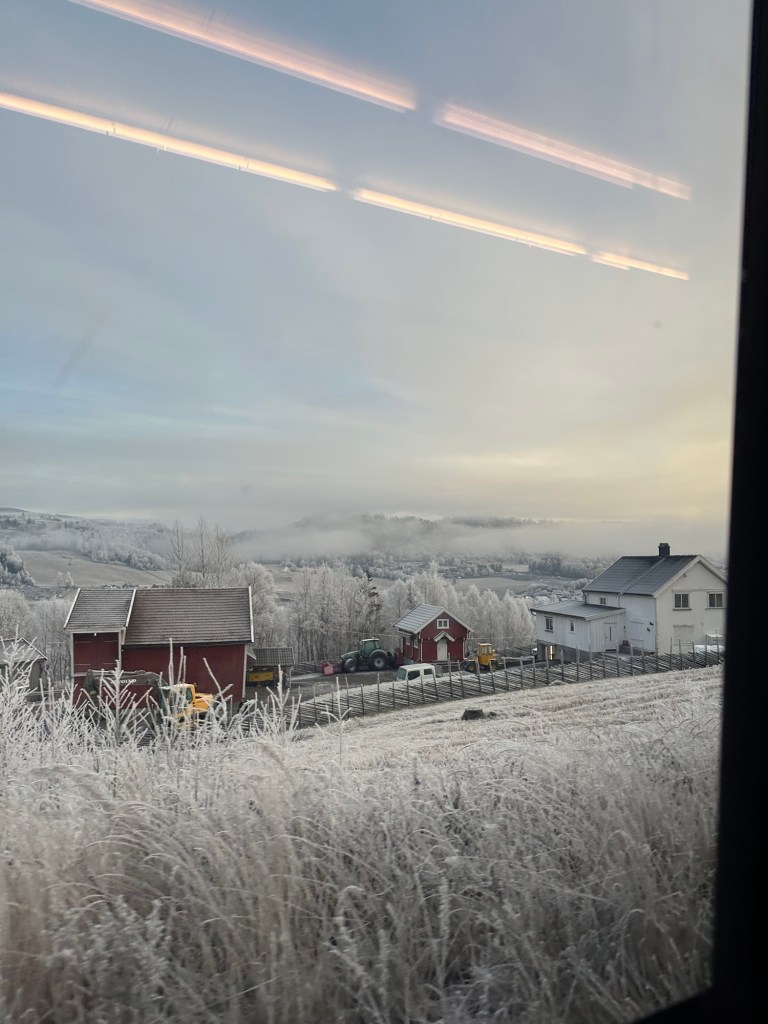
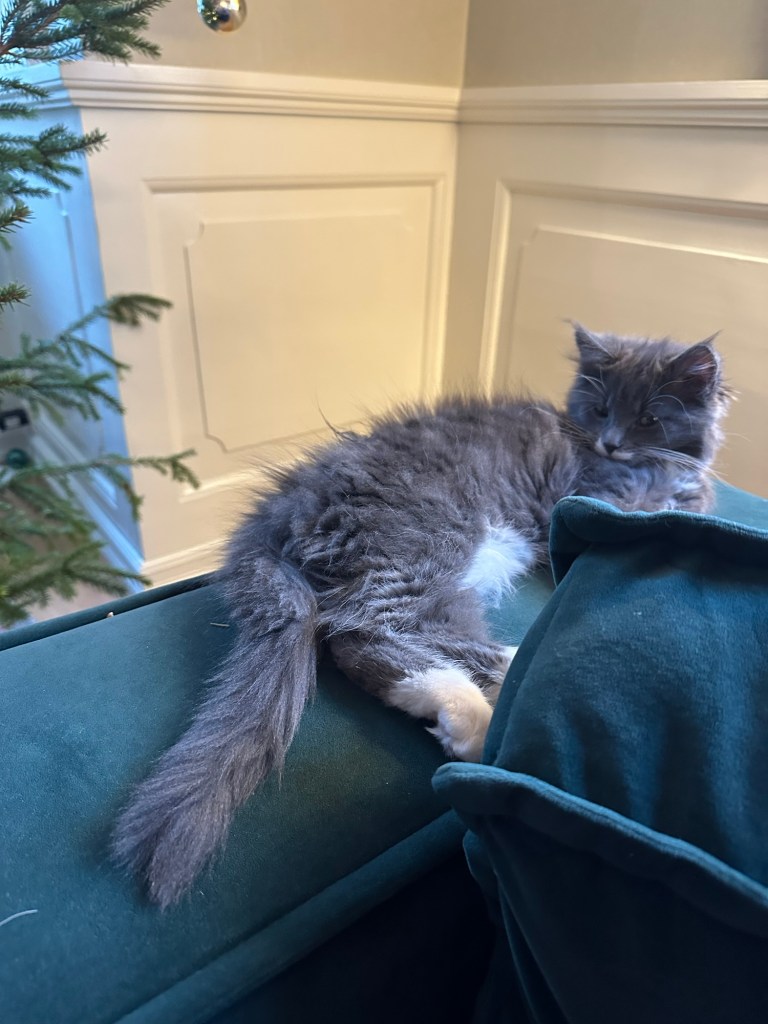
Before and around Christmas, I spent three to four days in a beautiful, magical valley in the Norwegian mountains, about a four-hour train ride from Oslo, followed by another one-hour car ride. I stayed with a Norwegian friend, her Swedish husband and his father, their kids, and their cat, which is a familiar. I am serious. I also visited them two years ago, in early December, and had the feeling that this cat was special. It jumped into my bed at night and I had weird dreams about it. Now the cat has died, and they have a new cat from the same breed, and it behaves in the same way, as if the spirit of the familiar was simply transplanted from one cat to another. While we were baking gingerbread cookies, we also exchanged notes on Norwegian, Swedish, Icelandic, Germanic, and Belgian folklore around Christmas and midwinter, noticing many similarities. It was the beginning of some enchanting days.
Stave church – the old and the new one
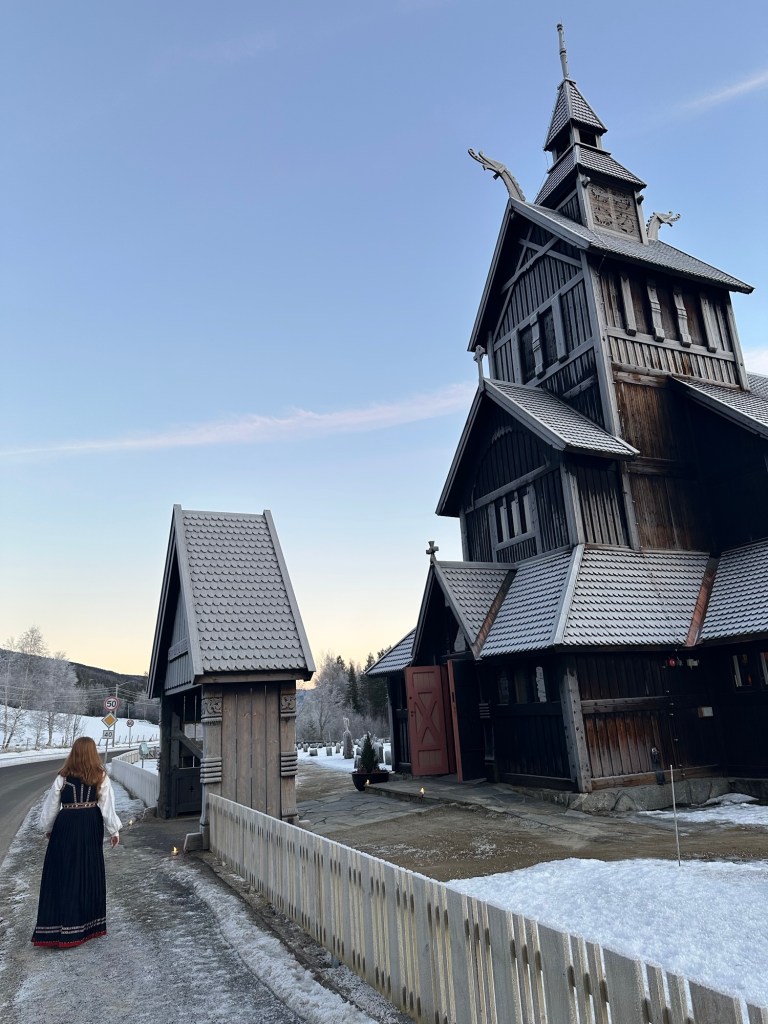
Two years ago, it was arranged that we could visit the old stave church, which is full of Norwegian symbols. Nowadays, masses are held in the newer stave church. remember being intrigued by the old symbols and stories of the old church. They do not open the church in wintertime, and it was really cold—I still remember it after two years—while I was looking at all the patterns. My friend got married there and said she told her husband that she only wanted to get married there, as she felt she would be a witness before both God and the old gods. I do not have a wish to get married, but if I ever change my mind, I would love to get married in such a mystical place. You can feel the magic in the sigh of Jack Frost in the cracks of the old wooden building and in the painted patterns.
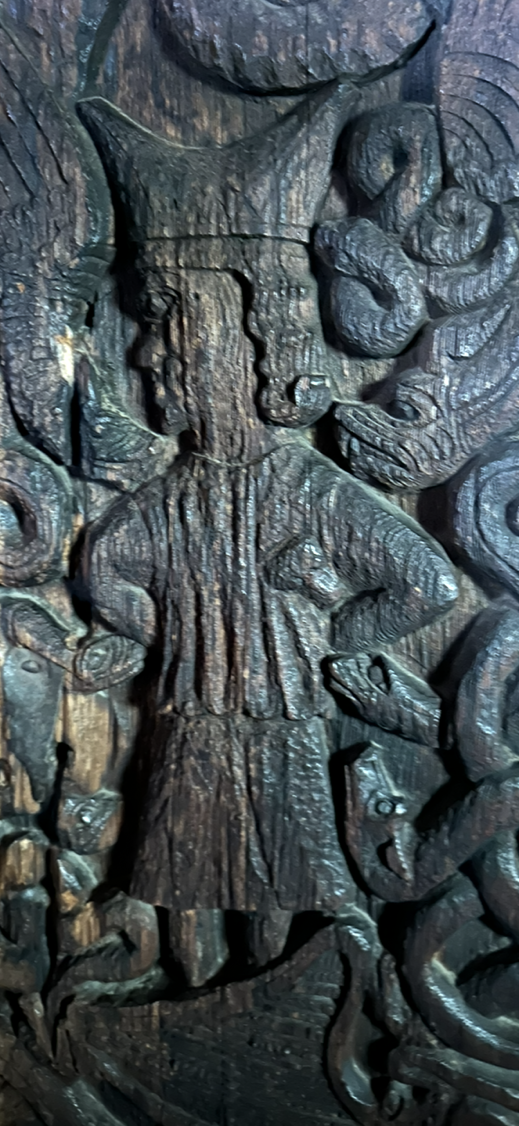
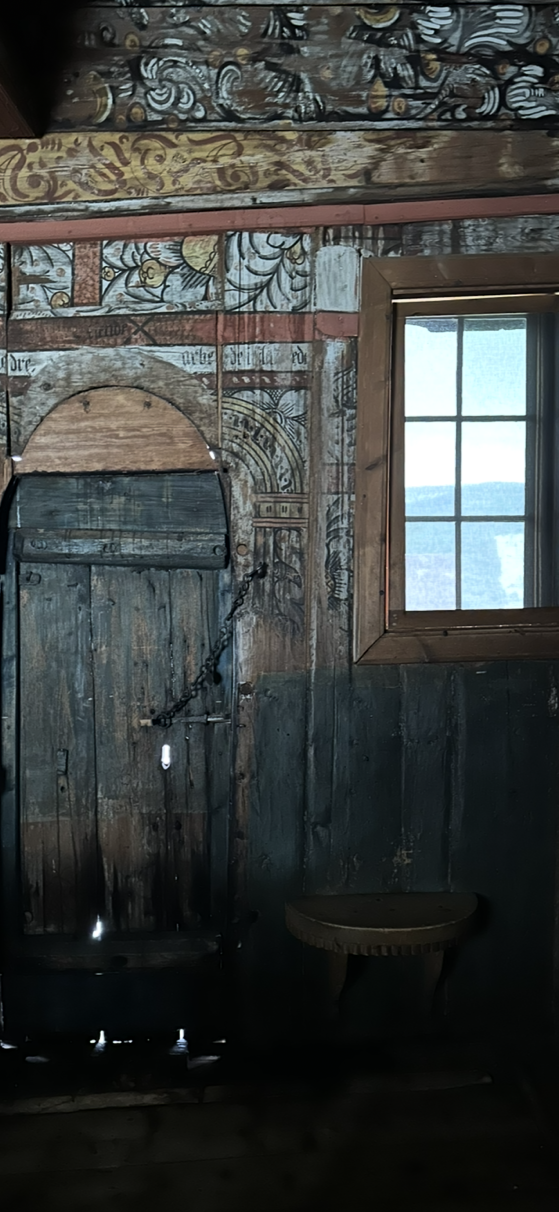
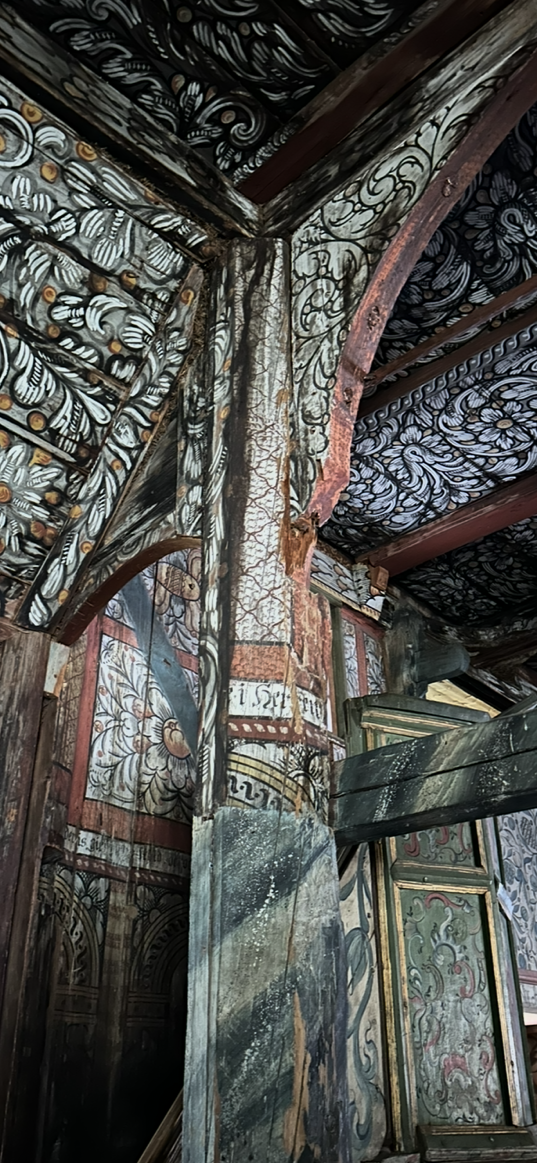
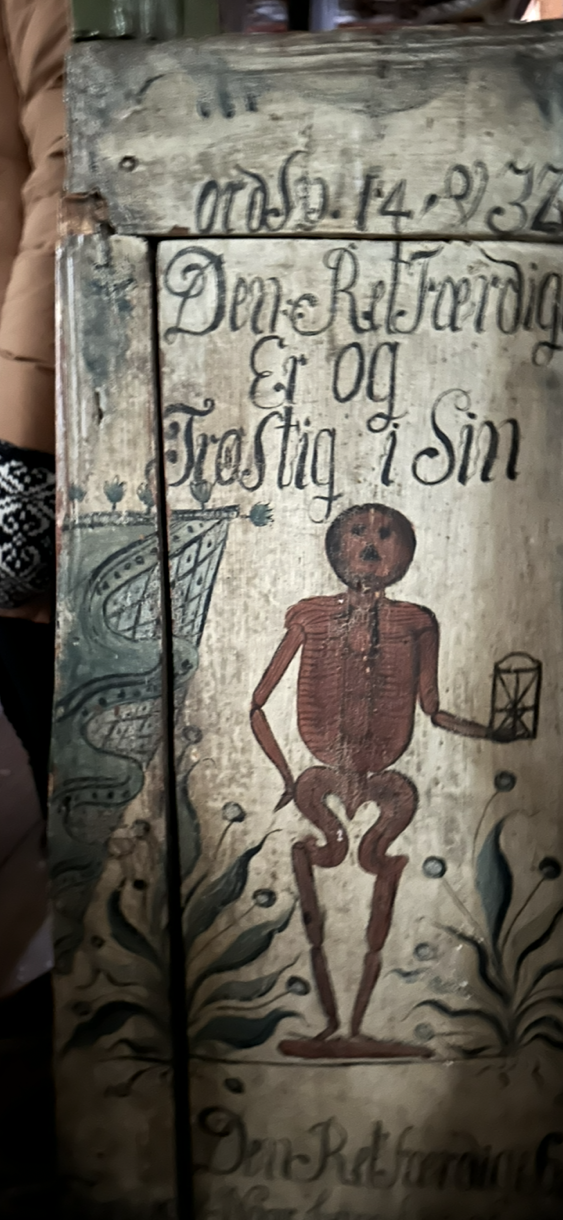
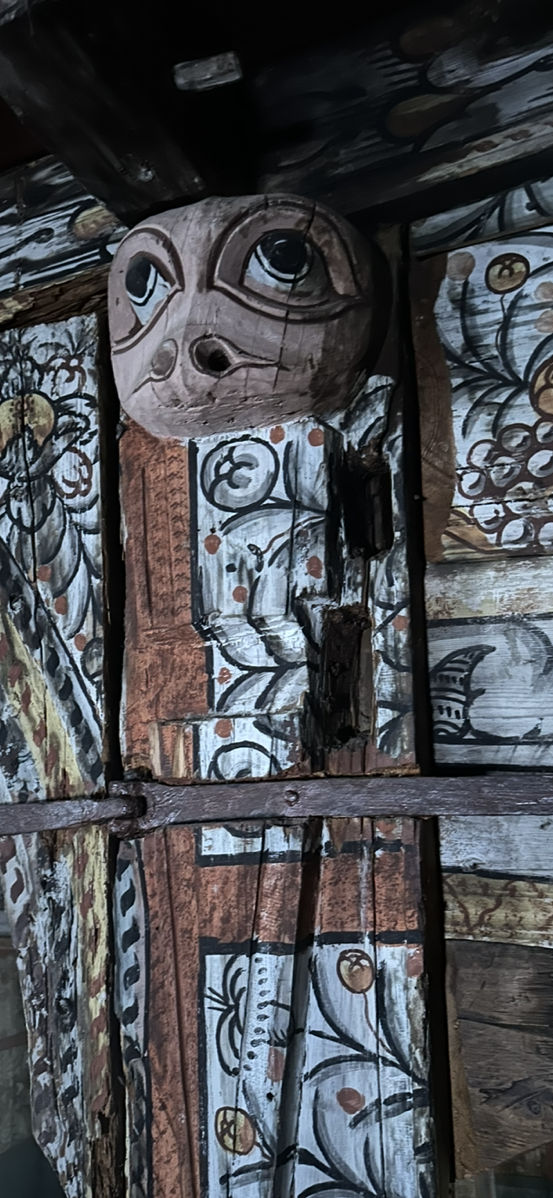
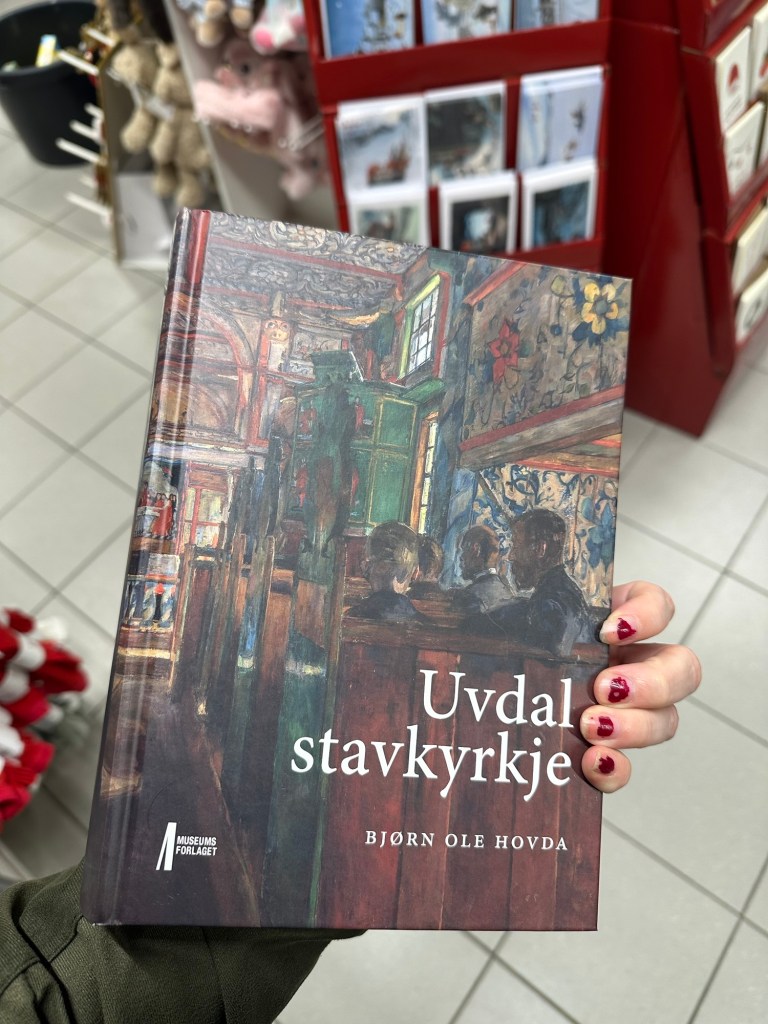
This Christmas, my friend showed me a large book that she had bought as a present for two friends, all about the history and magic of the stave church.
Her eldest daughter had completed her Confirmation. Confirmation in Norway (konfirmasjon) is a significant rite of passage for 15-year-olds, marking a transition to adulthood. It exists in both Christian (church) and Humanist (secular) forms and involves preparation courses, ceremonies in spring (April/May), and celebrations with family, often featuring traditional dress (bunad) and gifts, usually money or jewelry.
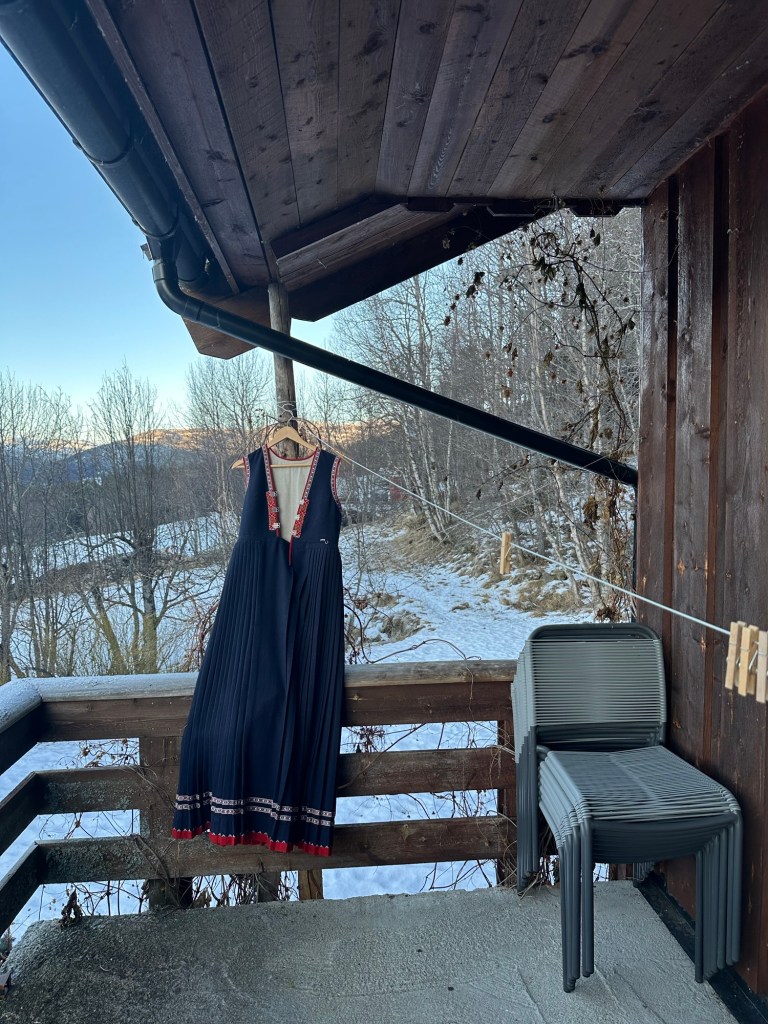
She was asked to read during the Christmas Eve Mass—which was attended by the Norwegian Crown Prince, his wife, and their two children. I am not joking. Norway is a small country with a low level of hierarchy. In my previous job, I also got to meet some ministers. I recognized some songs, although the Norwegian translations did not match the Dutch versions I learned as a child, so I was sometimes confused.
the dream song period
By the way, Christian traditions are still present, and I appreciate the Norwegian mystical Christian story of The Dream Song of Olav Åsteson (Draumkvedet). It begins on Christmas Eve and lasts until the evening before Epiphany, and tells the story of Olav going into a kind of trance for twelve nights, descending into the underworld and then returning. This period is meant to feel a bit winter-feverish, with a lot of dreaming and some shadow work, alongside candlelight, and I also tried to stay open to these strange feelings.
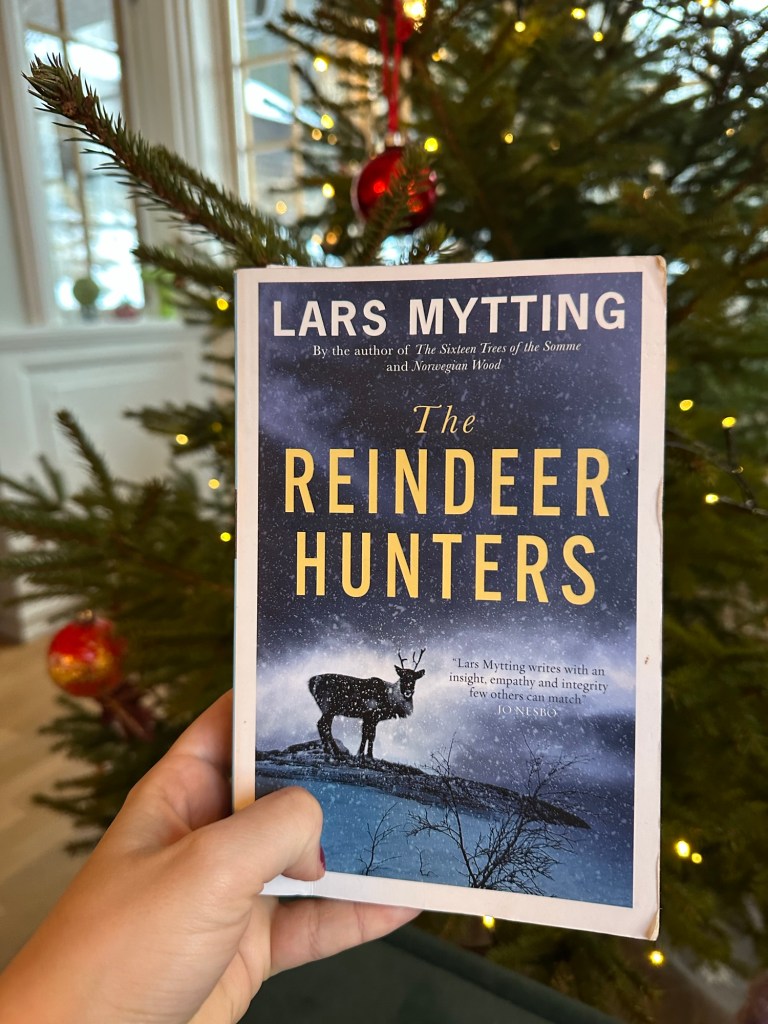
During my visit, I did not open a laptop and was reading Reindeer Hunters by Lars Mytting, which brings you back to 19th- and early 20th-century Norway, with its magical realism, folklore, and love for old traditions.
And then I was back home, alone, after Christmas, also embracing the weirdness of the Dream Song period. Writing this blog post feels a bit like Olav Åsteson returning and telling the story of reflections from a past journey.
Christmas eve porridge
On Christmas Eve, we also ate Norwegian Christmas Eve porridge, or julegrøt, which is a warm rice porridge made with milk, sugar, cinnamon, and butter. It is traditionally eaten for lunch or breakfast on Christmas Eve, often with a hidden almond for good luck, leading to a prize such as a marzipan pig. However, that did not happen. My friend used the leftover porridge to make riskrem, a creamy dessert with berry sauce, for the evening.
I was in charge to keep stirring the porridge – for quite some long time.
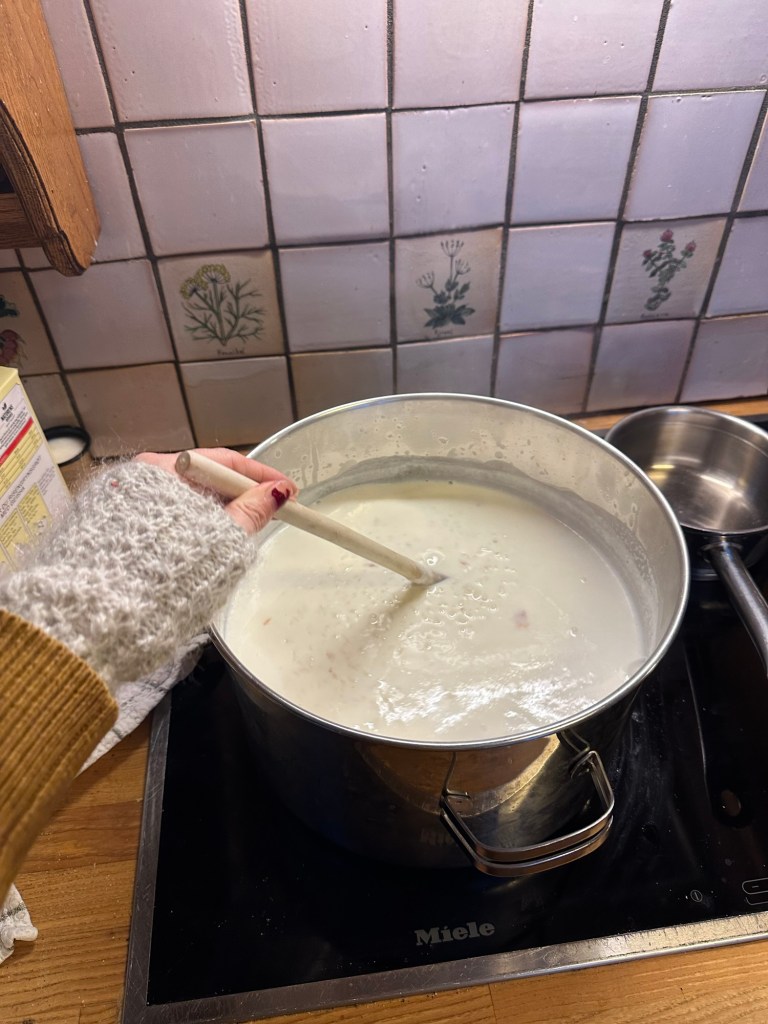
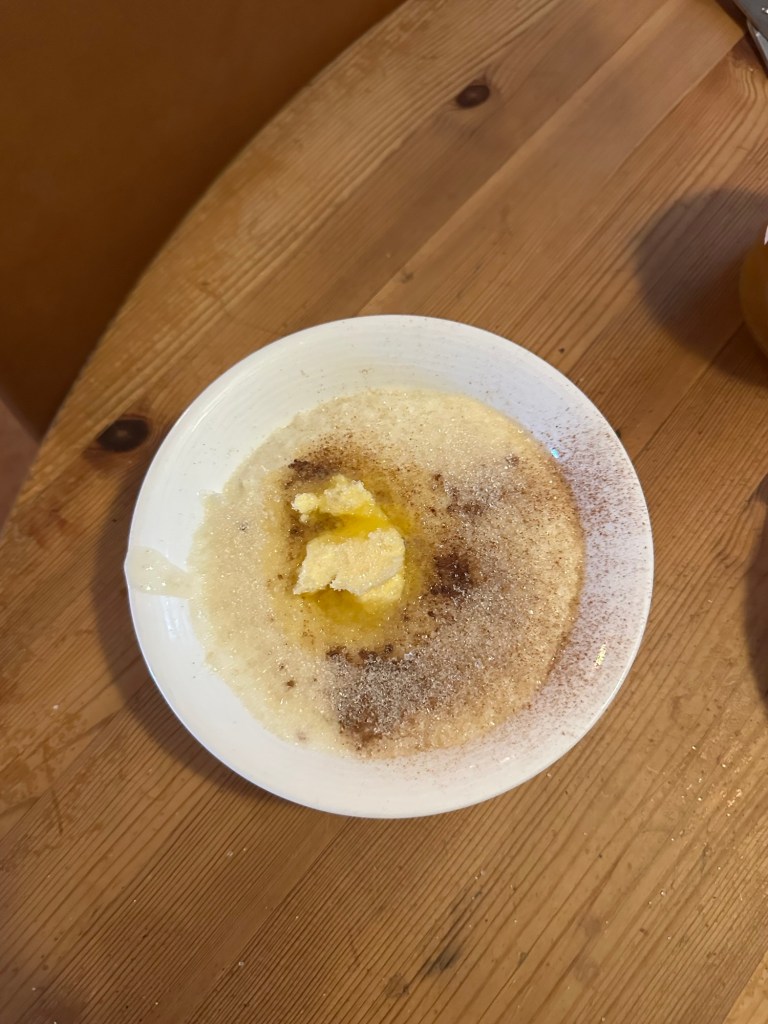
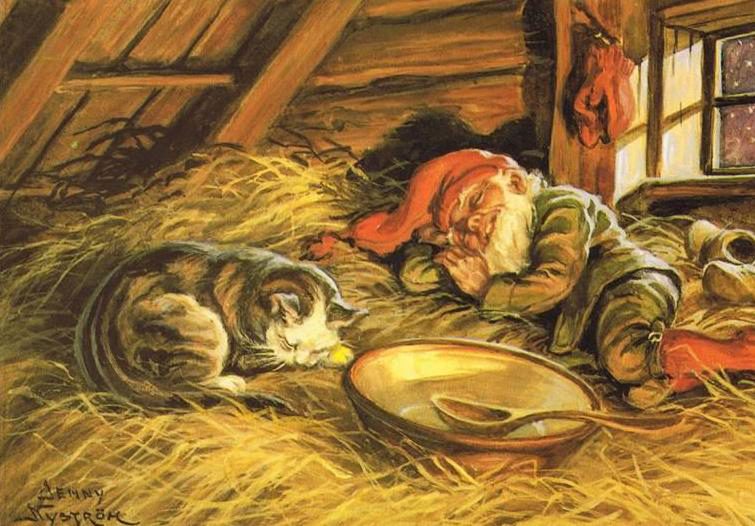
One of her sons brought a plate of rice porridge to the nearby farm, while my friend and I took the car to bring a plate to two of her other farms on the land. This is a ritual for the farm gnomes. Not all Norwegians do this, but my friend is a biodynamic farmer who wants a healthier world (which means healthier soil and healthier microbiome in each human body) and she also makes time for the old rituals of the land.
Feed your farm gnomes
Fjøsnissen is a traditional Norwegian mythical creature—an elf-like being who lives in the barn (fjøs) and protects the farm animals, similar to a house spirit or a precursor to the modern Santa Claus. He is shy but helpful, demanding respect and a bowl of porridge on Christmas Eve in exchange for looking after the livestock, and is an important part of Norwegian Christmas folklore.
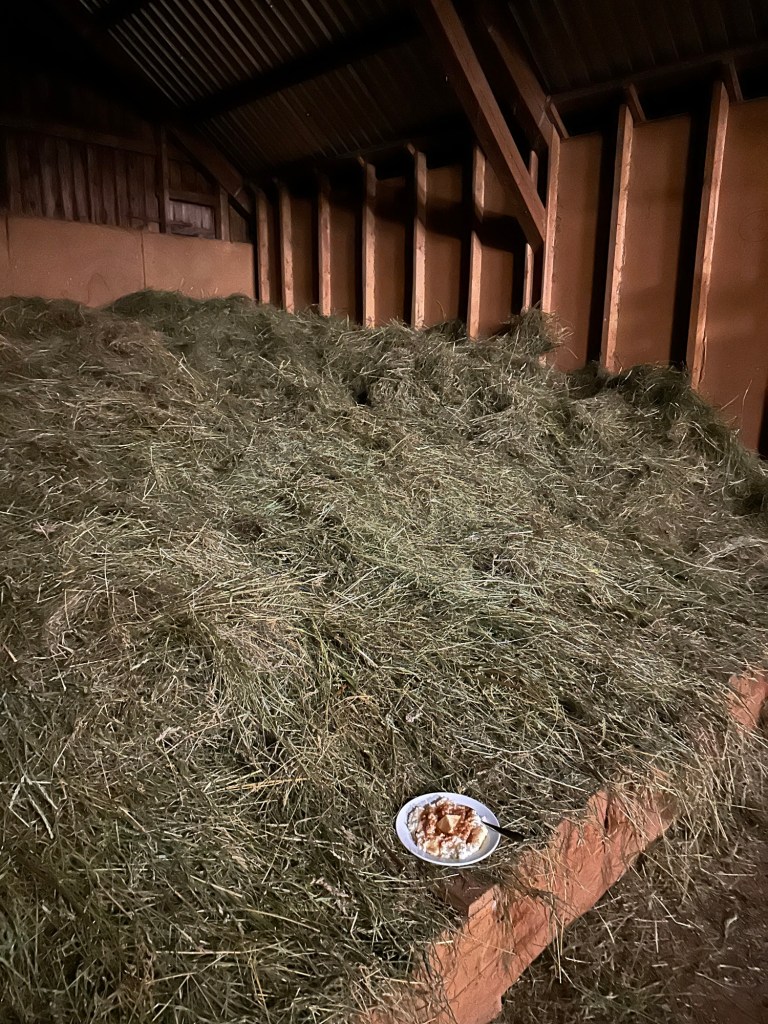
The word Nissen has references to Dutch-Belgian traditions of Sint Nicholas and Sinterklaas, which, to my knowledge, relate to pre-Christian shamanic figures. These figures are also celebrated as gift-bringers, who want to be fed (or, at least, their horse does, with sugar and carrots, like I used to place next to the stove as a child) and are connected with December and midwinter rituals.
For a more detailed description, with a big dive into the origins and the meaning of the word, I refer to wikipedia: https://en.wikipedia.org/wiki/Nisse_(folklore)
Biodynamic farms and Rekindling with invisible friends and helpers
Biodynamic farming is a holistic, regenerative agricultural system that views the farm as a self-contained living organism, integrating soil, plants, animals, and humans. It goes beyond organic standards by using cosmic rhythms (like lunar cycles) and special herbal and mineral preparations to enhance soil fertility and vitality. Developed by Rudolf Steiner, it emphasizes creating closed-loop systems, avoiding synthetic inputs, and fostering biodiversity for healthier, nutrient-rich food and a more resilient farm ecosystem.
The practices of biodynamic farming hark back to “old traditions” and rely on various natural “helpers” to create a balanced, resilient ecosystem. Biodynamics originated decades before the term “organic” farming was introduced, reviving pre-industrial methods when farmers relied on natural cycles and remedies. Working with lunar and cosmic cycles is an age-old principle that guided farmers for centuries before synthetic chemicals existed. Integrated livestock (like cows for manure or chickens for pest control), beneficial insects, birds, and diverse plant life (cover crops, hedges) are crucial “helpers” in maintaining balance and soil fertility.
In academic literature focused on One Health and environmental/public health (e.g. Robinson & Jorgensen 2020), I learned some years ago about rekindling connections with invisible friends and helpers, like the bacteria that are not all bad (but could behave like tricksters, similar to a farm gnome). Humans are spending less time in biodiverse environments, and according to the Old Friends and Biodiversity hypotheses, this has led to fewer interactions with diverse immunoregulatory microorganisms, or “old friends.” Non-communicable diseases such as asthma and inflammatory bowel disease are on the rise, and the development and progression of these “modern” diseases may be attributed, in part, to the breakdown of this evolutionary relationship between humans and environmental microbiota. Calling back these old friends—whether bacteria in our soil and gut, or gnomes—could be a way to make us stronger. I like to include both bacteria and gnomes, as we also need some magic and imagination in our world.
A thin line between magic and meaning, and between magic and technology
For me, there is a thin line between magic and meaning, ritual and practice, magic and technology that can help our soil and, therefore, our health. When I started writing my ecofiction books, like De witte droom, fourteen years ago, I thought they were more eco-fantasy.
But after working in large European Union–funded innovation projects, where I learned a lot about the state of the art in material science, detection methods, and collective intelligences, and also meeting scholars working on biosemiotics and applied signal theories, I began to realize that I should not categorize my books as eco-fantasy but as science fiction.
Feed your imagination
Imagination, performing rituals, and believing in magic are all about harnessing imagination, the very tool we need to rethink the world and find deep systemic solutions, rather than instant fixes that harm us in the long run. It is also beneficial for improving emotional intelligence, empathy, and mental health.
So: read science fiction books, watch thoughtful television shows and movies (but avoid basic TV like Stranger Things with its pseudoscience and toxic tropes), engage in art and critical discussions in book clubs, go outside, support biodynamic farms, eat less but better, and feed your imagination with some good, warm, simple porridge.
Join our interactive online winter symposium on eco-mythology
Are these themes that do interest you? Are you connected with the North or Baltic region of Europe? Do you want to yarn together with other soul-minded people. Until Sunday January 11th, you can still register for our winter symposium on eco-mythology. You can learn more here: https://www.nsuweb.org/circle-5-ecology-of-transformative-learning-practices-with-in-a-more-than-human-world/
Discover more from Stories from the Wood Wide Web
Subscribe to get the latest posts sent to your email.
 Stories from the Wood Wide Web