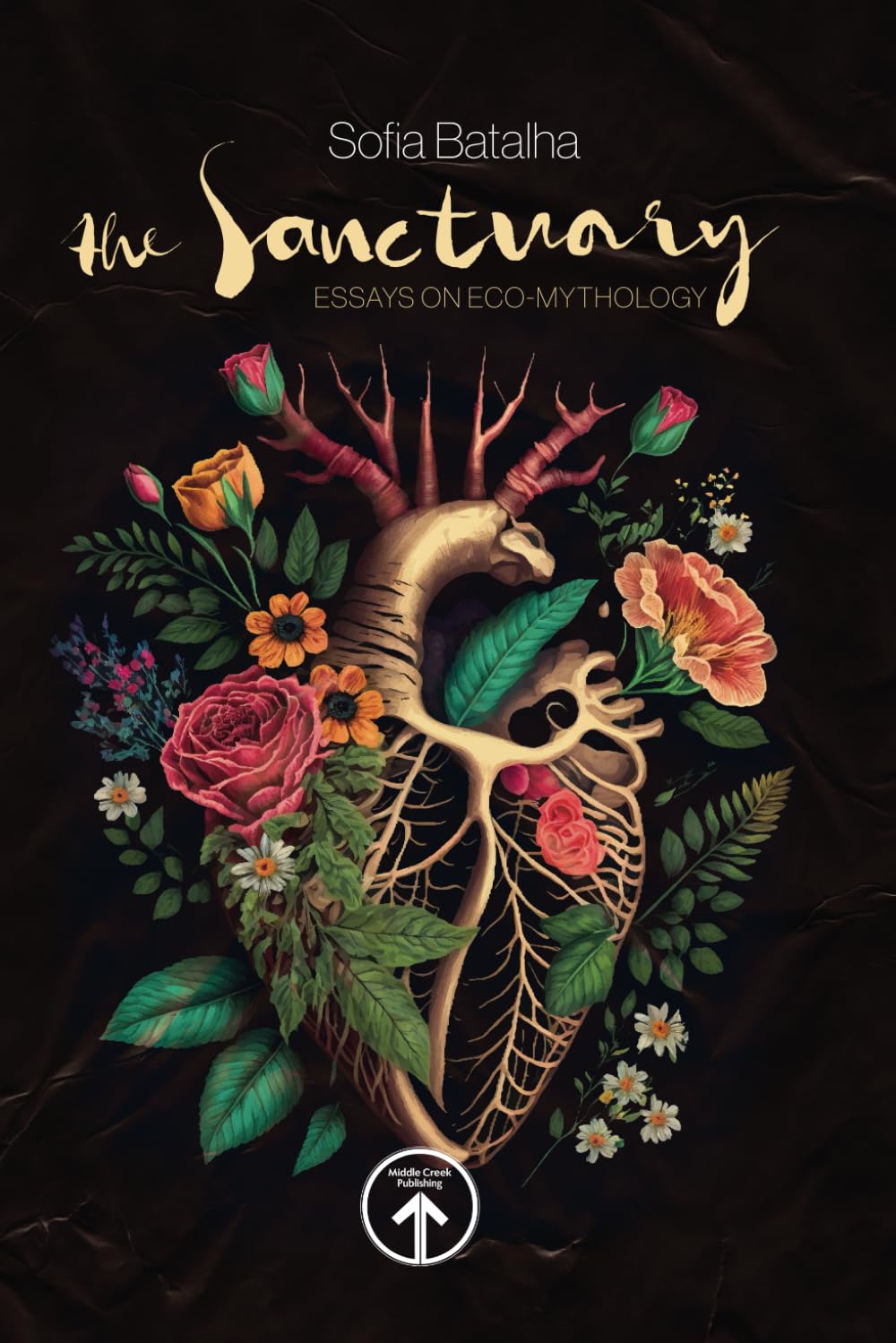
While searching for definitions of ecomythology, I came across the inspiring work of Sofia Batalha, who has organized events and writings on the topic. Intrigued, I ordered her book—and this blog post shares my brief review and reflections on it.
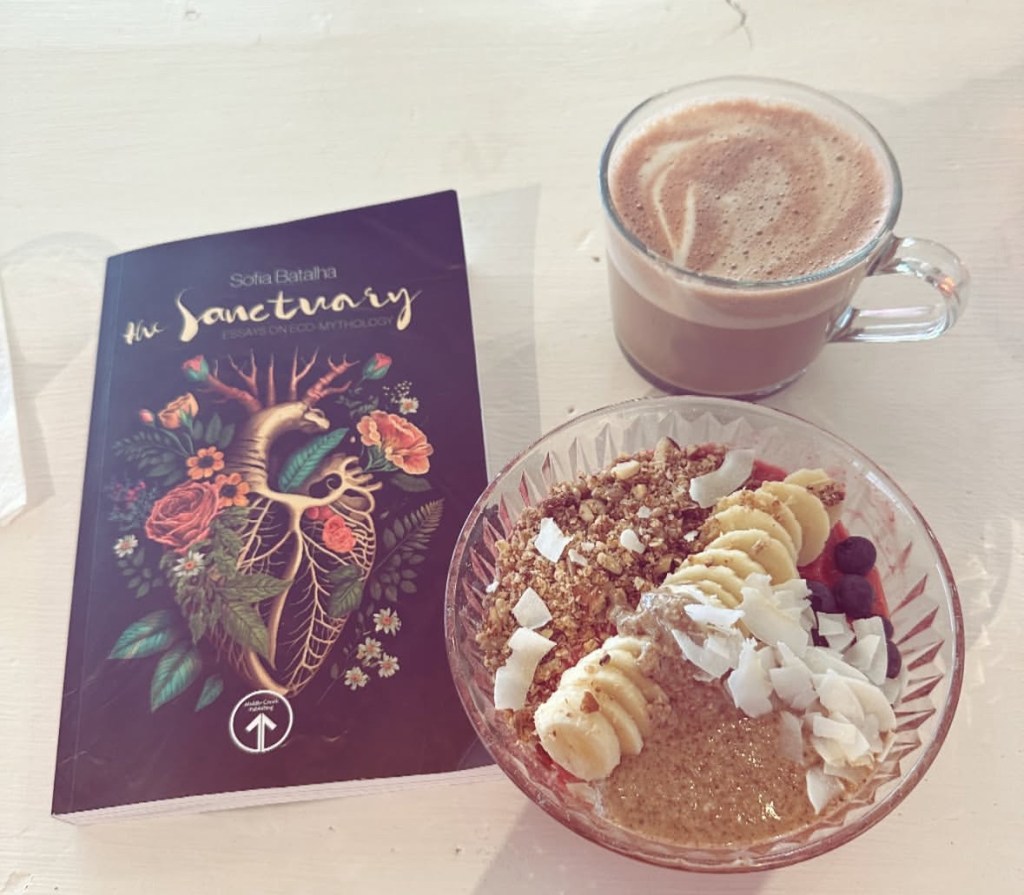
ECOMYTHOLOGY
Ecomythology weaves together ecological knowledge and mythic storytelling, reminding us that the Earth is alive and full of meaning. In times of polycrisis—climate change, social fragmentation, and ecological collapse—we need stories that reconnect us to place, relationships, and the more-than-human world. Like mycelium in the forest, ecomythology creates hidden networks of understanding, linking ancient wisdom with contemporary learning. It fits naturally into mycelium-informed education, where knowledge spreads through connections, reciprocity, and shared narratives across the “wood wide web”.
- «Myths are codified in metaphors and symbols, in stories and songs, but they always emerge from the lived experience, situated and contextual, from people like us.» (p25)
- «Myths build sociocultural truths, instruct and guide, about place and ecosystem from which they are born, working in the spectrum from the practical to the mystery.» (p. 26)
- «Eco-mythology recalls the terrain, the web and the valuable threads of living connection, venturing beyond the solutionist tyranny.» (p 57)
Sofia batalha
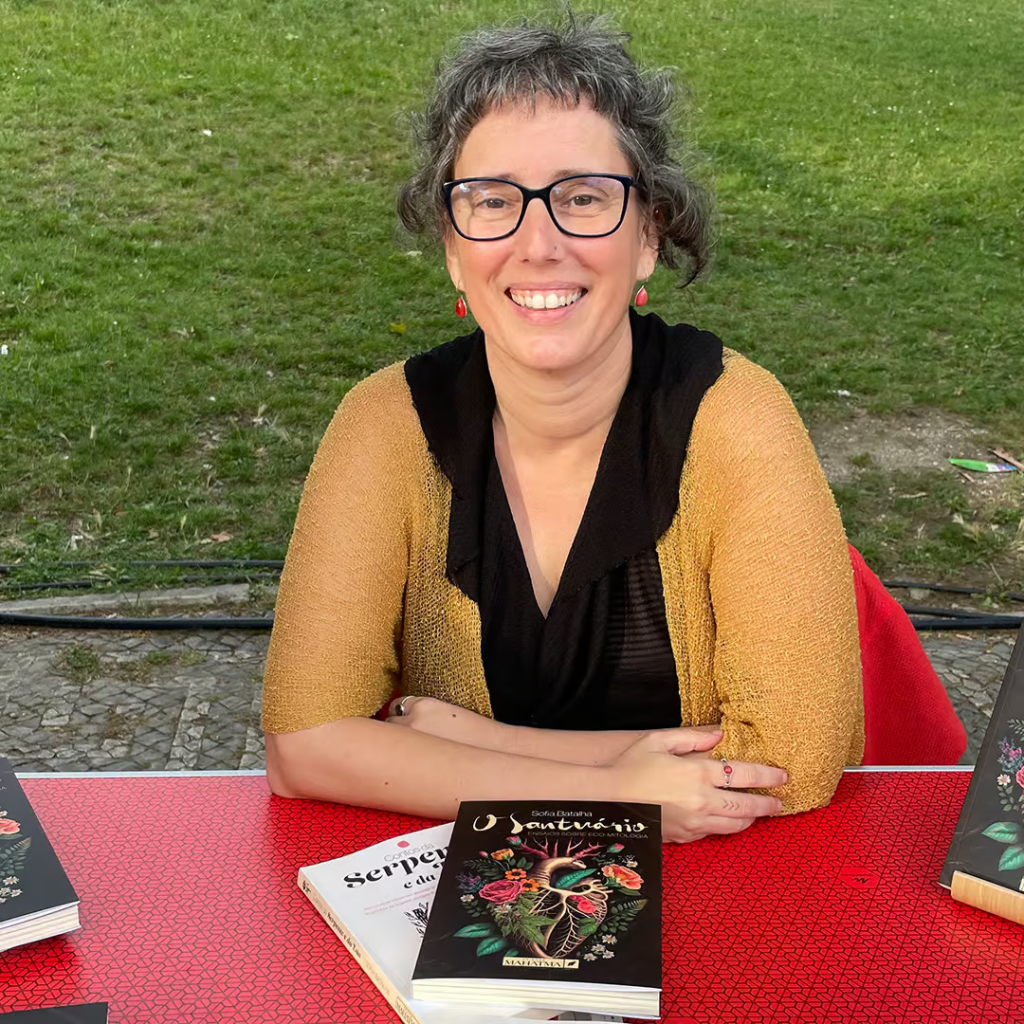
Online, I found Sofia Batalha described as a “designer” by academic training, a teacher by chance, a writer by visceral necessity, and an independent researcher driven by natural curiosity. She identifies as a mammal, author, woman-mother, and question weaver, calling herself an “awkward prose poet without grammatical knowledge.”
Batalha is a pilgrim between inner and outer landscapes, recalling cosmic and chthonic practices through radical presence, active listening, art, ecstasy, and writing. She is (re)learning to live in immanence, belonging, and consciousness while embracing eco-mythology, ecopsychology, eco-philosophy, eco-spirituality, decolonization, and multiple art forms. Speaking from a place of mythological and philosophical postactivism, she invokes the three M’s—Mystery, Metaphors, and Myths—to reconnect us with the primordial and paradoxical wisdom embedded in our shared existence.
An english translation of her research-prayer journey
The Sanctuary, described by herself as a research-prayer journey, weaves mythology, psychology, and ecology into a beautifully designed “Amulet Book” of portals, principles, and ancient tales. Sofia exposes the amnesia and dysfunction of coloniality, while foregrounding Portugal’s sacred stories and landscapes to reveal the “frail remaining fragments of a responsible and reciprocal European psyche.” It reminds us that the earth is alive, the elementals speak, the land is full of stories, and somatic dialogue with the more-than-human world remains possible.
Did I got to know the Iberian storied and spirited landscapes better?
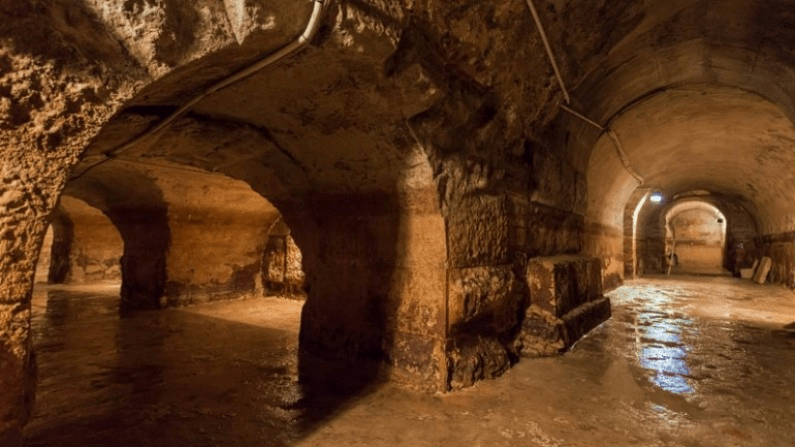
Sofia Batalha’s The Sanctuary opened my eyes to the Iberian Peninsula as a storied and spirited landscape, alive with myth, memory, and ecological presence. I liked her writing about the entanglement of the sacred Yew tree, the Tagus River, and the figure of Atæcina, the pre-Roman goddess of the underworld and renewal who still haunts this land.
The book mentions the Odyssean connection to Lisbon. Some speculate that the city’s ancient name, Olissipo, is linked to Ulysses, who journeyed here to the western edge of the known world before turning back toward home. As someone who has studied and translated parts of the Odyssey, this myth resonated deeply, intertwining classical literature with the landscapes Sofia evokes.
the book review
The book is undeniably rich. You need plenty of headspace to fully immerse yourself in its ecomythology. Having experienced two Warm Data Labs by Easter 2025, I was prepared to “follow”—or rather surrender to—its non-linear storytelling. However, I can imagine this intensity might be challenging for readers less familiar with such approaches.
I wanted to give the book five stars, but I ended up giving it four. With another round of editing or proofreading, it could have been even stronger. Some footnotes felt incomplete, and a few wordy paragraphs could have been trimmed. Like many texts by Warm Data Lab hosts, the book uses repetition to emphasize systems thinking, but I found that the real ruptures—the powerful shifts—were often hidden in the footnotes. For example, there’s a hint about the significance of the yew tree that deserved more elaboration in the main text.
I also missed some practical invitations, guidelines, or methodological frameworks to help readers create or experience ecomythology in the places they inhabit or visit.
Despite these small critiques, the book is powerful. After reading it, I found myself making plans to spend several weeks in Portugal. Not many books make me want to leave my job and relocate!
In the background, we are also developing an ecomythology around the Baltic Sea. Interestingly, in both these places—and their ecomythologies—the sea, the snake, and women are strongly present. Very intriguing.
Discover more from Stories from the Wood Wide Web
Subscribe to get the latest posts sent to your email.
 Stories from the Wood Wide Web