Some summers ago I got to know about the Huldra, a Norwegian forest creature (in Swedish: skogsrå, which can be translated as the guardian of the forest) and the Norwegian word Bergtatt. Since then, I am drawn to this Scandinavian folk figure.
What or who is the Huldra?
A Huldra is a creature from Scandinavian folklore, particularly associated with Norway and Sweden. It is a seductive forest creature that can be found in the mountains and woods of Scandinavia.
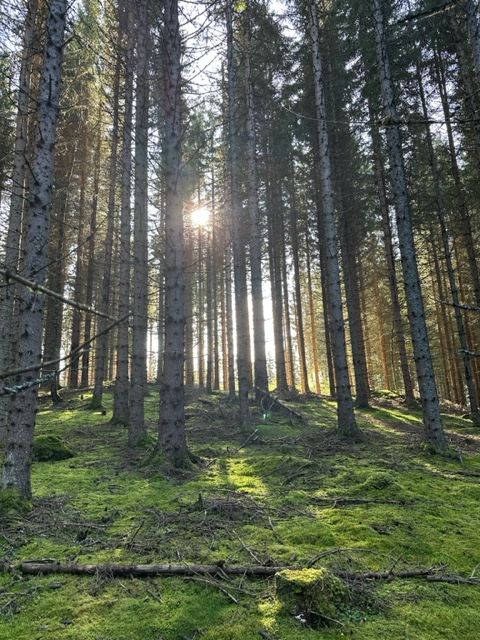
The Huldra appears as a beautiful young woman, often naked or scantily clad. To those who see her from the front, she seems like a regular woman, but from the back, she may have a cow’s tail or even a hollow back like an old tree trunk (in some tales). This tail or hollow back is a mark of her supernatural origins.
Huldras can be both benevolent and malevolent. They might seduce humans, leading them into the forest, where the outcome might be favorable or disastrous for the human. In some stories, a Huldra might reward those who help her, while in others, she might play tricks or even bring harm.
Connection with Nature:
Huldras are deeply tied to the forests and natural elements. They are said to be the guardians of the animals and the trees. In some versions, they make sounds or sing to lure people into their domains.
One of my favorite illustrators can tell you more about the huldra:
How do we Come Home through the Land?
In our journey through life, how do we come home to the land beneath our feet? This question that I ask myself for many years, is as much about choice as it is about understanding. To belong is a deliberate act, of leaning in to truly be part of a place. I have been working with materials provided by the ecopsychologist Sharon Blackie who works with mythic imagination. I joined some of her virtual circles and learned so much. In this podcast about the choice to belong and the land needing us, I got reminded again:
As the social scientist, Debora Bird Rose, who delved into Aboriginal practices, reminds us, one does not simply sneak into a place. Instead, introduce yourself to the land, announce your intentions, and let the soil, the trees, the very air you breathe know you’ve arrived.
But so many of us exist in a state of alienation. This detachment from the land isn’t entirely the world’s doing; we’ve forgotten our agency. In our separation from the natural world, we’ve forgotten that, for example a mossy stone we encounter on our walk (later, more about this mossy stone), is in us, that we become the stone. Our skin, porous and ever-receptive, doesn’t act as a barrier. It absorbs, feels, and breathes. The mossy stone emits whispers of ancient tales, and we, in our porous nature, take them in. The land, the forest, becomes us. Every stone, with its touch, weaves stories into our souls, reminding us of our intrinsic connection to the world around us.
By being open for local folkstories
If we want true connection, I believe – as Sharon Blackie and many others that I encountered in the past 4-5 years – that we must seek knowledge of the local myths and legends. Like the Huldra, a whisper of Scandinavian woodlands, tales that provide orientation, helping us know the way the wind sings or why one should often look up. Such stories teach us to notice south-oriented termite hills. By understanding the geology, the rhythm of rivers, the mysteries of stones, and the tales of creatures like the Huldra, we root ourselves deeper.
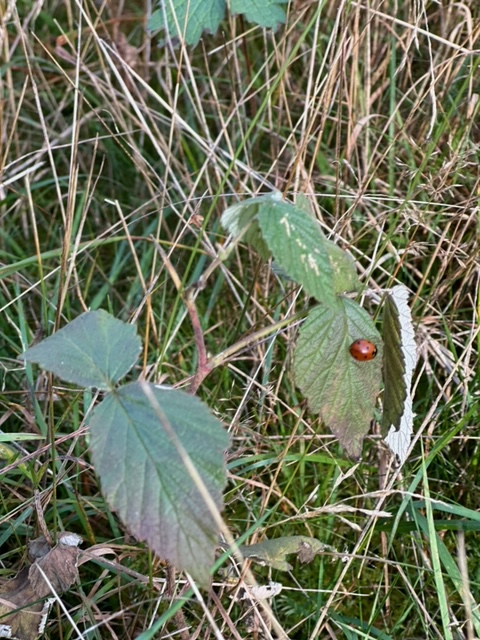
Landscape archetypes
Drawing on the insights of ecopsychologist Sharon Blackie, we’re urged to relate with landscape archetypes. Some souls find solace in the depths of a lake, others feel the call of expansive mountains when craving space, and still, others are pulled by the desert, seeking the raw, stripped-back honesty it offers. Blackie challenges us: if you were a place, what would you be? For me, when I listened to this question, the answer is a swampy realm, a wetland.
As I wander around the Mjøsa lake, I feel the gravitational pull, sensing how everything wishes to roll into its depths. Yet, while the lake beckons, I resist full seclusion. The sensation of mud, drawing me in, tugging at my feet, feels more like home. It’s a reminder that to come home through the land, one must be willing to get a little dirty, to delve deep, and most importantly, to listen.
Bicycling trip to Ringsjøen
Huldersteina in Biri
On one radiant September day, I traced the St. Olafspath from my doorstep in Gjøvik, stretching nearly 25 kilometers, until I reached the fabled Huldra stones. Though their tales had reached my ears before, the timing never seemed right to seek them out. However, inspired by the completion of the Hildegard pilgrimage trail earlier that month, I felt a renewed pull to venture farther along the St. Olafspath than my previous, modest 1-km endeavors in the past two years.
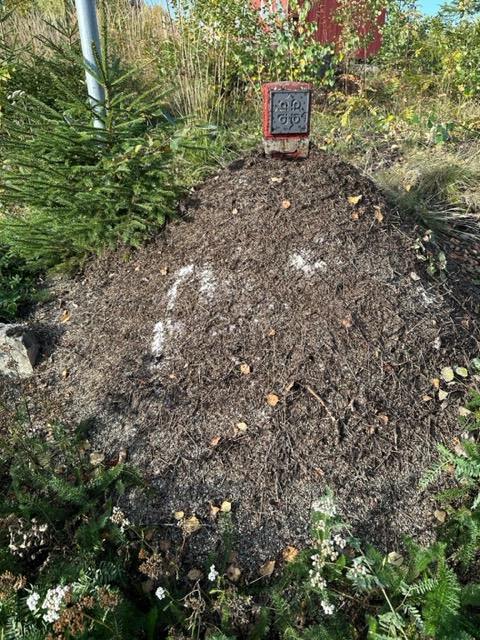
During a pause, I consulted my book of this pilgrimage trail and I really got excited when I read about the approaching Huldra stones. I did not know that they were part of the trail, but I was also not surprised. I know that modern pilgrimage trails have often detours to (bio)cultural heritage. My journey resumed, taking me through narrow, mud-laden trails sheltered by linden trees beginning to show their golden autumn dresses. I walked along the outskirts of hay fields, their hues deepening to rich browns. Guided by nature’s own compass, two termite hills reminded me to the wind directions. Intriguingly, one such hill had almost completely taken over a sign bearing St. Olaf’s cross, nature and history entwining.
By afternoon, my feet found their way to Biri, where the Huldra stones awaited.
Do you know more Huldra stories from this region or your own region? Did you visit these places?
Discover more from Stories from the Wood Wide Web
Subscribe to get the latest posts sent to your email.
 Stories from the Wood Wide Web