Update: 03 March 2026.
Crowdfunding campaign until Friday April 17th: https://www.ulule.com/writing-with-plants-the-book
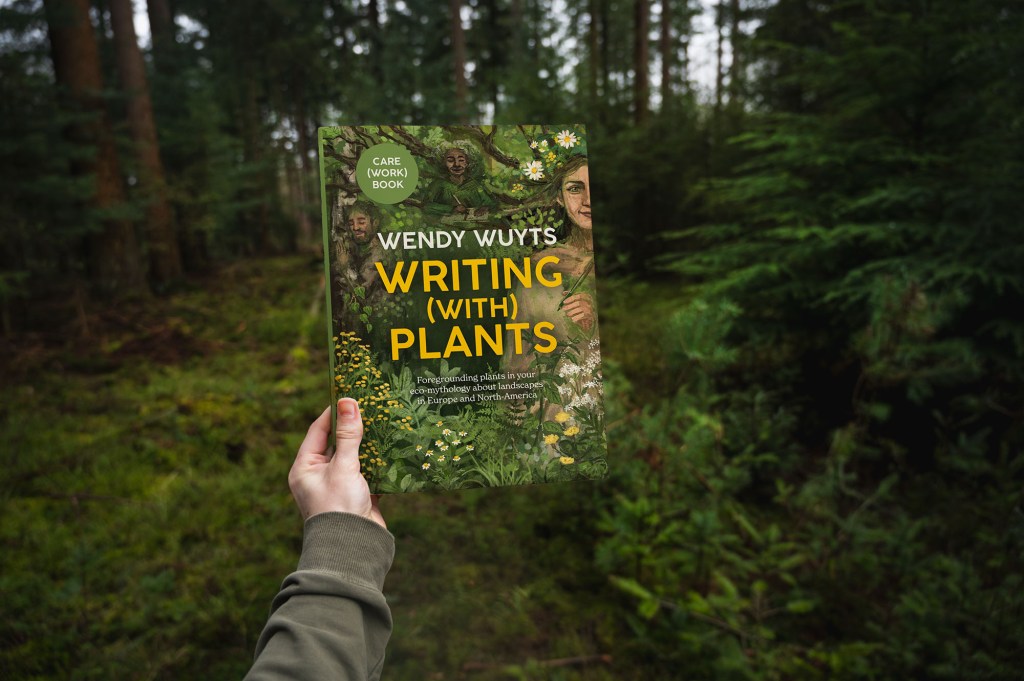
- Text and frameworks: Wendy Wuyts
- Book cover and graphic design: Maartje van Dokkum (artist name: Mary Feywood)
- ISBN number: 9789465206844
- Limited edition, with crowdfunding campaign for European market
- The dream is to work with USA-based publisher for the North-American market.
- 120 pages: 40 pages with theory and short stories from Flanders, Belgium and 80 ’empty’ pages with templates for DIYO and DIWO sessions
This is a book for designers and facilitators who want to work with plants, not just write about them.
What will be in part 1?
- This book traces the roots of a practice that treats plants as co-creators in design, facilitation, and collective imagination. It offers a brief, accessible history of the philosophy behind this work, with enough context to ground the reader, without drowning them in academic theory or endless references.
- Along the way, I open up the design and ethical choices behind the practice: why certain decisions were made, what was left out, and how responsibility, care, and power shape collaborations across species.
- At its core lies a reflection on disenchanted landscapes in a globalized world. Without nostalgia or naïve romanticism, the book introduces the political and psychological forces that have stripped many places of meaning…
- … and why re-enchantment matters. This becomes the anchor for exploring the need for new eco-mythologies and eco-critical thinking: stories that do not escape reality, but help us stay with it more attentively.
- Interwoven through the book is my personal story in Flanders, Belgium. Willows, family histories, loss, and quiet resilience shape this landscape. There are sad stories here, but also encounters (human and more-than-human) that have informed my ecofeminist practice and way of working.
- Short chapters document previous writing-with-plants sessions: fragments, reflections, and musings on what emerged, which choices mattered, and what patterns kept returning across different contexts and groups.
- For practitioners, the book introduces the P-framework: a practical guide for designers and facilitators working with plants: Plant, Place, Prompt, Psychology, Politics, and Play.
- This framework supports the design of sessions that are grounded, ethical, and imaginatively alive.
- Finally, the book maps the mythopoetic spectrum of plants, helping facilitators understand how different “guest plants” invite different types of conversations, tensions, and co-creation processes… and why plant choice is never neutral….
What will be in part 2- templates?
- templates for 20 guest plants
- templates for mapping the ecosystem in various seasons
- templates for business modeling and planning, to ensure that you do not end up getting exploited for your care work
- check sheets for facilitators and participants who want to do DIWO and DIYO sessions
- …
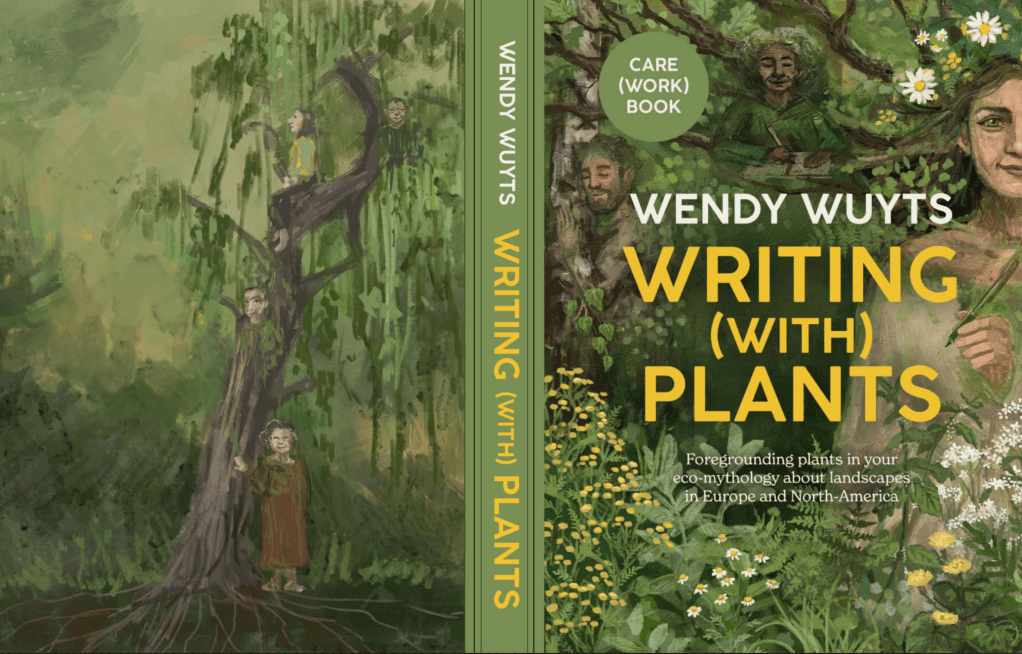
A first volume – a vision of a bigger series of care(work)books to support the co-reation of eco+mythologies and ritual prototypes across the globe
This book would be seen as a first volume of a series of care(work)books. The vision is that the first part of each volume focuses on another geography, demonstrating how the writing(with)plants practice and certain frameworks can assist in the co-creation of a (new) eco+mythology for a place. The second part are (improved) templates for writing(with)plants sessions, ecosystem mapping and making action plans for valorizing your care work in your chosen place (ecosystem, watershed).
Do you want to experience this with others?
To learn more about the writing(with)plants frameworks, and to receive announcements for the Do-It-With-Others (DIWO) sessions, please consider to subscribe to our tailored newsletter. You can subscribe here or visit the page about writing(with)plants as a practice with more blogposts of our journey since 2021.
 Stories from the Wood Wide Web