I went to Seville to escape reality – a stressful job in a start-up, a recent break-up, the looming threat of losing my visa, the geopolitical quagmire flirting with World War III, and the existential dread of my existence as an immigrant. Seville seemed like the perfect getaway to fall back in love with what brought me to this continent to begin with, uprooting my life from car-centric suburban America to the walkable cobblestoned streets of city centers older than my country, trees that saw leaders rise and fall, and a rich culture so different from my own. I looked forward to getting lost in the winding alleyways and lush urban forests that transported me to a Mediterranean escape.
To be a tourist is a massive privilege, and as an somewhat avid traveler, I try to be aware of the spaces that I am in, the impact I have on the local populace, but also the interplay of history, policies, and wealth that built the palaces and museums that I am able to enjoy. Seville is a city that makes you reflect – both figuratively and literally – and throughout the trip, I found myself ruminating on the systems that built The Heart of Andalusia.
A Colonial Legacy
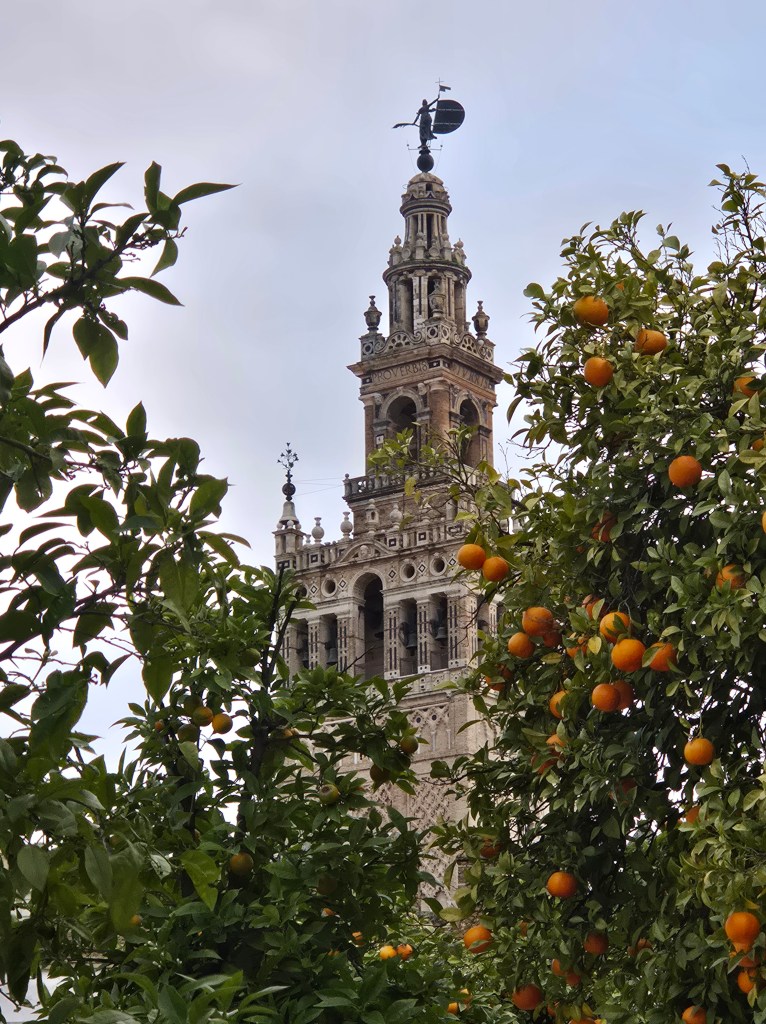
Seville is synonymous with romance, it’s a beacon of beauty, progress, and sustainability, existing in the shadows of exploitation and colonization. Seville has a deep respect for the nature of Andalusia; with its hidden gardens dotted around the city, laced within the winding cobblestone streets of the Casco Antiguo, to the massive swaths of green space that bring you into a jungle of Mediterranean flora as you approach the Plaza de España. Bike paths interplay with the streets and sidewalks around the Plaza Don Juan de Austria, with tram and bus routes making the already walkable city center accessible (for an American, always impressive to see). The naranjos trees were ripe, decorating the streets in orange and green.
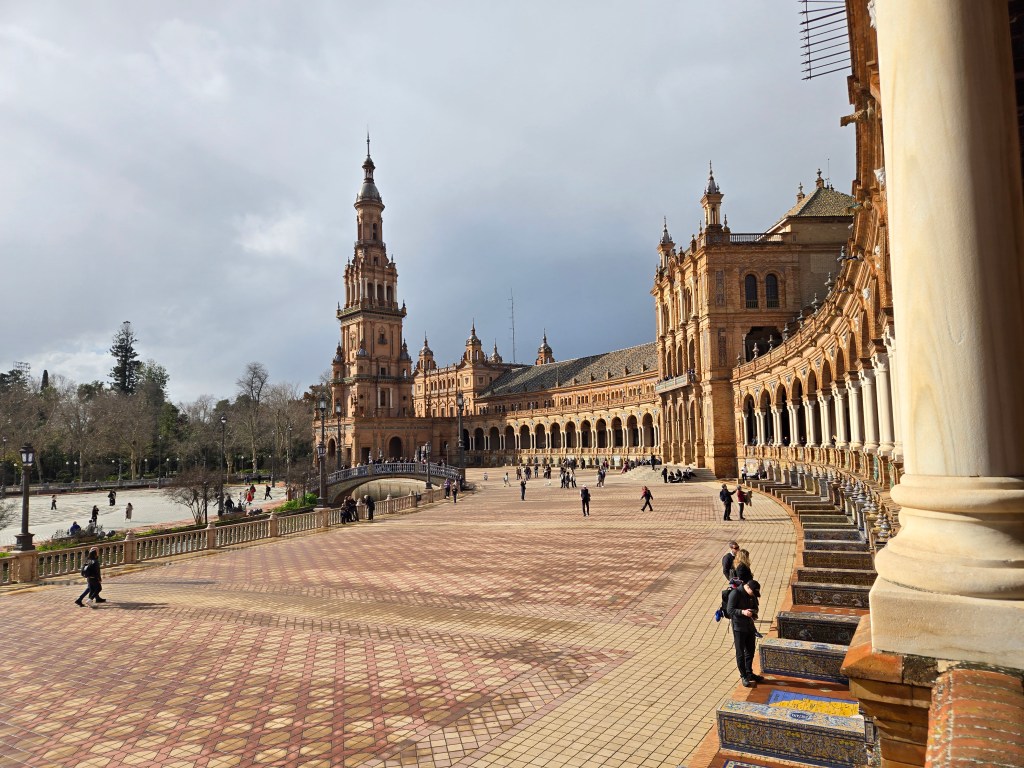
The grand architecture throughout the city reflects the wealth of a country that once colonized half of the New World. Intricate designs built by the labor of slaves that never saw the land they were subjugated by, and gold adorning artifacts extracted from mines of the Americas. As I reveled at the ornate moorish designs on the Royal Alcázar of Seville and the romantic gardens that stole the heart of the Arab poet and king Al-Mutamid, I couldn’t help but feel the tension of conquest, of religious persecution, of a colonial past that built the wealth that captured my attention centuries later.
Gazing at the paintings on the wall depicting massive colonial ships on their way to the New World, I felt uneasy. I was reminded of my own place as an American, living in another postcolonial country that built its wealth on exploitation, while my government continued to cause chaos on shores so far from our own land. A country that could only exist in its current form because of the events depicted in the painting; one that continues the vicious cycle of conquest. It was inescapable.
You can’t interact with the nature of Seville without understanding the historical context that the city is situated within. This doesn’t make Seville’s nature preservation endeavors any less impressive – in fact, it underscores the incredible efforts of the artists, activists, gardeners, and civic-minded botanists who work to preserve the local history and community through public gardens, repurposed monasteries, and green spaces. Not in spite of its complicated history, but carefully informed by it.
Jardín Americano
Seville boasts over 1,000 hectares of green spaces. Hidden amongst the impressive architecture and moorish gardens, I found many wonderful green gems that revealed a community with a strong reverence for nature, advocacy, and beauty. From Maria Luisa Park, to the Murillo Gardens near Santa Cruz, Buhaira Gardens, and Cristina Gardens of Seville’s green corridor, there is no shortage of spaces to escape from urban life.
The most impressive gardens, however, were nestled in the center of the Isla de la Cartuja – the Jardín Americano. A peaceful escape from the bustling old town, the Jardín Americano is a public botanical garden that was created for the 1992 Universal Exhibition and was abandoned for 17 years until it reopened in 2010. The garden is home to around 350 species of trees and plants native to the American continent, with themed sections, ponds, waterfalls and a boardwalk along the Guadalquivir River.
The existence of these gardens are directly intertwined with a history of extraction and occupation; the Expo ‘92 marked 500 years since Christoper Columbus’s voyage. These gardens could only exist because of the relationship between the Old and New World. They are therefore emblematic of the tension between the modern ideals of Seville, and the dark history that built its wealth.
Manuel Olivencia Ruiz, who spearheaded the gardens, wanted to bring different plant species from the Ibero-American countries to exist together in harmony, representing each land. The gardens were designed to outlast the Expo, becoming a public asset for citizens, and serving as a space of ecological diversity and conservation, as well as environmental education. The goal was to convert the area into a livable, green urban district.
The result is a remarkable urban garden that hosts plants and trees unique to the continent. The garden had recently fallen into disarray and had to be reworked in 2016 due to neglect, waste from public drinking, and vandalism. Now, the Delegación de Parques y Jardines has placed trash bins around the park with the goal of having citizens take up the stewardship to keep the gardens clean.
The Urban Oasis
I didn’t know much about the gardens before I went there. They were recommended to me by a friend (and sustainability expert) who had previously spearheaded community gardens projects throughout Spain. He had lived in Seville for quite some time, so I knew I was getting a solid recommendation from a local. Of course, the name was the first thing I noticed – Jardín Americano. Familiarity.
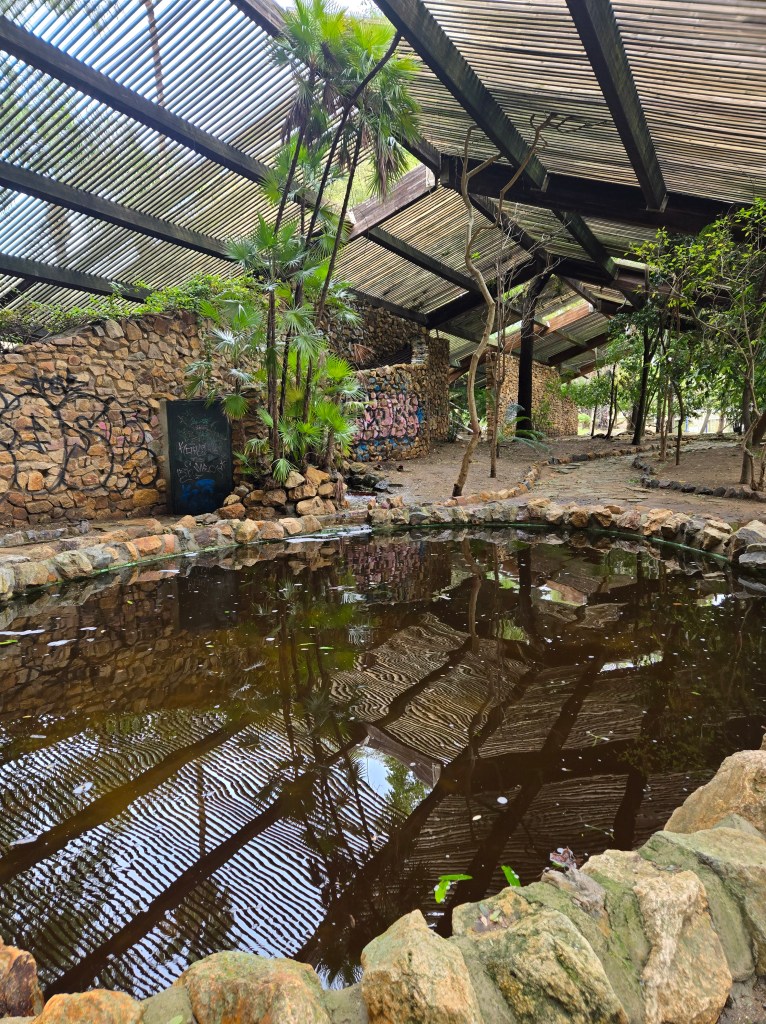
Once entering the garden, my attention was immediately drawn to the large wooden shade house. Under it, winding paths of earth and cobblestone that twisted through the garden, up towards the waterfall, and out to a brutalist boardwalk with water streaming down the concrete, rushing back to greet the river. Its irregular landscape felt like a plant playground inviting visitors to transport themselves to the New World. I marveled at the massive cacti and succulents, palm trees and budding flowers that ushered me along the footpaths in this quiet section of the city.
The gardens provided an oasis of rest and beauty amongst the clamor in and around me. It was a space of contemplation, a place where I could reflect – reflect on the romance of the city, on a history that raised a colonial empire, on a community that built gardens and ate the sweet oranges that came from the trees lining their streets – and mentally prepare myself to head back to my grey reality in the Netherlands. The sounds of rushing water kept me calm and grounded, the shade of the willow tree embraced me, and for the first time in weeks, I could breathe.
What memories do you have from the City of Orange Blossoms? What emotions does the city evoke in you?
Discover more from Stories from the Wood Wide Web
Subscribe to get the latest posts sent to your email.
 Stories from the Wood Wide Web