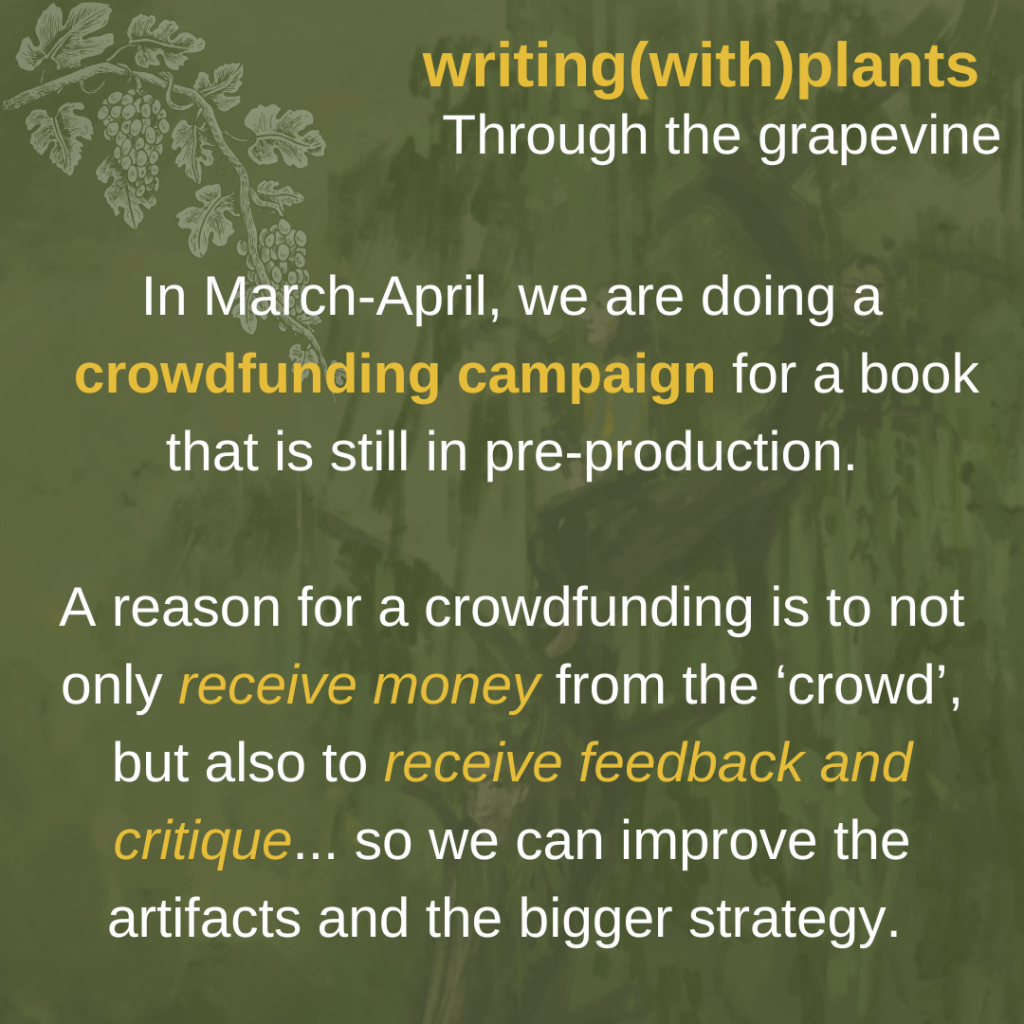
This blogpost is part of the creative process of the upcoming writing(with)plants care(work)book. Currently we do crowdfunding (until April 17th, check here), which means that we are receiving money from backers, but that we are also open for receiving feedback and critical questions.
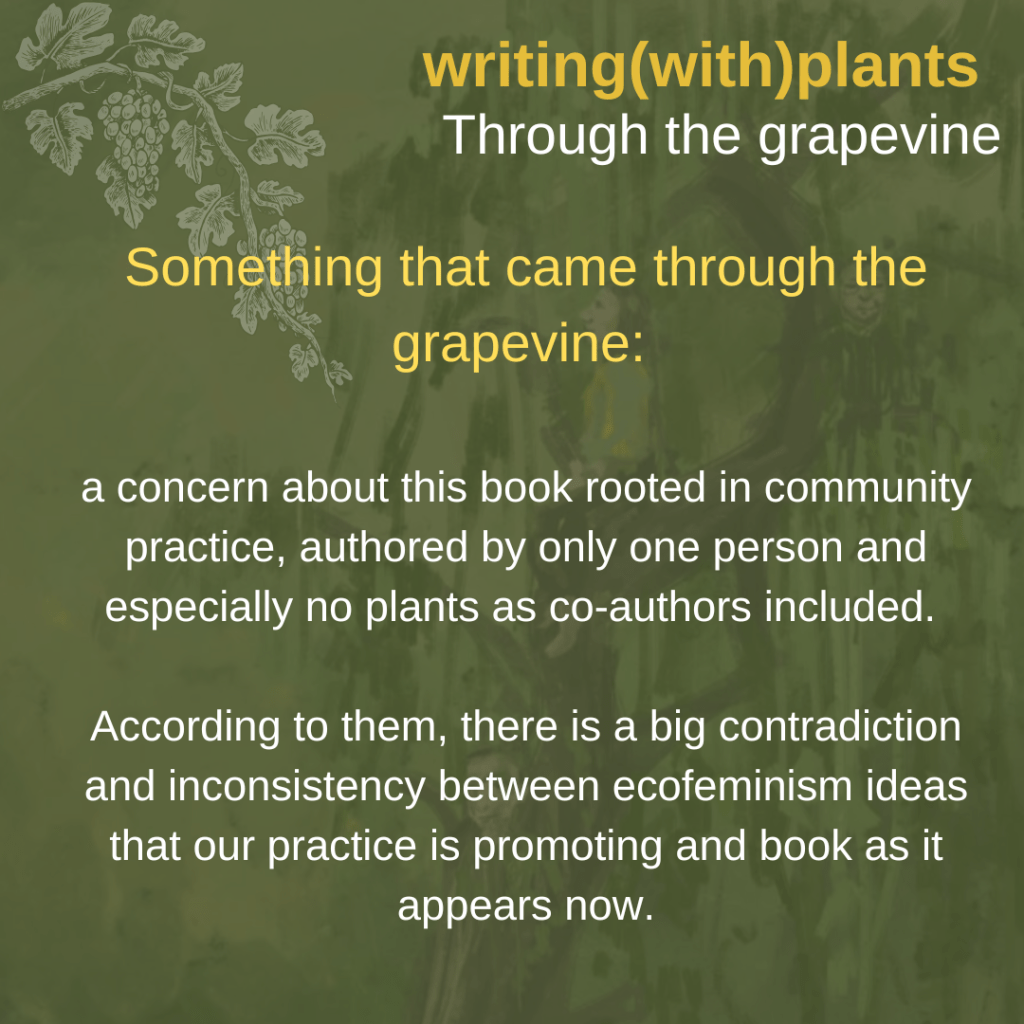
In the past week, something came through, which deserves a platform, some Instagram posts and stories, LinkedIn posts and now this blogpost. This was not comfortable, but it lead to some new creative (= political) choices and decisions. I want to share some insights in the process, as I think I am not the only creator getting critique and difficult questions… yes…
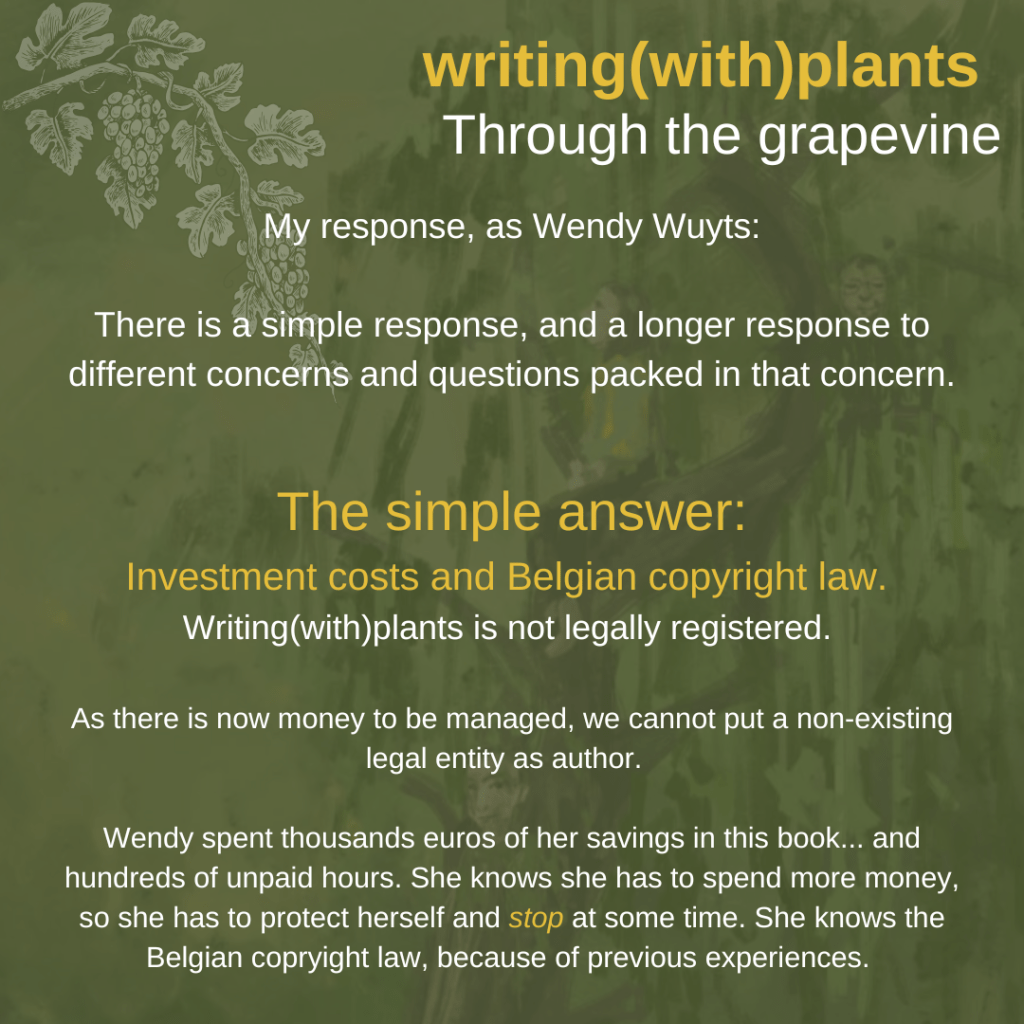
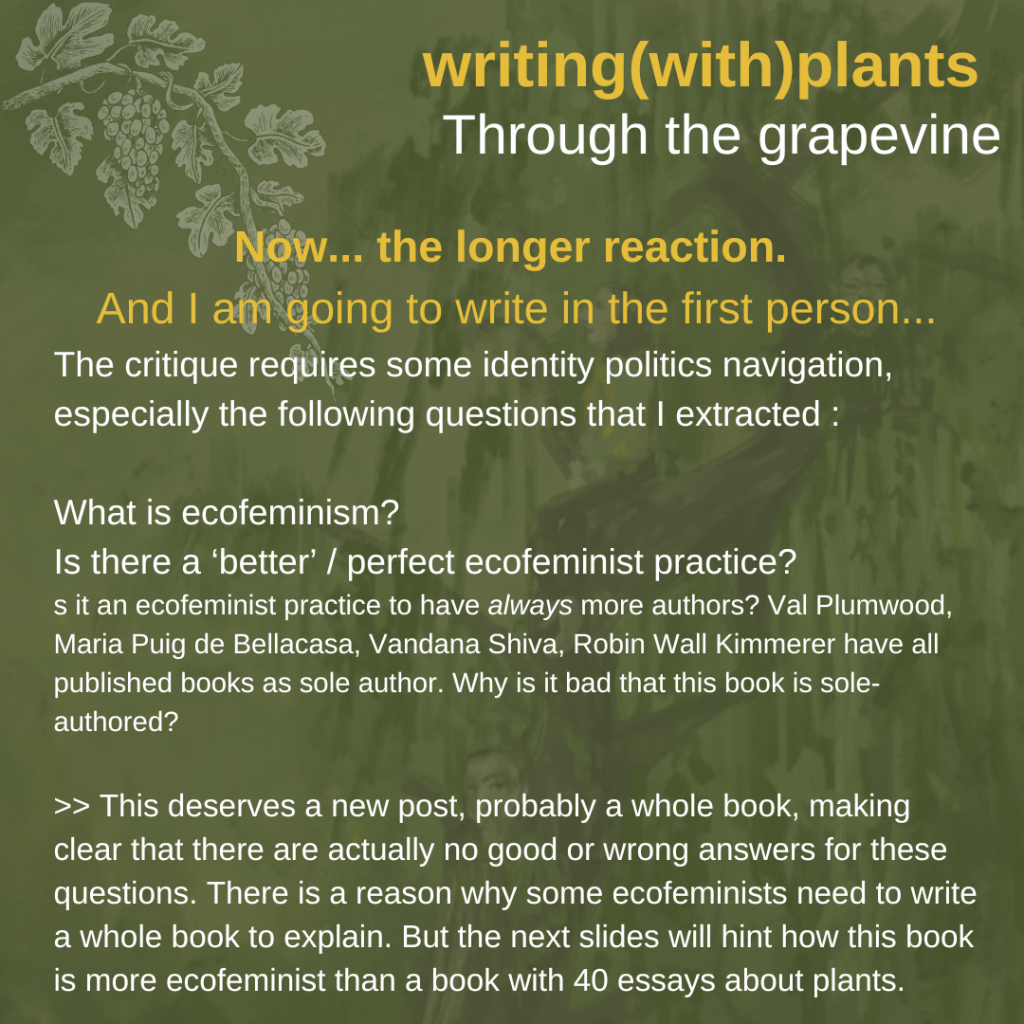
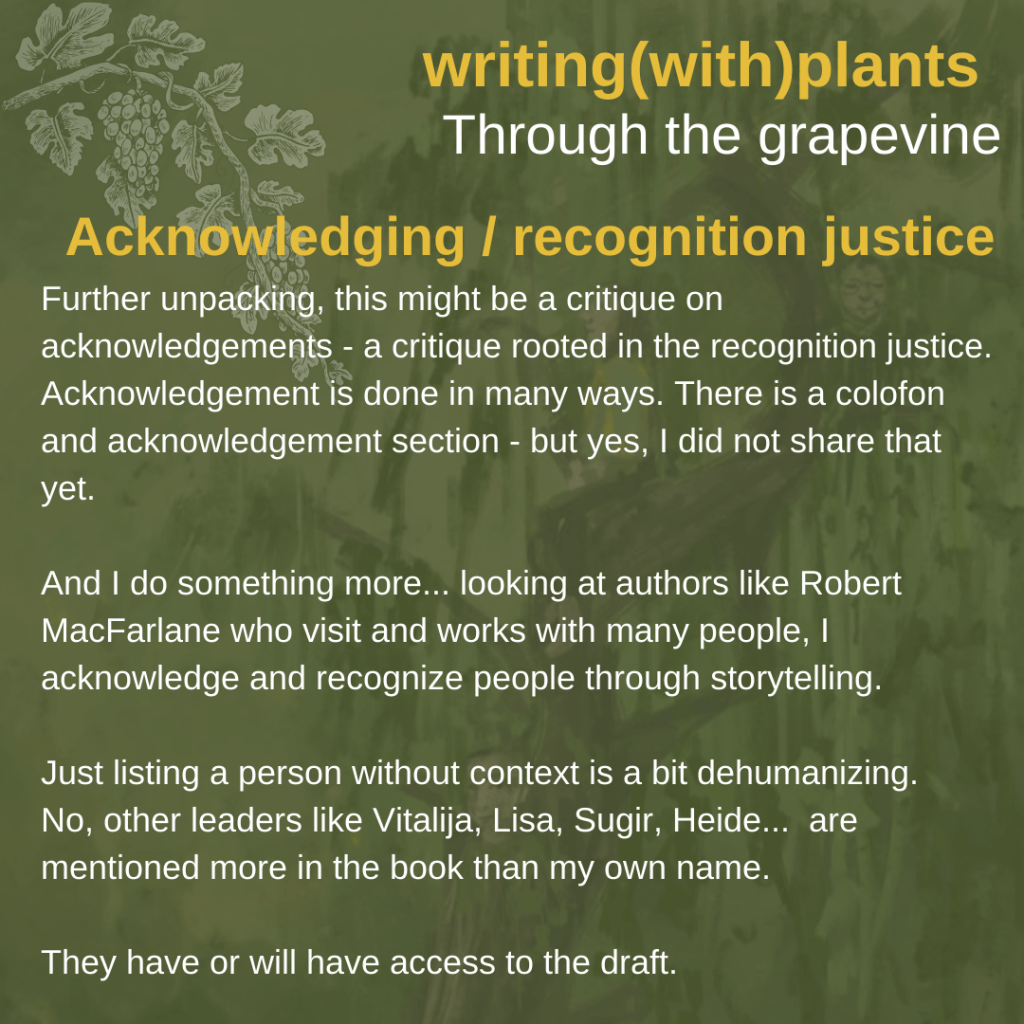
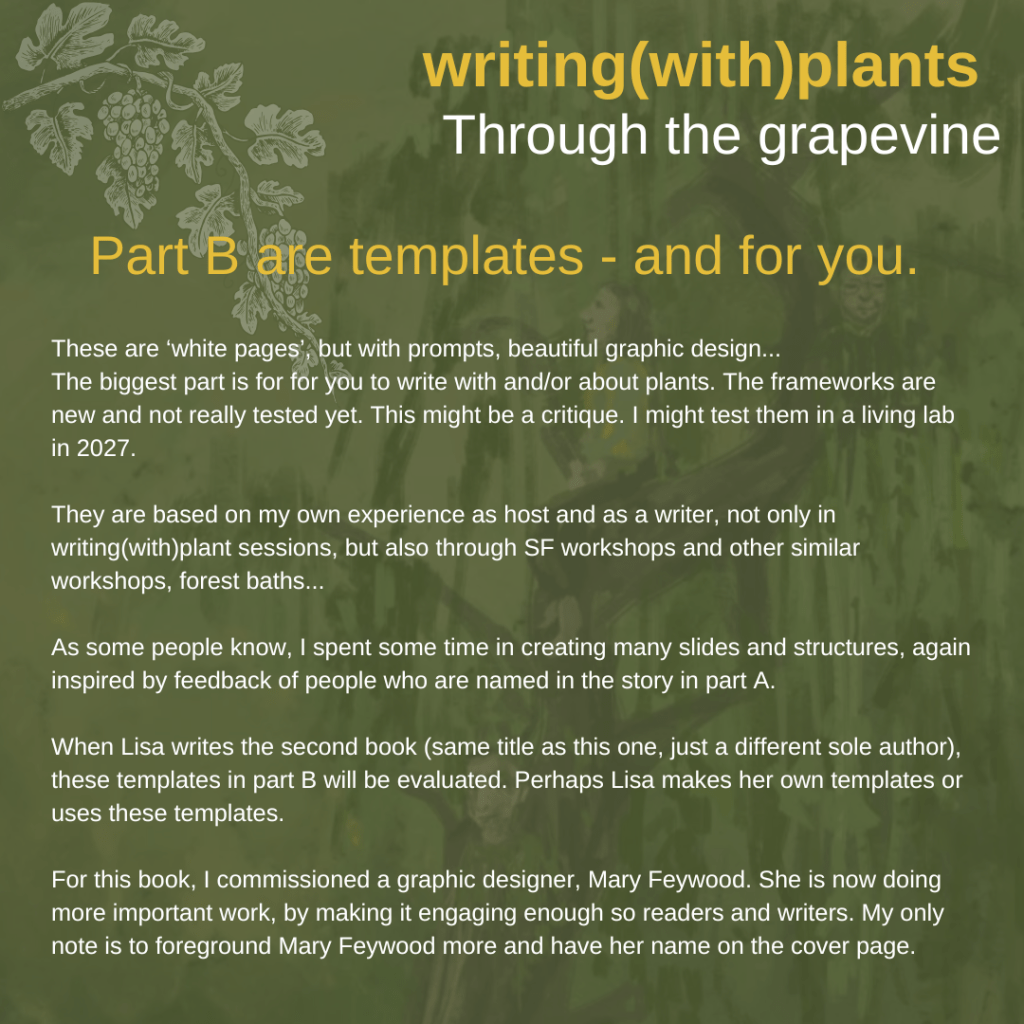
… it is about authorship and the conventional procedures that reinforce some recognition injustices.
The grapevine
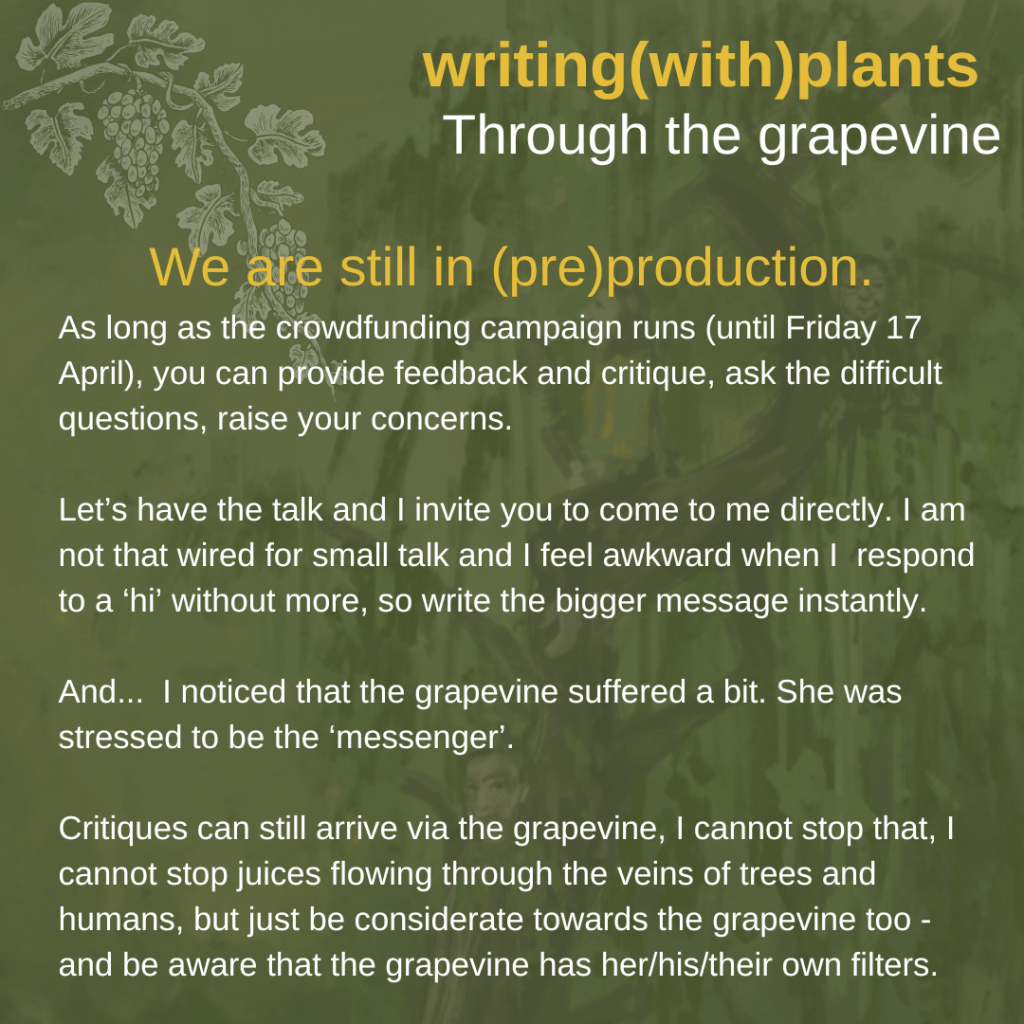
I made some language errors, but I saw them too late and did not want to spend another hour – before I posted this slide deck on Instagram:

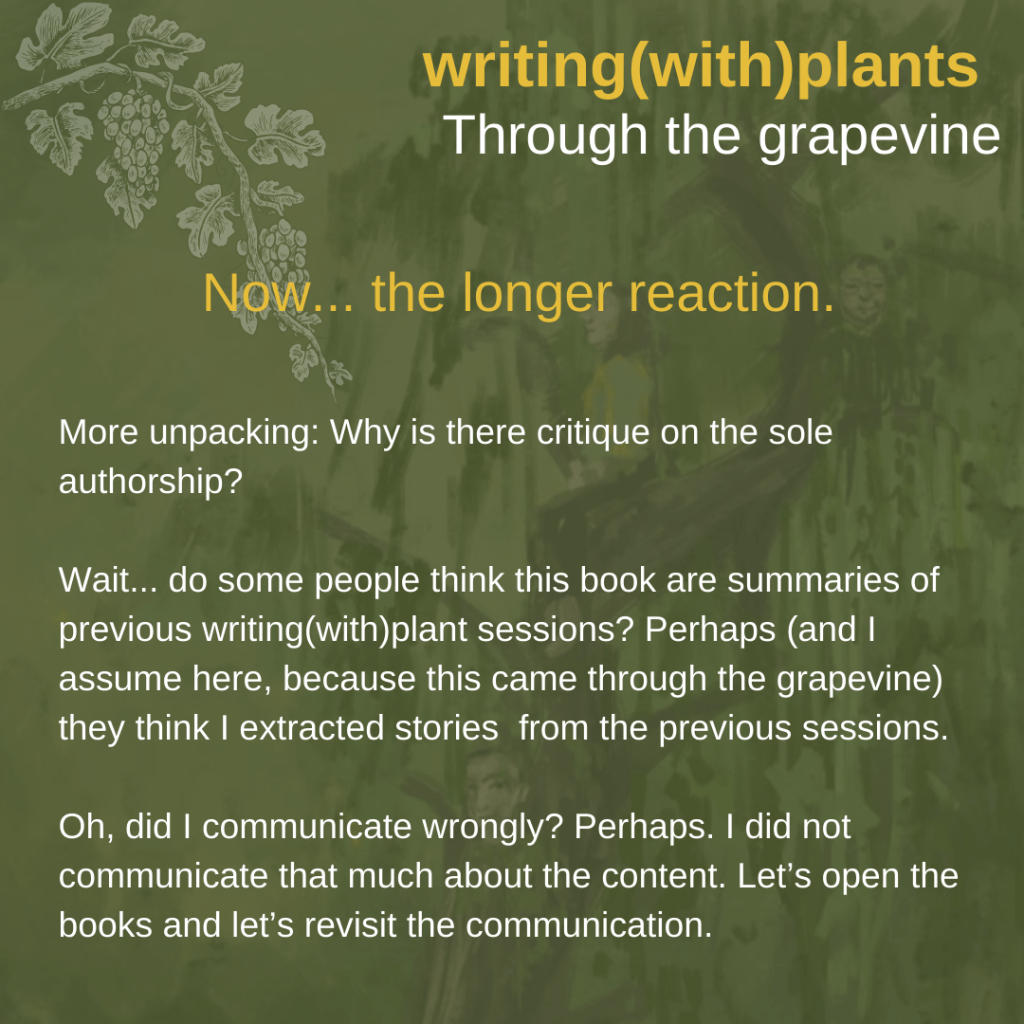
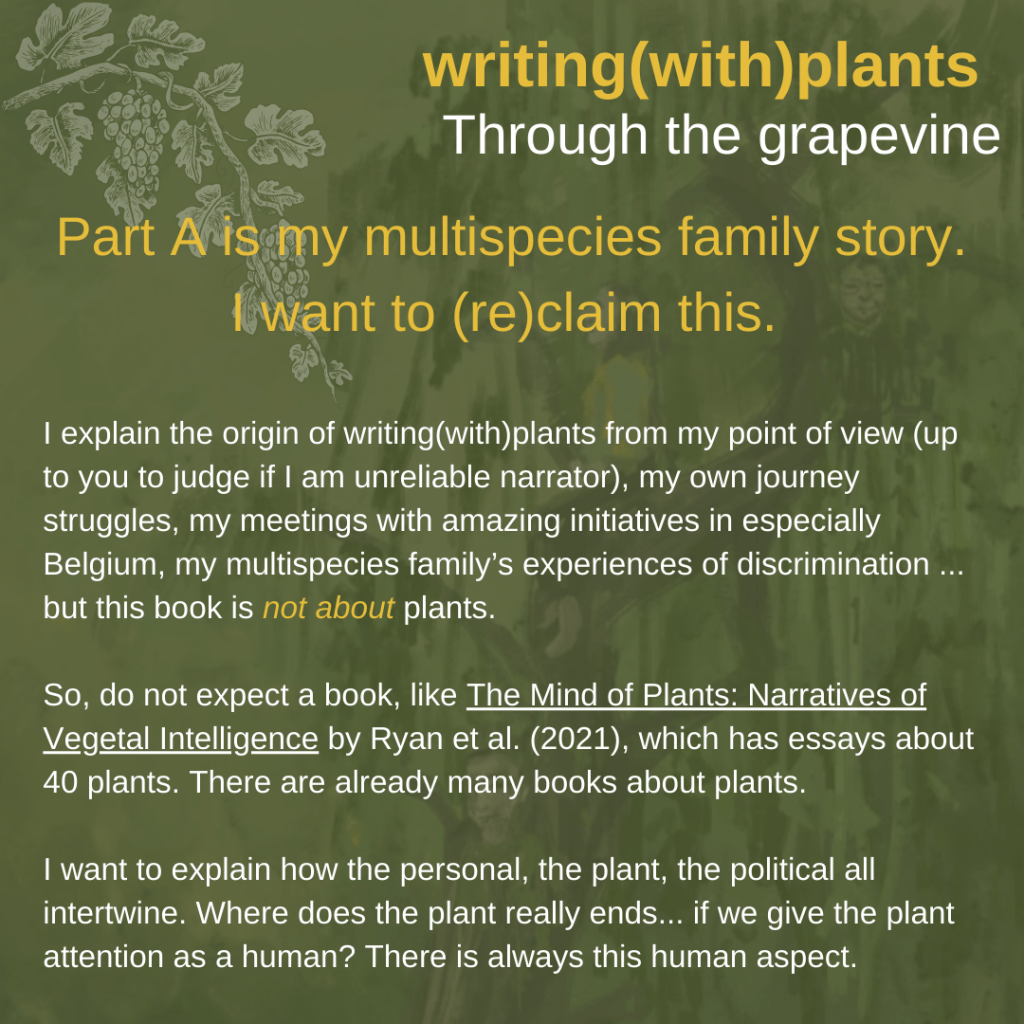
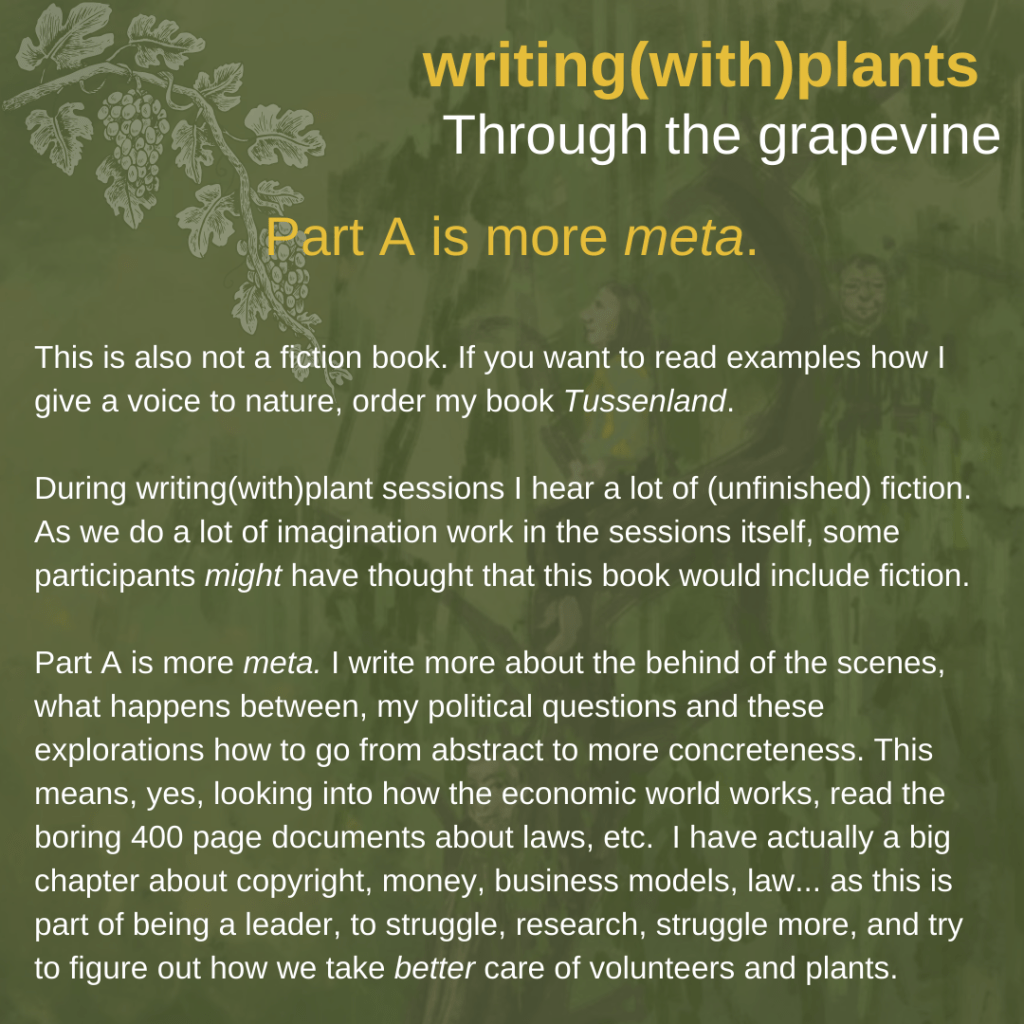
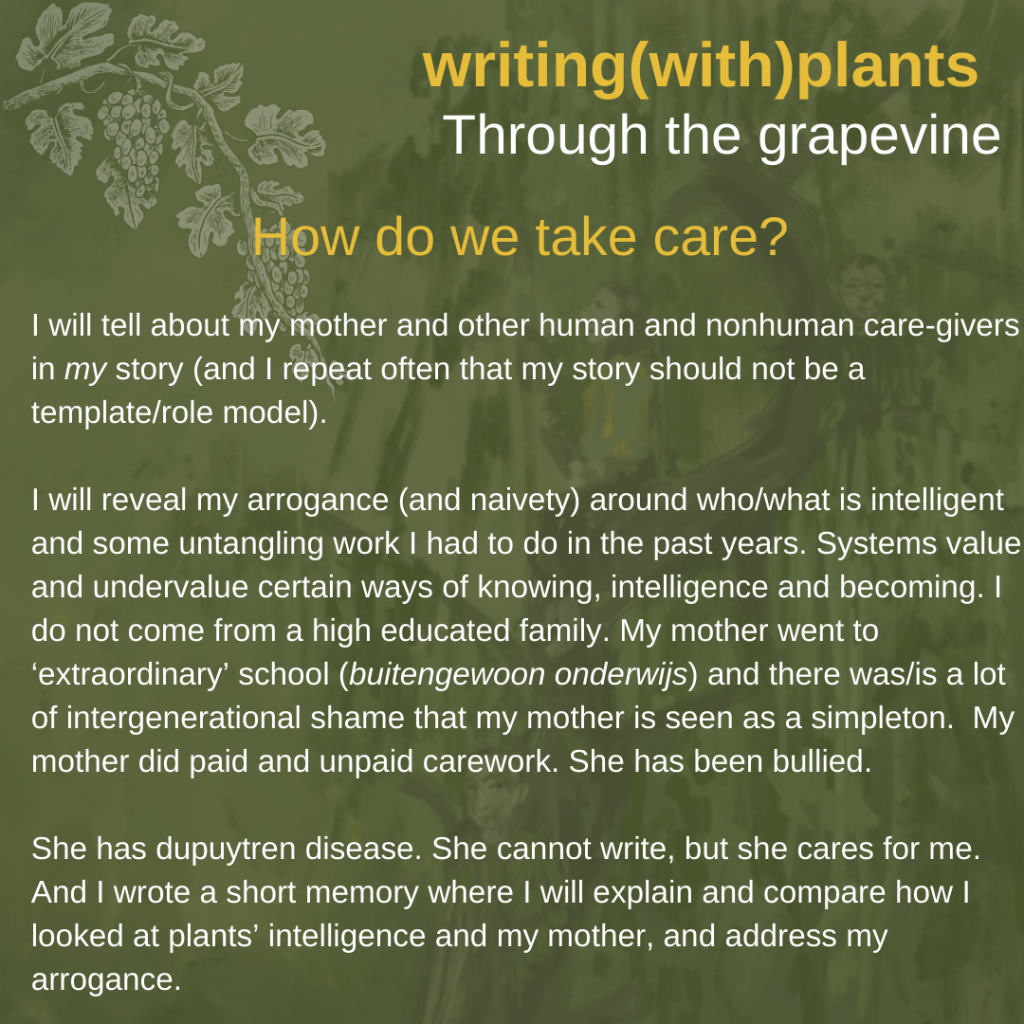

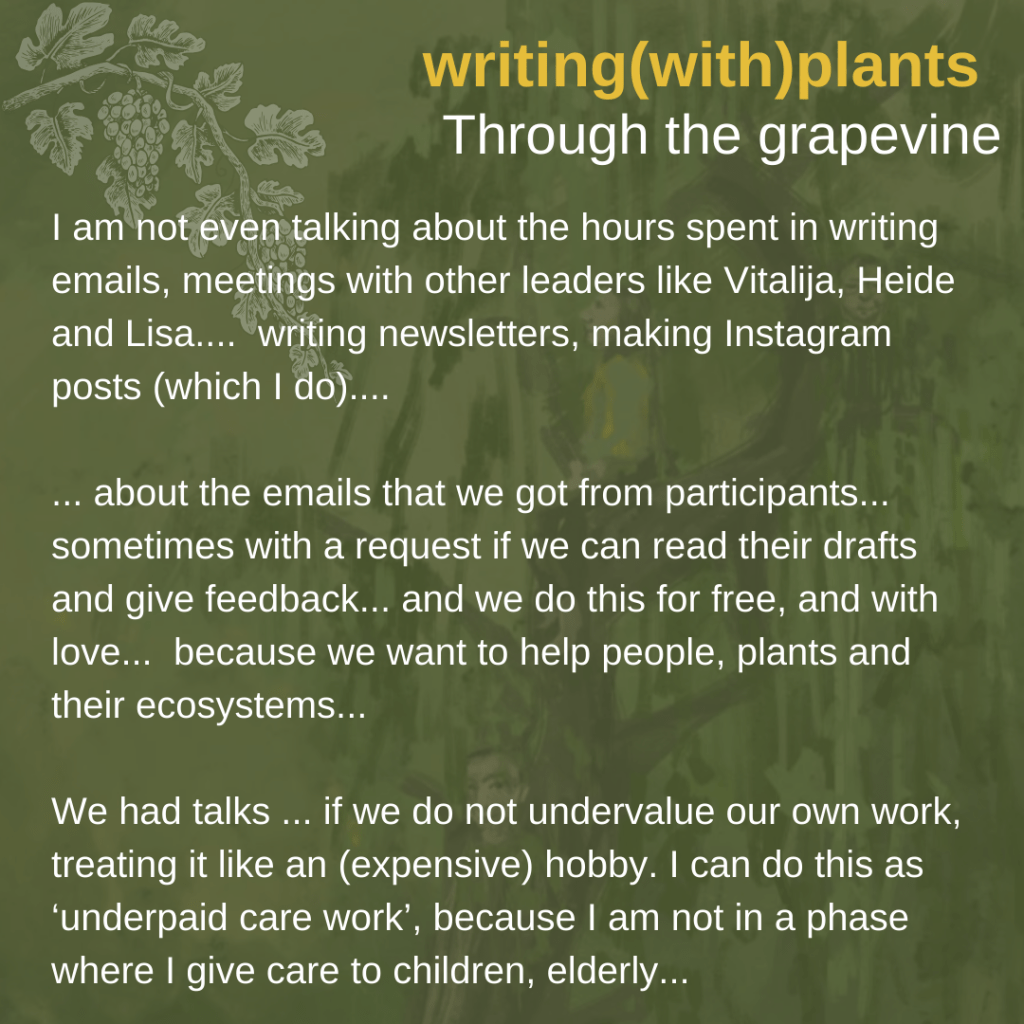
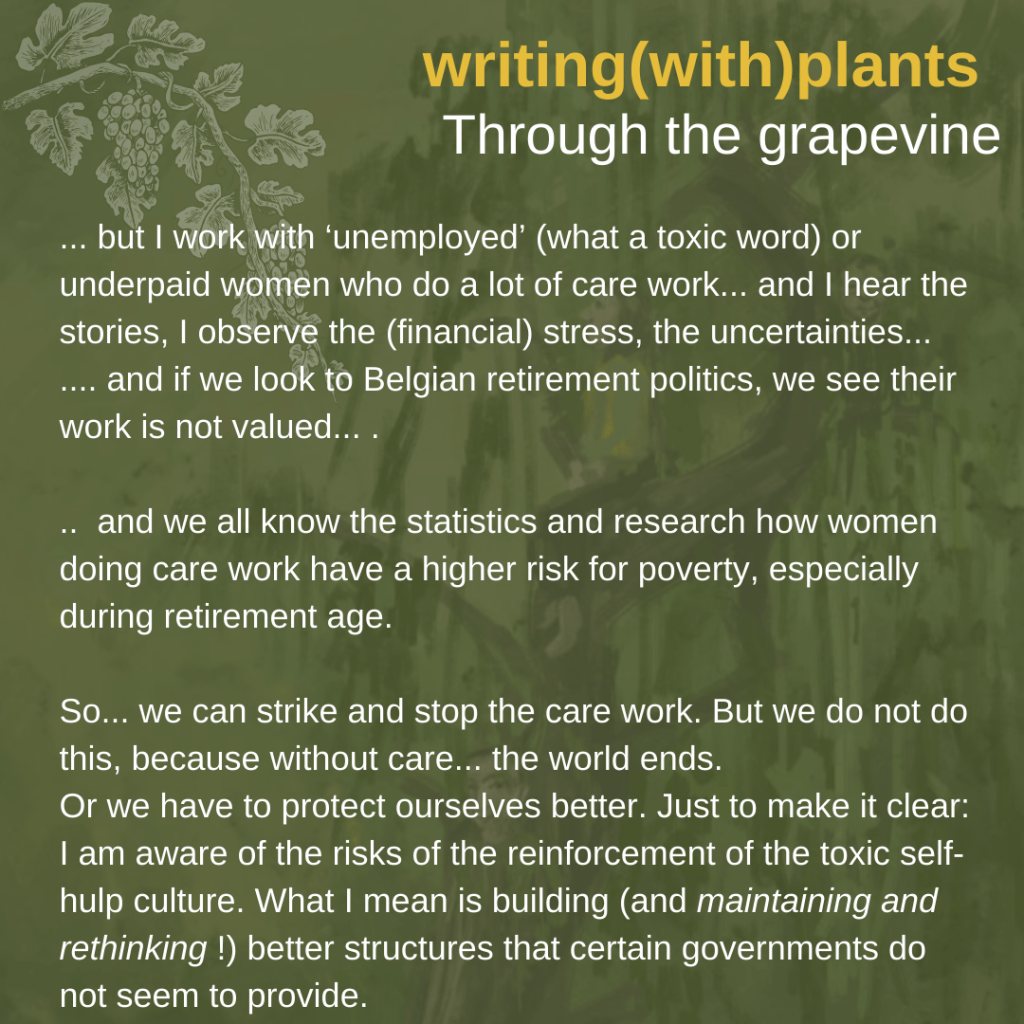
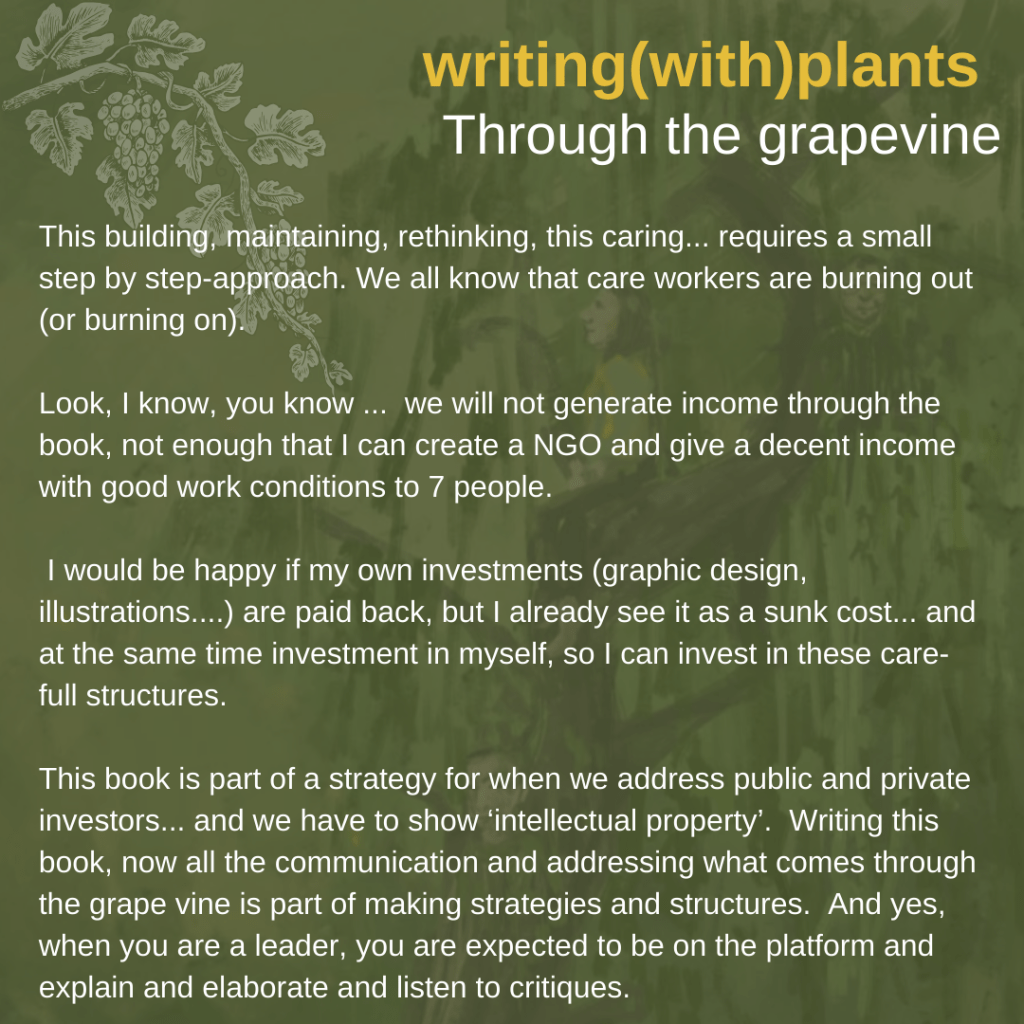
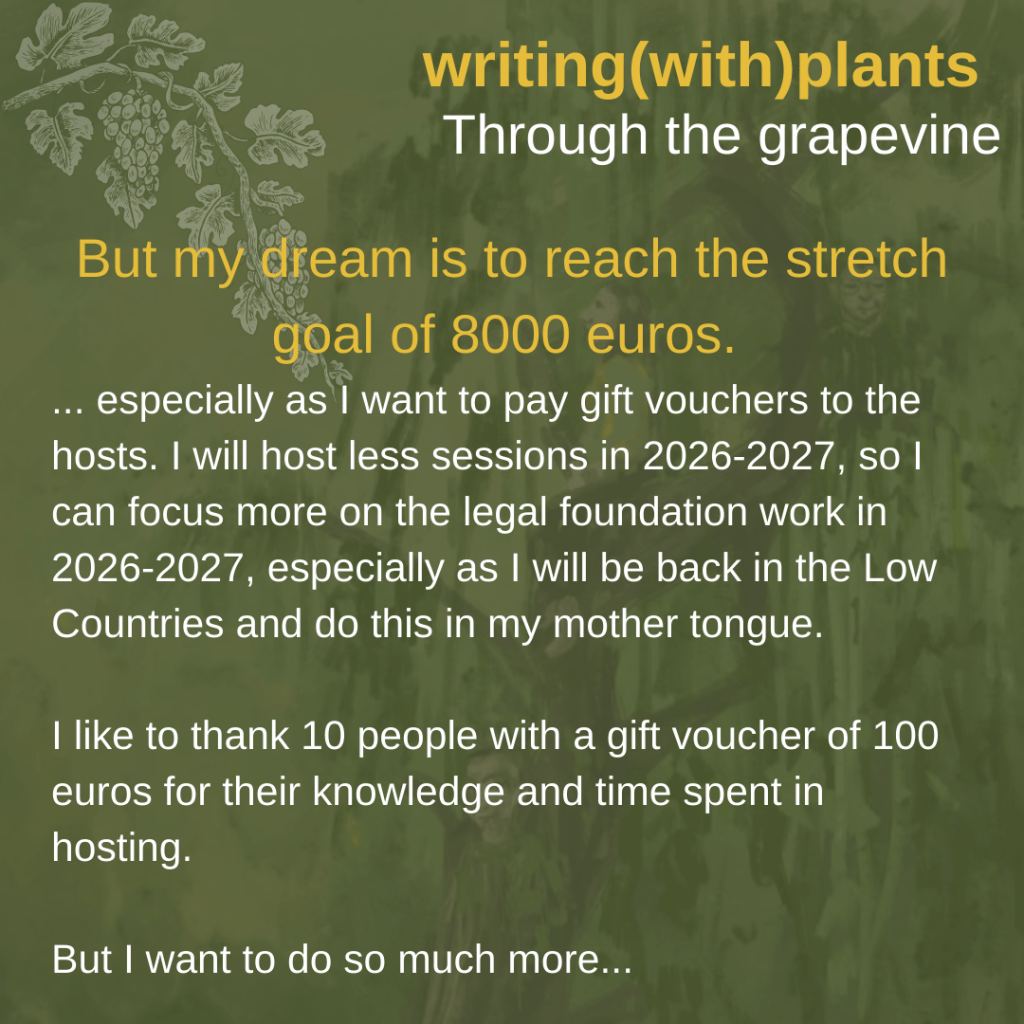

The first creative decision: the back cover which is perhaps not the back cover (or background)
Some weeks ago, I was asked by the graphic designer what should be the back cover text. The idea that I got after concerns were expressed that the plants were backgrounded, I got an idea. I tend to like being a little cheeky in my writing, and this seemed like the perfect place for it. When Maartje read the text, she told me she had done so with a big smile and that she liked the idea. She is now exploring how the text might be balanced with the illustration on the back cover, and I’m curious to see the designs she will come up with.
But the text itself already contains an important creative choice: who gets to speak.
Instead of presenting a conventional back cover description, I imagined the plants themselves responding to the book. Or perhaps interrogating it. The result became a playful chorus of voices, plants questioning the very premise of humans writing about and with them.
Some are skeptical:
Who says we want to be writers? What do we gain from this?
— Holly, Peony, Knotweed
Others question language itself:
Ah, “writing”… what does that even mean? It’s about language, isn’t it? And why English, of all languages? Do you think we speak English in the soil?
Some challenge scientific naming:
Why have you used vague English names? Why not Latin? Why not more specific names? Do you not recognise the diversity in our becoming?
Others question authorship:
How do you know you can write on our behalf?
— Belladonna, Yew
A few are unimpressed:
We do not like this book. She has been writing mostly about willows, yews and pine trees. Why can she not recognise us more?
— Birch and Ash
And some are quietly philosophical:
Where does the plant end, and where does the human begin?
— A willow and his/her/their multispecies family
At some point in the text, the human author, me, finally responds:
Thanks for this dialogue with my ecological self. I don’t think I will be able to answer all your questions, concerns, and critiques in this book, but let’s try anyway…
This playful (self?-)dialogue allowed me to introduce the themes of the book like care, ecological relations, ecofeminism. Instead of presenting answers, the back cover opens with questions.
And then another creative thought appeared.
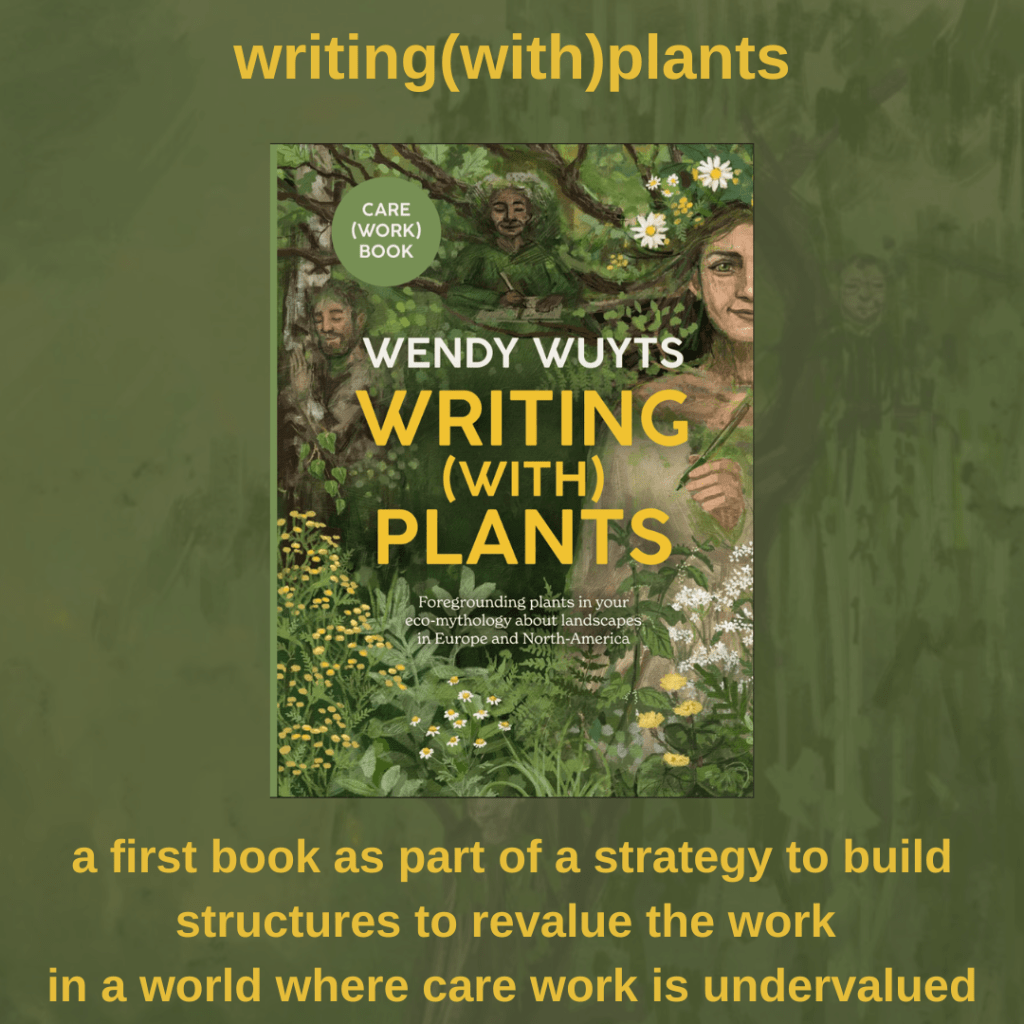
What if the back cover is actually the front cover? Let’s play even more with the idea of backgrounding, which is criticized by ecofeminists such as Val Plumwood.
While living in Japan, I often encountered books that challenge the Western habit of reading. Text flows vertically, pages are turned differently, and sometimes the “back” of the book is where the story begins, like in manga. That memory sparked a bold design idea: perhaps the book could be placed either way up. Readers could choose which side is the front.
This decision was received well… by the grapevine. But I still got critiques about the ‘conventional’ forefront.
A voice, the voice…
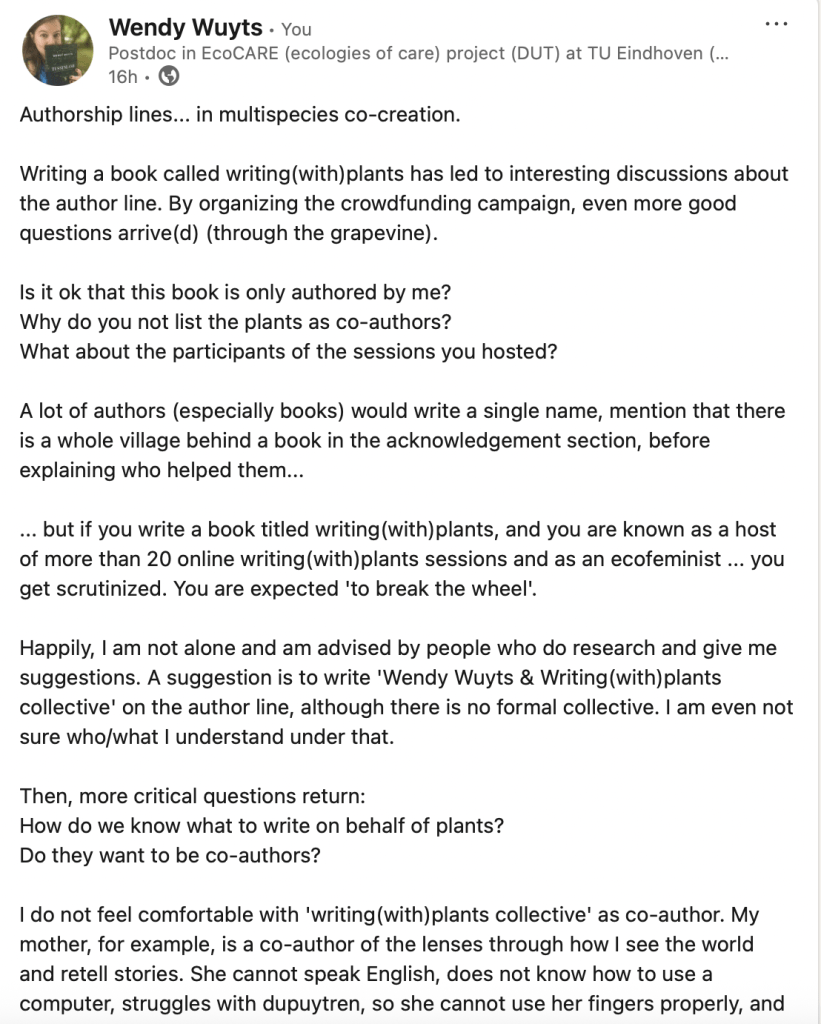
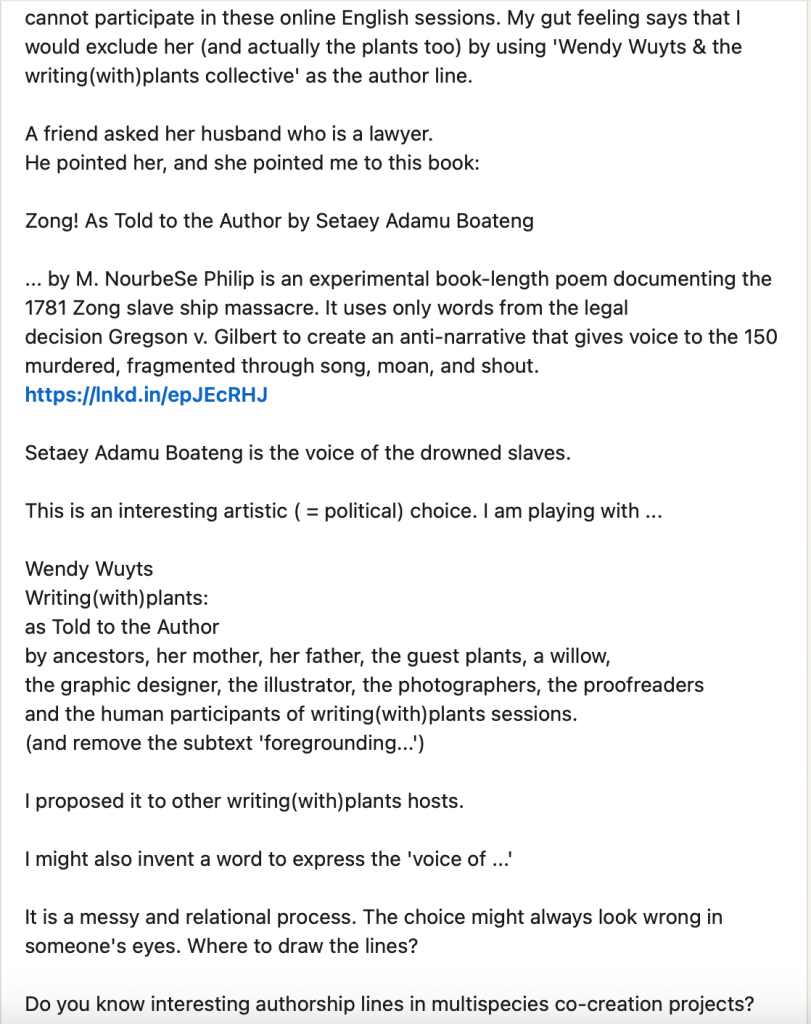
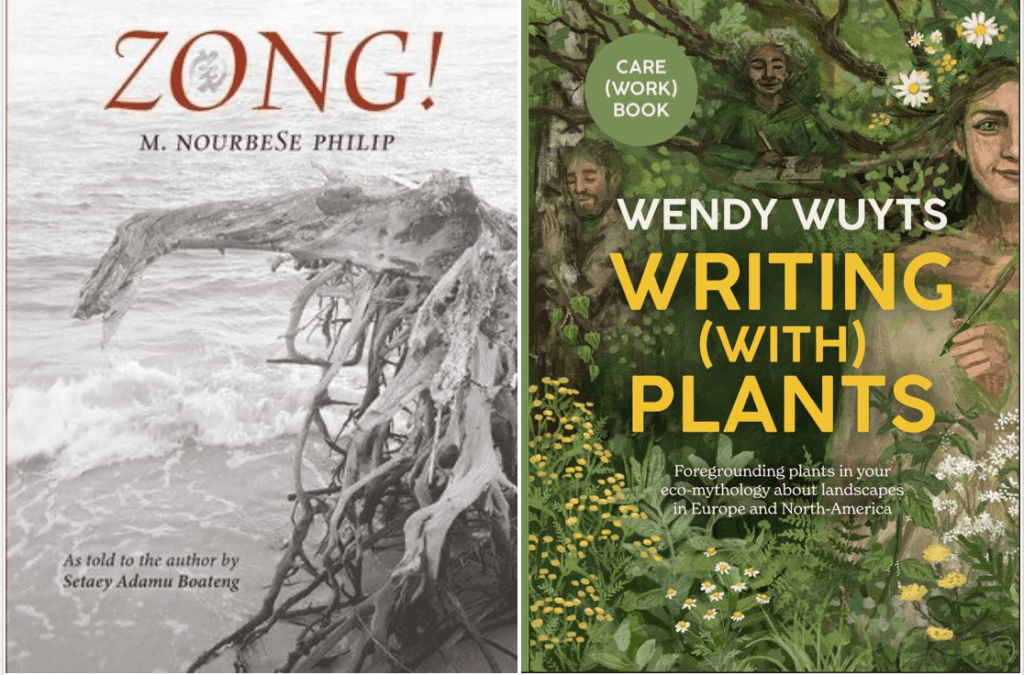
I am going to play more with this. I consider adding forest baths in the list – as I am also writing about the forest bath practice, the training, and the forest baths in Japan, and especially the few forest baths that I guided in Belgium.
This book is still in pre-production, but I am learning and reflecting a lot. However, sometimes it is very overwhelming and it is not always comfortable to be in defending modus. The other leaders and I identified that writing(with)plants is becoming something bigger, so this means having talks about a governance model, clear roadmaps etc… will be an important phase. We are all living in places with spring energy, so now it is time to grow, to adjust and observe at the same time.
There is a reason why the crowdfunding campaign is planned during early spring. I know that I am now at my most energetic, and I know it is a marathon.
It does not only end with the crowdfunding campaign, the creative writing process, all the communication behind and in front of the scenes, but I also planned a few physical workshops, e.g. in Utrecht in the Netherlands (17 April) and Aarhus in Denmark (13 June). However, at the end of May, I plan to be not online on Fridays and during the weekends for the rest of spring and summer. This also means that there is a surge of blogposts from the wood wide web in this spring period.
Gossip from the Forest
A small note. Sometimes … things come back. When I was playing with the idea of ‘hearing gossips, critiques…’ through the grapevine, I had to think about the book Gossip from the Forest: the Tangled Roots of our Forests and Fairytales by Sara Maitland. I read that book in 2029/2020, and this is one of the books that inspired me to write something similar for Flanders and the Low Countries. Gossips of the Forest are a bundle of retellings of folktales – for each month-, connected with an essay about a walk or forest bath in a British landscape. Writing(with)plants care(work)book: As told to the author by a Voice… includes parts that I started to draft for that book. Her retelling ‘”The Dreams of the Sleeping Beauty” (for the February chapter) is one of my favorite short stories ever. When I was invited by EarthWise Education in Belgium (educational center for ecopsychology and ecophilosophy) to give an online lecture about eco linguistics, this was the story I selected to read aloud.
If you want to support a book which is full of gossip from especially Flemish forests, please consider to support our crowdfunding campaign. It is a limited edition. There will be a print-on-demand edition, but this will be programmed for late 2026 and at a more expensive price. You can learn more here: https://www.ulule.com/writing-with-plants-the-book
Discover more from Stories from the Wood Wide Web
Subscribe to get the latest posts sent to your email.
 Stories from the Wood Wide Web