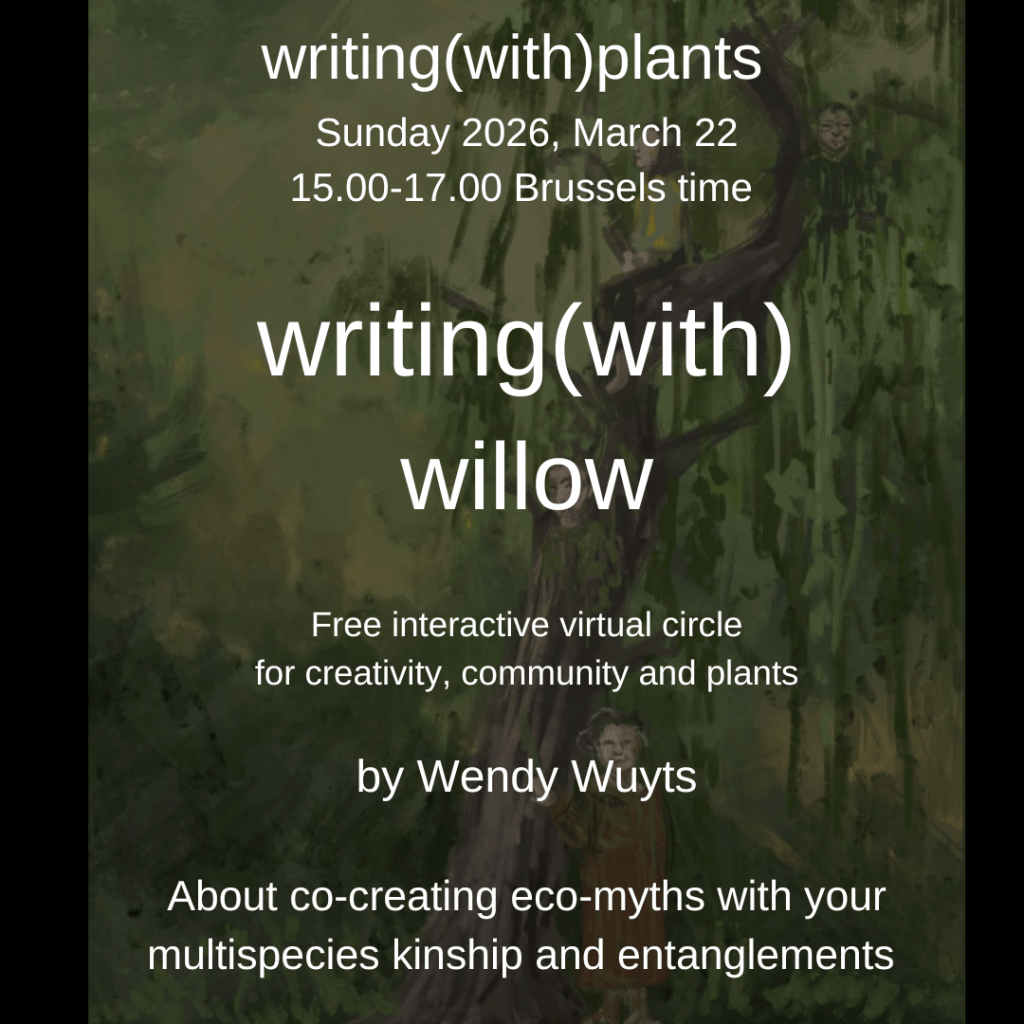
This spring I’m inviting you to two special Writing(with)Willow sessions on March 22 and April 12. They are part of the growing writing(with)care project … and also connected to the crowdfunding campaign for the upcoming book.
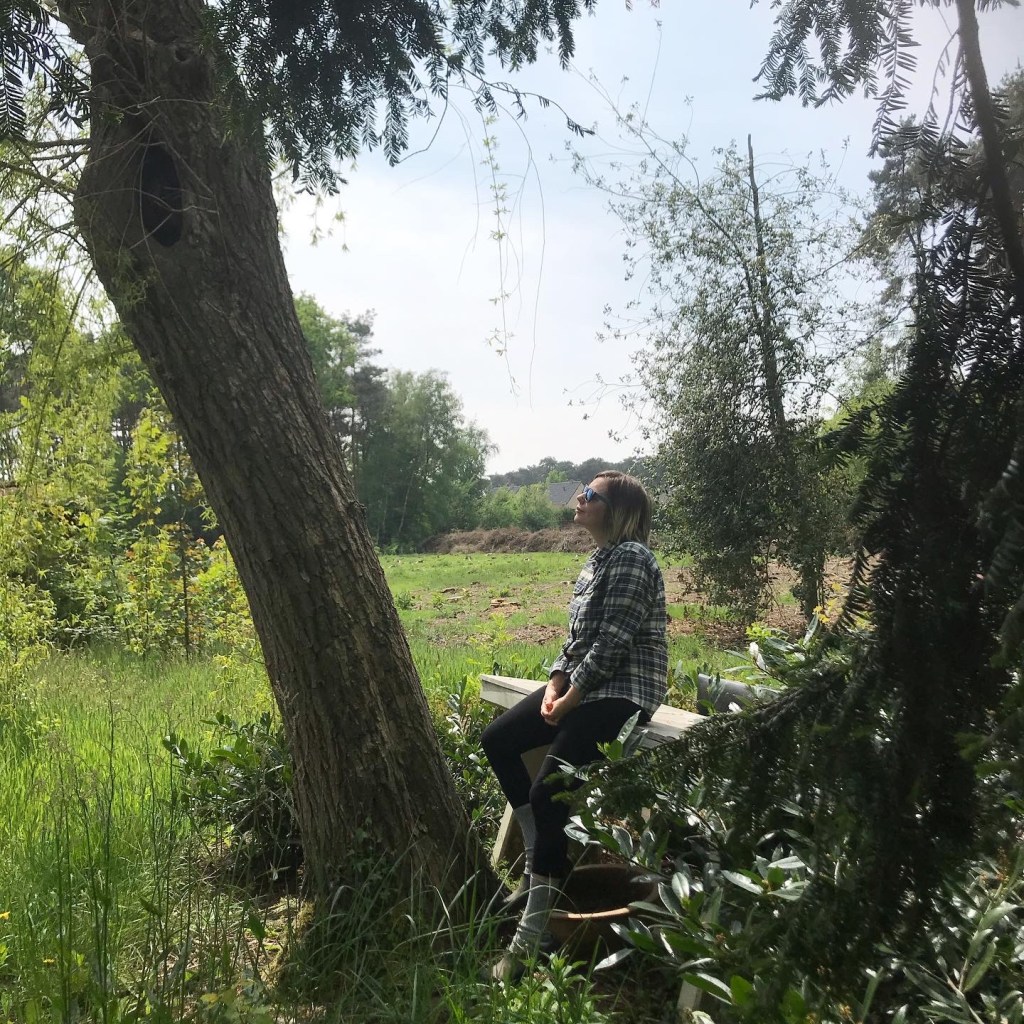
Why willow?
Yes, there is a willow package in the crowdfunding campaign. But willow is also an invitation to something more tangible: meeting other plant people, sharing creative practices, taking a short walk, talking, reflecting, and being cosy together. Not just catching up, but experiencing something together.
These sessions are small moments of connection before a series of physical workshops in Belgium and the Netherlands later this spring and summer.
Willow is also central to Part A of the upcoming book. In that section I explore personal stories and reflections written over the past 5–7 years, rewritten many times while searching for meaning. Writing, for me, often becomes a kind of self-extraction of experiences, trying to find sense, magic, or understanding in what has happened.
Multispecies kinship and entanglements
Part A is probably the most difficult part of the book. Harder even than my fiction. I share fears, mistakes, and moments of arrogance I had … and still have and make. There are threads running through it: willow, willow women, landscapes of the Low Countries, and the strange ways plants become companions in meaning-making.
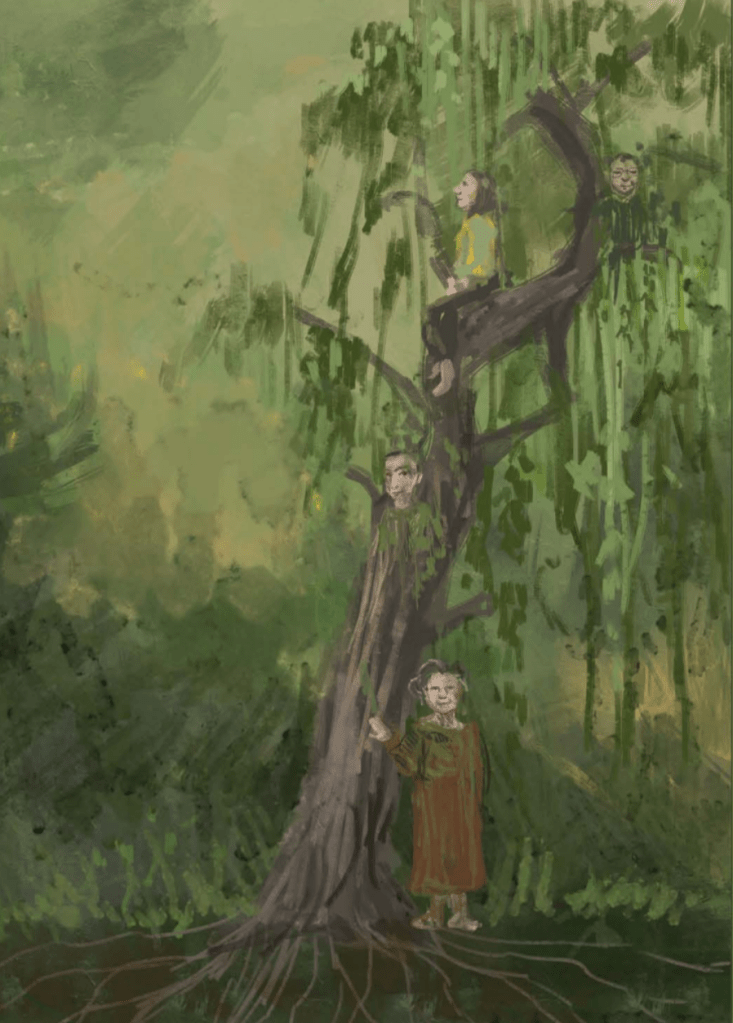
One decision I made for the book was not to include a traditional author photograph. Instead, I asked Mary Feywood, a young Dutch artist who is also creating the book’s cover illustration and graphic design, to draw a multispecies family portrait. Mary’s work reaches more than 30,000 people on Instagram, and her sensitivity for ecological storytelling felt like the right fit.
The portrait includes:
- my grandmother
- the willow tree in her garden
- my brother and father
- the garden that is now my brother’s
All of them appear in the book in different ways. In fact, I probably write more about the willow than about my brother.
While working on this, I also realised something that felt strangely heavy: our family tree ends here. We are a small family. My brother and I do not have children. My father was an only child. Our branch of what is apparently an old village family will end with us.
At first this felt like a kind of loneliness. But slowly it began to feel like a transformation.
Perhaps there will be no next human generation in this line. But there may be stories. Practices. Invitations. Templates for others. In Part B of the book I share exercises and frameworks that can travel further than I can.
Maybe this book, and this portrait, is another kind of legacy. I hope to share soon the final multispecies family portrait that will be featured on the back of the book.
Multispecies family portrait as part of the DIWO sessions
In the Writing(with)Willow sessions, I’ll keep the familiar structure for people who are new to writing(with)plants: slow attention, reflection, and writing. But we will also dive specifically into willows of the Low Countries, and my own associations between pollarded willows and women, care, labour, and landscape.
And this time we will also draw or cut and paste.
Inspired by a beautiful session on multispecies self-portraiture by elin kelsey and her daughter Esme Johnson during the Ecomythology Winter Symposium, we will experiment with collage and pastiche.
Instead of only writing, we will spend time creating a multispecies family portrait.
If you join, please consider bringing or collecting:
- old magazines, brochures with photographs and images of plants, animals, landscapes, fungi, humans or other species
- paper
- objects from local ‘nature’ that you can play with (whatever that means for you)
- scissors, paste
- drawing pencils
- …
We will use them to build our portraits together during a 20-minute collage exercise.
- Who belongs to your family if we expand the idea of kinship?
- Which species shaped your life?
- What landscapes raised you?
These sessions are small explorations of multispecies kinship and entanglements.
Maybe our family trees do not only grow through humans.
I hope you can join one or both Writing(with)Willow sessions on March 22 and April 12. And perhaps later this year in one of the live workshops in Belgium or the Netherlands. You do not have to be in the Netherlands or Belgium to join the free online willow sessions.
If you feel drawn to this work, you can also support the crowdfunding campaign for the book and help bring these stories and practices into the world.
Last two online sessions hosted by Wendy before summer
Will you join us? The session is for free, but you have to register beforehand to receive a zoom link: https://us02web.zoom.us/meeting/register/Can4w2TKQne23OOO-DMY4A#/registration
The link of the second session will be shared in the writing(with)plants newsletter (end of March).
To learn more about writing(with)plants and receive announcements for other writing(with)plants session, please sign up to our free newsletter by clicking here. More information about the other writing(with)plant sessions that will be hosted in the coming weeks (juniper, spruce, olive tree and cedar) will be shared in the next writing(with)plants newsletter(s).
Discover more from Stories from the Wood Wide Web
Subscribe to get the latest posts sent to your email.
 Stories from the Wood Wide Web