A Growing Gathering Around Plants and Stories
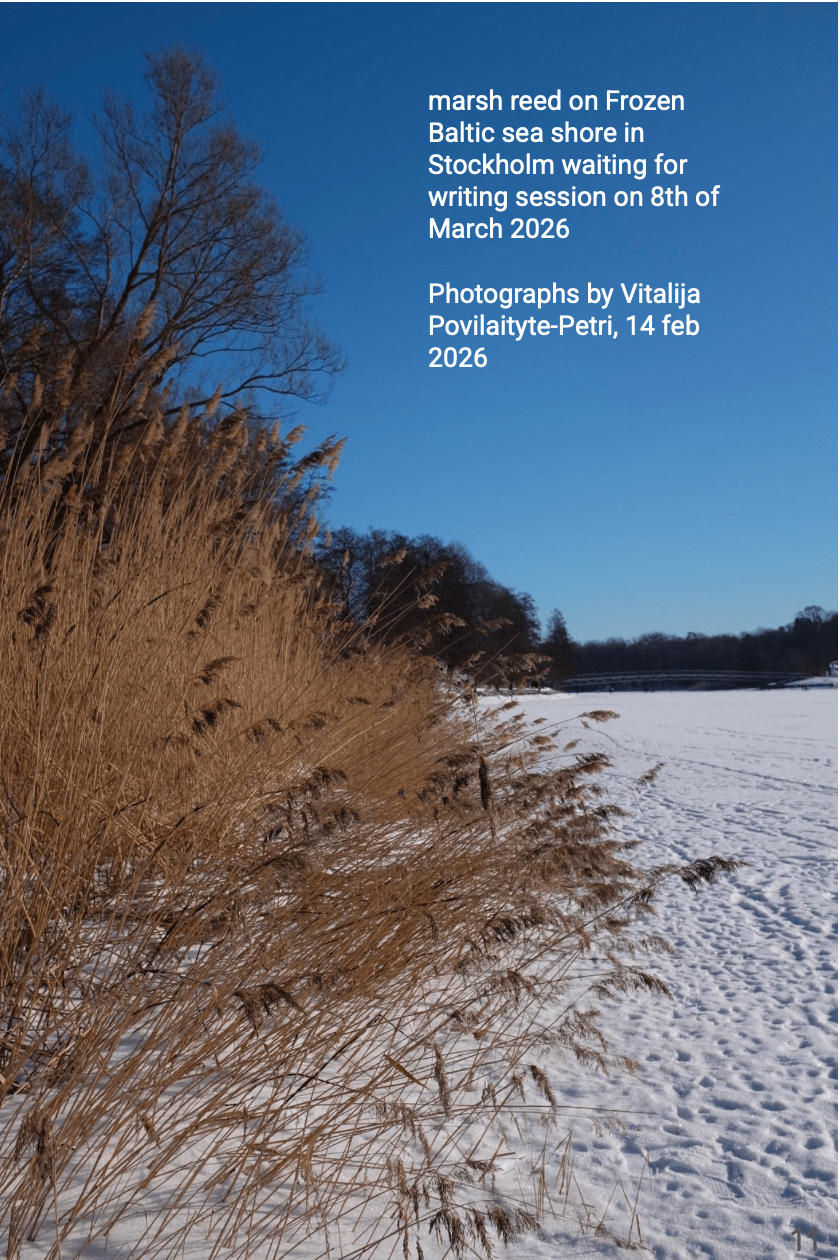
The latest Writing (with) Plants session brought together a large and geographically diverse group of participants for a two-hour online gathering dedicated to marsh reeds and the myth of Syrinx. I facilitated this session, with a guest contribution from philosopher Michael Marder and with technical assistance of Lisa Sattell. As other writing(with)plants sessions, this session combined philosophical reflection, ecological discussion, and creative writing.
Around 29 Participants joined from across Europe, North America, and Asia, including the UK, Belgium, Denmark, Poland, Spain, Portugal, Germany, Norway, Canada, the United States, and China. In the opening chat introductions, many described their motivations for joining: curiosity, a desire to reconnect with plants, interest in ecofeminism, or professional engagement with botany, herbalism, or environmental art.
This session marked the first time the workshop was held with such a large group, which influenced how the conversation unfolded. To allow everyone to participate, facilitators relied heavily on the chat box and breakout rooms. While this helped create many simultaneous conversations, it also introduced a certain “mud” or messiness, a fitting metaphor for a session devoted to wetlands. Reflecting on this experience, I noted that future sessions will likely include fewer breakout rooms, ideally matching the number of facilitators available to mediate them. We learn every time, about the plants, but also about the methods and way of hosting these spaces and moments.
Writing with Plants: An Ecofeminist Approach
I opened the session by introducing the Writing (with) Plants initiative and outlining the structure of the workshop: a presentation, breakout discussions, a creative writing exercise, and a final sharing session.
The project draws inspiration from ecofeminist thought, encouraging participants to reconsider how plants are represented in stories. Rather than treating plants as passive objects or metaphors for human concerns, the practice invites participants to approach plants as collaborators or co-authors in storytelling.
Several methodological questions guided the discussion:
- How can we write with plants without simply projecting human emotions onto them?
- How does place shape plant stories?
- What relationships exist between plants, animals, landscapes, and human cultures?
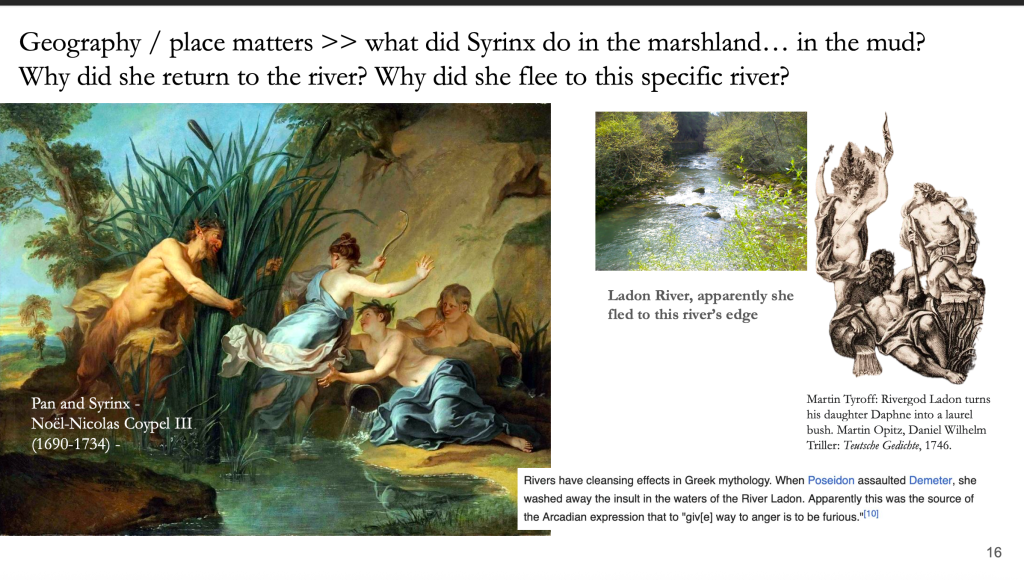
Place matters
The session focused on marsh reeds and the mythological figure Syrinx, drawing inspiration from Michael Marder’s book Metamorphoses Reimagined, which reinterprets stories from Ovid’s Metamorphoses.
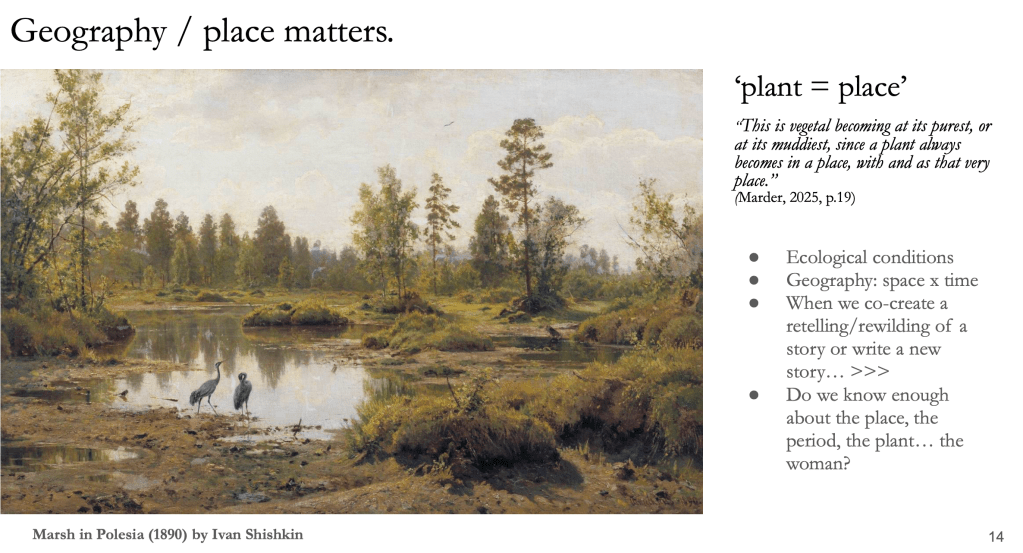
For this session, I created a few more slides, to even emphasize the role of place, how it shapes the plant becoming and constant metamorphosis. In the chapter that we selected from Michael’s book (all registered participants got a PDF from the two-page chapter beforehand), he wrote a beautiful quote about how plant is place.
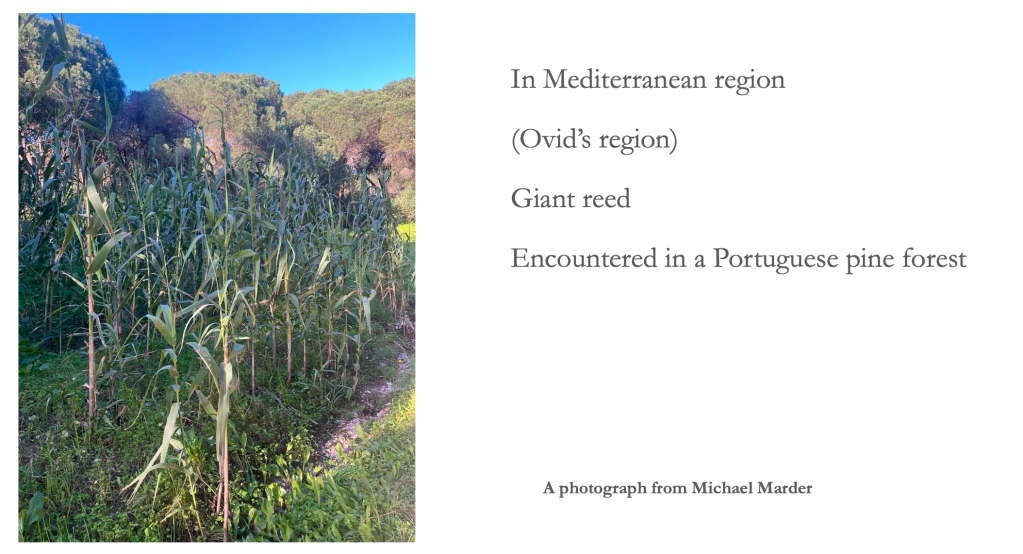
Michael had explained me before that the marsh reed that would star in the myth would be the giant marsh reed that you can encounter in the Mediterranean region, the region where he currently lives, and where also Ovid lived. You can make flutes from these giant reeds. One participant asked about which reeds we were talking, and Michael confirmed the Latin name of the reed in which Syrinx transforms: Phragmites australis.
Revisiting the Myth of Syrinx and Pan
In the second part of the session, Michael Marder addressed the question of why violent or troubling myths, such as the story of Pan pursuing Syrinx, should be revisited rather than avoided.
He suggested that myths often carry deeply rooted cultural biases, including patriarchal and sexist assumptions. Ignoring these stories does not remove their influence; instead, they need to be revisited, interpreted, and “worked through.”
Marder described contemporary reality using the metaphor of a “dump”, a world accumulating ecological, social, and psychological waste. This accumulation blocks processes of transformation that ancient Greeks described through the concepts of metamorphosis and metabolism. Reimagining classical myths, he argued, may help reopen possibilities for change.
Drawing a parallel to psychoanalysis (with references to Freud), he emphasized the importance of “working through/out” the past: revisiting inherited narratives so that they can be transformed rather than unconsciously repeated.
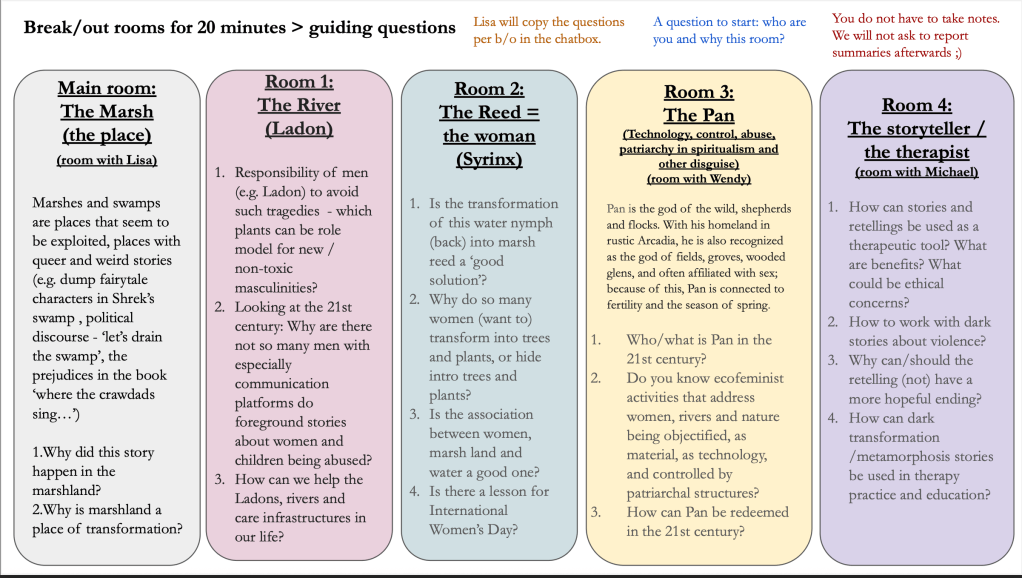
Break/out rooms
For the third part, of the group split the group in five break/out rooms. It was the first time that we used break/out rooms during a writing(with)plant session. Beforehand, I tried to came up with room names and some guiding questions. Here is the slide that we shared with the participants:
Marshlands as Ecological and Narrative Spaces
In one of the breakout discussions, participants explored under guidance of Lisa Sattell why marshlands and wetlands appear so frequently in stories. Thanks to the recent publication by Rick Dolphijn and Irena Chawrilska “On the Femininity of the Swamp. Reading the Monstrous Garden of Fertility, Fermentation, Decay” and their keynote during the ecomythology winter symposium 2026, we had already rich material to prepare this break out room.
Marshes are often portrayed negatively, as eerie, dangerous, queer, weird or morally ambiguous spaces. Popular culture examples such as swamp imagery in films and political metaphors like “draining the swamp” illustrate how wetlands have been culturally stigmatized.
Participants proposed alternative interpretations. Marshes can be understood as ecotones, transitional environments where different ecosystems meet. This is also the big keyword in a summer symposium I am co-hosting in the end of July, in Latvia. Applications are open until April 1st.
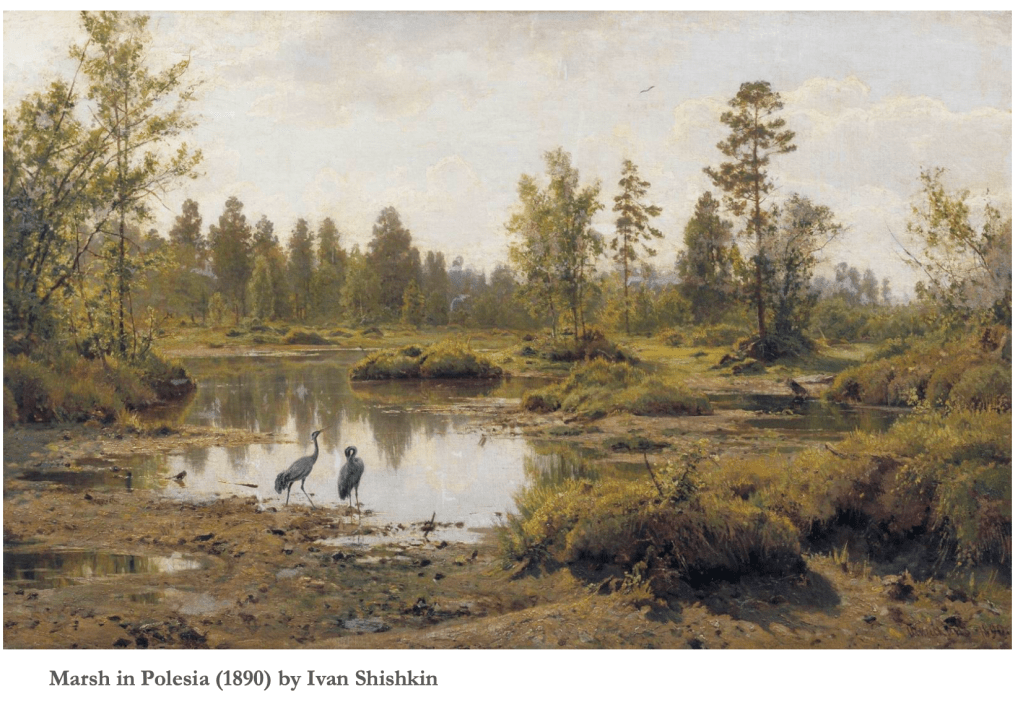
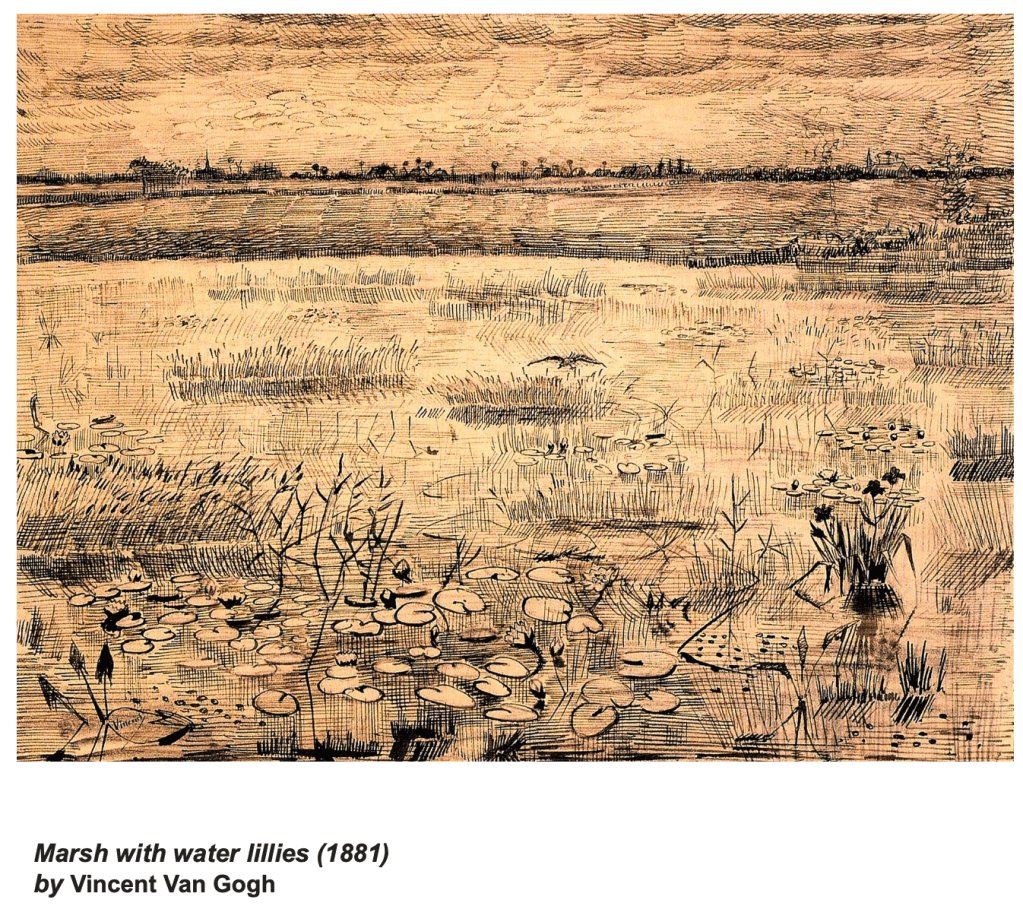
Marshes embody process and exchange, constantly absorbing and releasing water, nutrients, and life.
The metaphor of metabolism emerged repeatedly: just as organisms take in and transform substances, storytelling can involve receiving and transforming experiences.
Ecologically, wetlands are also crucial environments. They are habitats for birds and other wildlife, carbon-storing ecosystems and natural water purification systems. One participant described wetlands as the “kidneys of the Earth,” filtering toxins and sustaining life. Someone in the chat box suggested a complementary metaphor: wetlands as placentas, nurturing new forms of life and transformation.
Invasiveness, and Plant Narratives
The chat discussion also opened space for ecological debate about marsh reeds (Phragmites australis). Participants from North America described how the species is sometimes treated as invasive and removed in biodiversity management programs.
Others referred to alternative perspectives from ecological writers such as Robin Wall Kimmerer, who encourages reconsidering how we frame so-called invasive plants. Pete Yeoh, one of the participants, who has been doing a lot of work on plant thinking (check out his Substack account: Plantae convivae ) challenged also this narrative that we see in some biodiversity management programs. In a previous session on Giant Hogweed, which is also considered as ‘invasive’, he has been providing a lot of thought on this idea of ‘invasive’, this ‘othering’, this ‘villainzing’ to evoke new ways of thinking to plants. He recommended the book Invasive Plant Medicine: The Ecological Benefits and Healing Abilities of Invasives by Timothy Lee Scott, which explores how many invasive plants can also serve as vital ecological healers, linking this with the metaphor of kidneys.
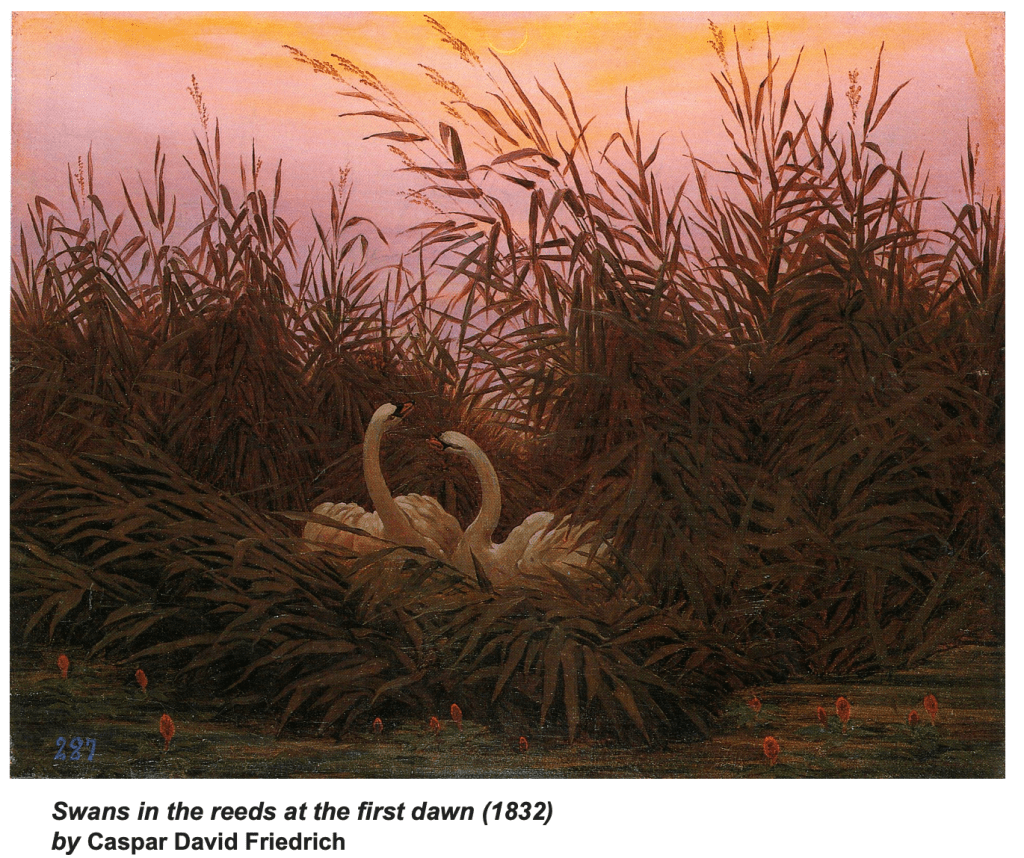
This exchange highlighted tensions between ecological management practices, cultural narratives about plants and the alternative ways of valuing plant life. The discussion also included literary and cultural references, including poetry by Derek Walcott, artistic uses of reeds as writing tools, and musical traditions connected to wetlands. Marsh reed is a a family of plants which (can) generate a lot of meaning and stories.
The Creative Writing Exercise: Becoming a Reed
In the last part of the session I invited participants to “shapeshift into a marsh reed” and write from the plant’s perspective. Prompts included questions such as:
- Where are you rooted? What sounds, smells, and beings surround you?
- What were you before becoming a reed? What are you becoming now?
- What does music mean to you? What is technology?
Another prompt encouraged participants to imagine what the marsh is digesting and what transformations might emerge from these processes. I hoped that this exercise encouraged participants to explore plant perspectives while remaining attentive to ecological context and place.
Sharing Stories from the Marsh
In the final ‘forum’ moment, several participants shared texts and reflections. One poetic piece described reeds standing in a northern wetland at the end of winter, filtering wind and water while providing shelter for animals and participating in seasonal cycles leading toward spring. Another piece portrayed a plant growing near a river, sensing wind, birds, and hidden water sources. The text reflected on the plant’s changing status, from once being valued as a food source to now being labeled an “invader.”
These contributions illustrated how writing with plants can reveal layered histories of landscape, ecology, ethics, biases, and human perception and associations. In the closing conversation, Michael Marder reflected on how plant stories unfold across different temporal scales: plant time, ecological time (and let me add river time), and seasonal rhythms that differ from human narratives. The question came back: How can we even let the plants more ‘speak’ in such sessions? A conversation to be continued…
Looking Ahead
Despite the logistical complexity of managing a large online gathering, with many chat contributions and breakout conversations, it was really nice to see the muddy richness that emerges when people from diverse disciplines and countries gather around plants and stories.
The experience also provided some practical lessons for me as a facilitator. Future sessions with more than 15 participants will likely feature fewer breakout rooms, ideally matching the number of available facilitators, allowing for deeper and more guided conversations. We planned more sessions (with willow, juniper, olive tree, spruce and cedar again) in the coming weeks before the big summer break, here at the northern hemisphere, which will be communicated in our newsletter and our Instagram profile.
Gratitude
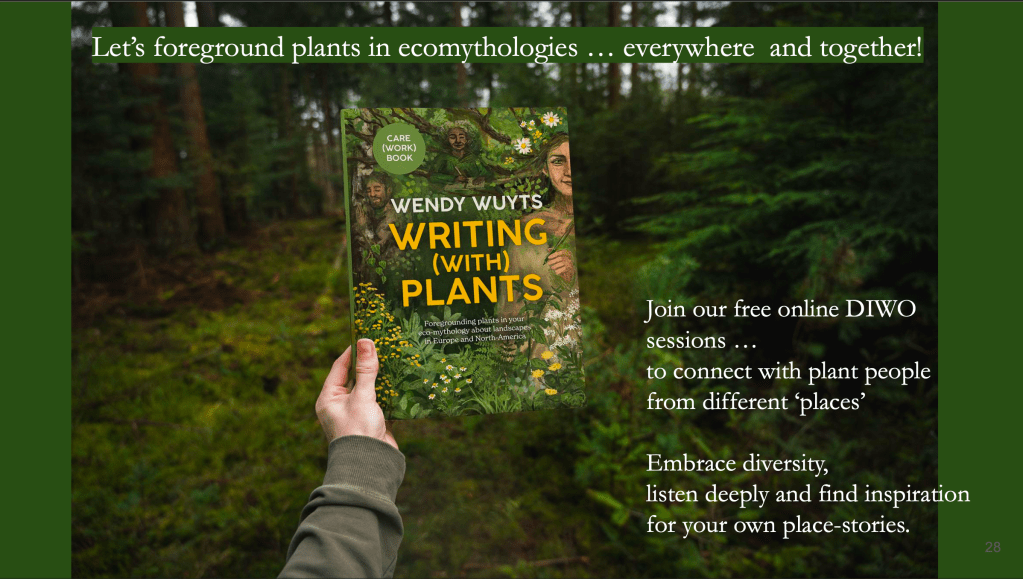
If you feel grateful for this session and/or the blogpost, please support our current crowdfunding campaign. All the work (preparation, hosting, e-mail communication, newsletter) is done by volunteers. We want to challenge the unpaid nature of this care work and the crowdfunding campaign is a part of a series of intervention to revalue this care work and build some more structures, to allow even more creative juices to flow. Your small contribution would mean a lot to us: https://www.ulule.com/writing-with-plants-the-book
Discover more from Stories from the Wood Wide Web
Subscribe to get the latest posts sent to your email.
 Stories from the Wood Wide Web