Last week, together with Vitalija Povilaityte-Petri, I facilitated a design workshop in Antwerp, Belgium, with Master’s students in architecture, interior architecture, product development, drawing, and the arts.
The overarching theme? Be+longing. There were eighteen workshops running in parallel. Ours explores apothecaries, nature-based health, and design.
Day Two: Learning From the Forest
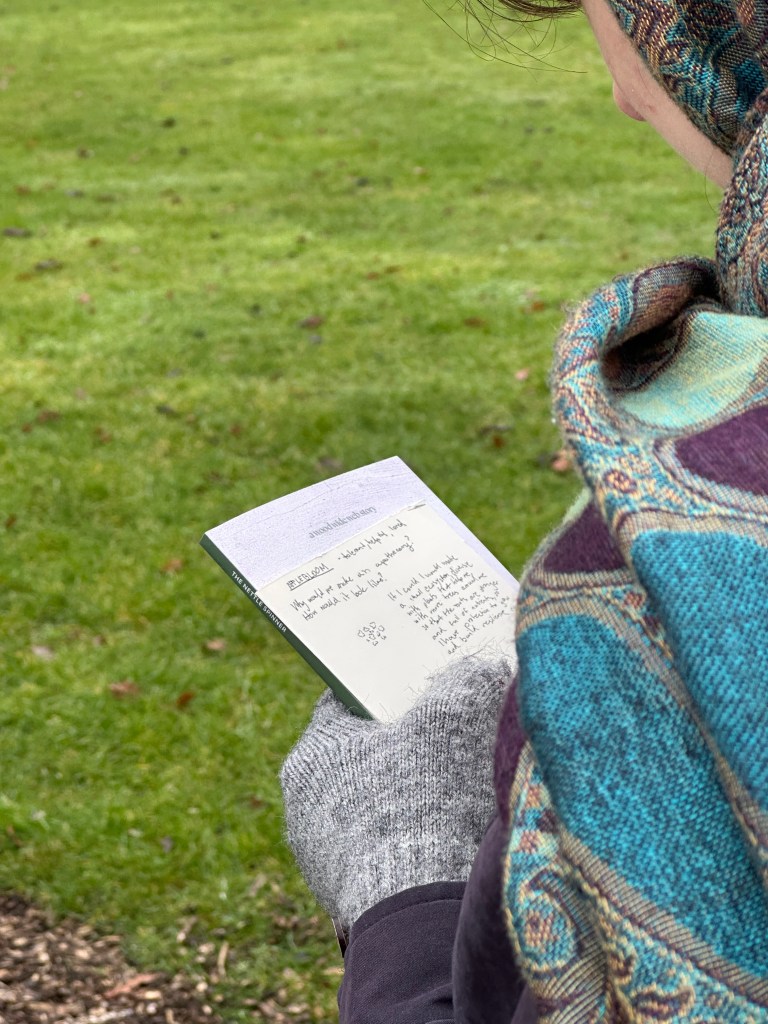
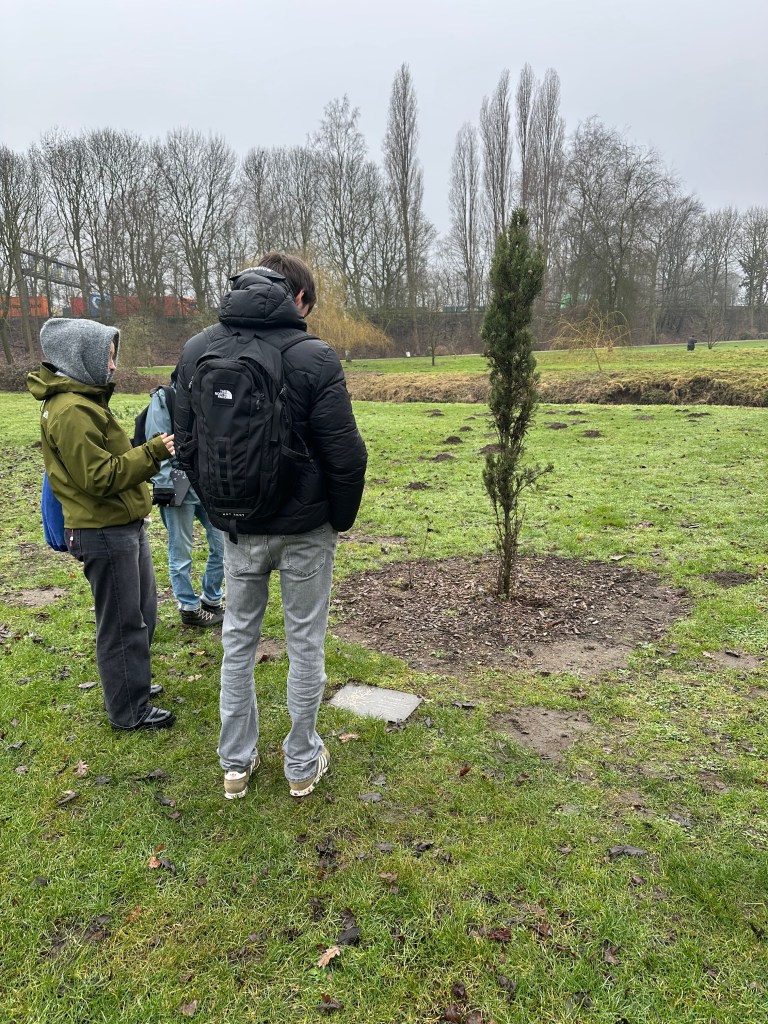
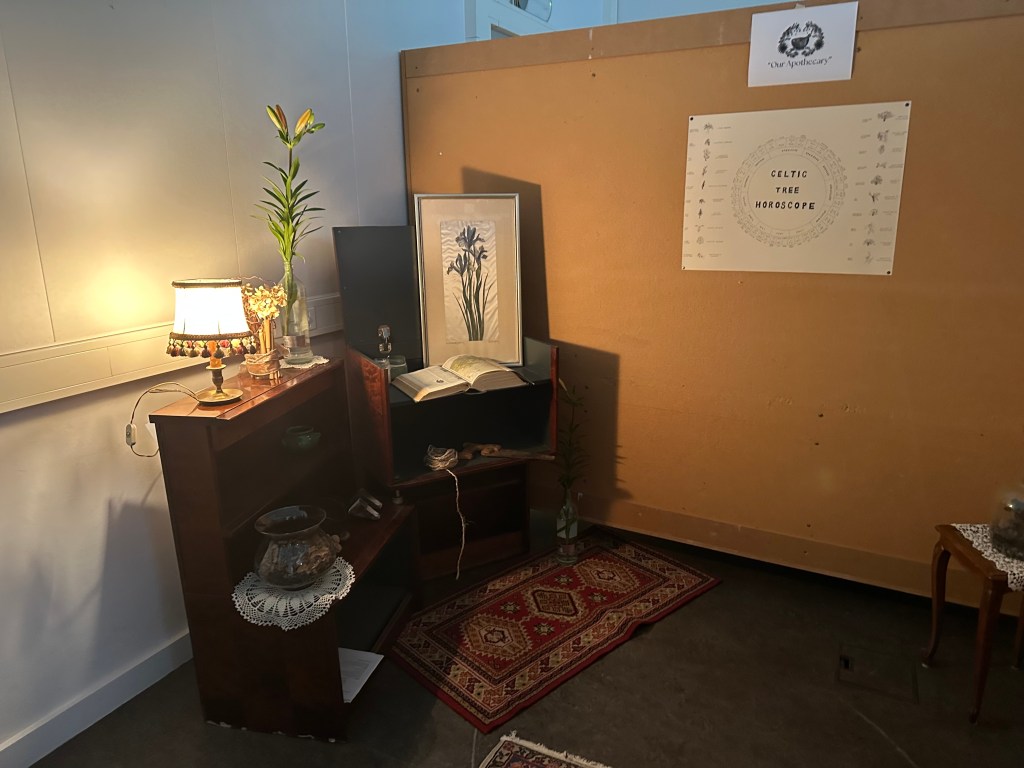
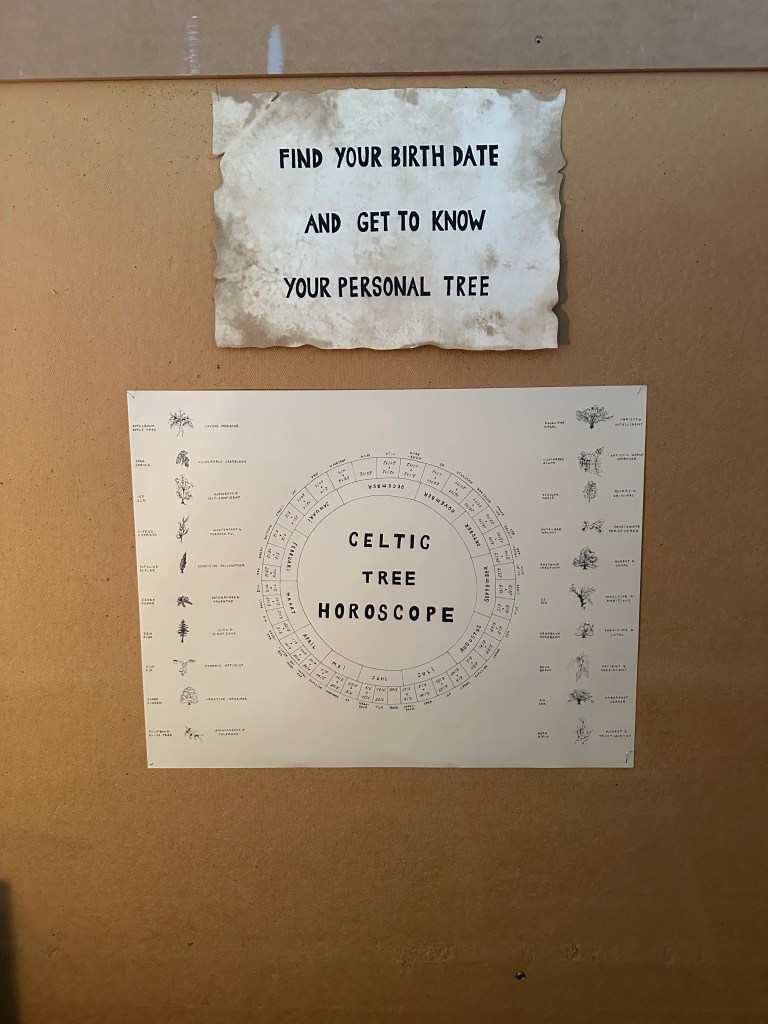
On Tuesday, the second day of our five-day long workshop, we left the classroom behind. In the morning, I guided a short forest bath in Rivierenhof. At the end of the forest bath walk, we landed on a grass field where they had planted trees in a circle. There was an information board about the Celtic tree horoscope and that the Celts have been here. You can see which tree belongs to you based on your birthday.
I invited students to imagine a conversation with their Celtic birth tree about health and belonging. I thought it was interesting to observe the different trees in that circle and to visit the different students and their Celtic birth tree.
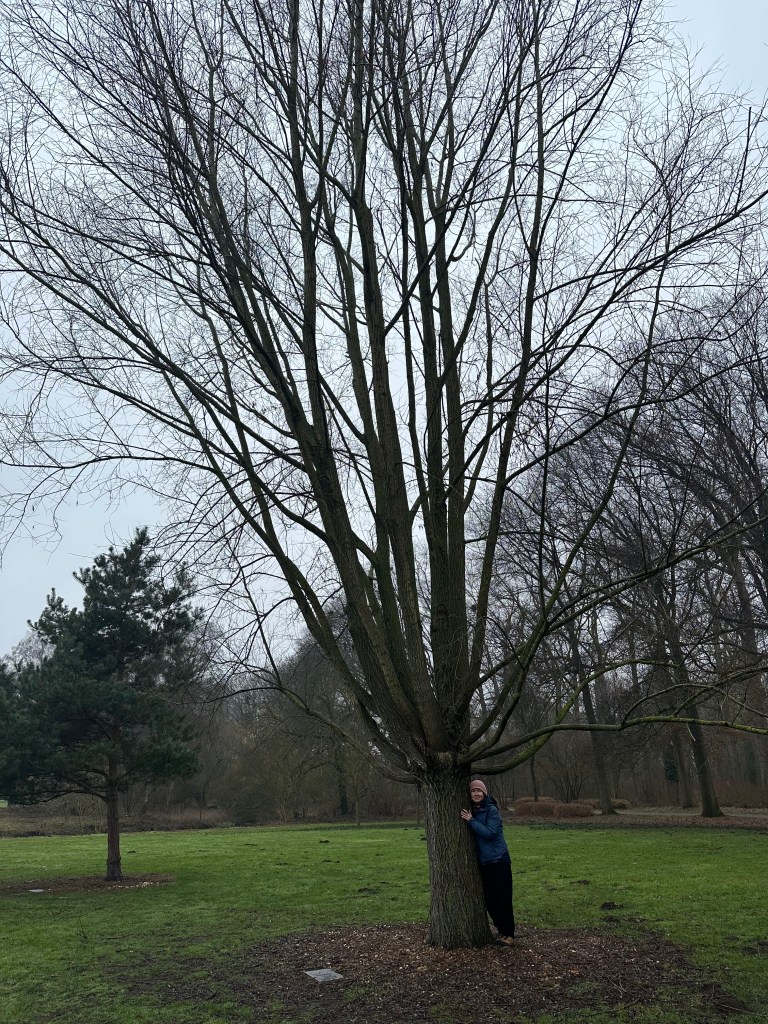
Some trees planted according to the Celtic tree horoscope stood tall and dominant. The willow, for example, which was apparently Vitalija’s Celtic birth tree, thriving in watery soil, seemed powerful and at ease.
The cypress, however, was small. Almost fragile. The students connected with the cypress began asking:
- Was it planted later?
- Does the landscape not suit it?
- Does this tree not belong here?
- Should we even judge a tree by its size?
- Is bigger the same as healthier? More successful?
When Plants Use Us
In the afternoon, Vitalija introduced students to local plants in Rivierenhof, Antwerp.
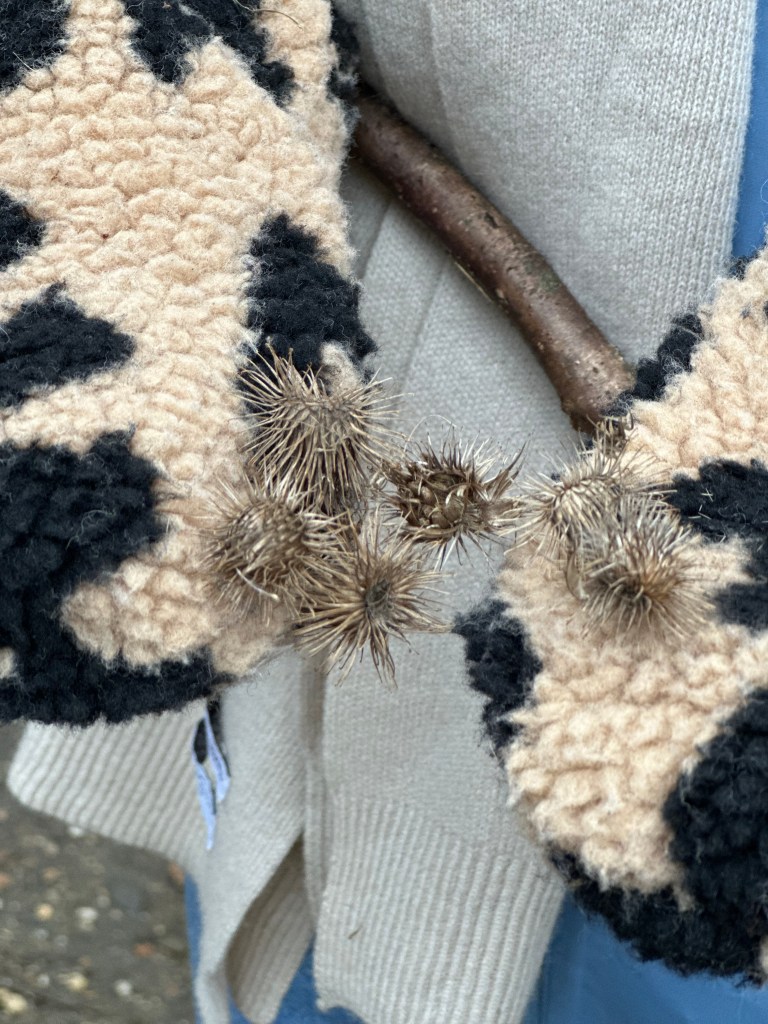
“Sometimes plants are using us too,” she said. She let the students play with burdock, a classic example in biomimicry, known for the invention of velcro… and perhaps the burdock was also playing with us.
For us, designing workshops means creating experiences where students observe before they conclude. Where they interact before they define. The more you observe “nature” (in all its layered meanings), the more you realize how unstable our categories are. Trees. Mushrooms. Nonhuman animals. Health. Belonging.
The labels start to blur.And with that blur comes confusion. But perhaps confusion is not a weakness. Perhaps confusion is where innovation begins.
Do We Need More Humility?
The deeper the conversations went, the more I sensed something essential. We might need more humility. More willingness to admit:
- We don’t always know.
- We are still learning.
- We are often under-informed.
- We are entangled in systems we barely understand.
During lunch, I had a rich conversation with architecture students about the need for further decolonization of architectural education. The philosophical, political, personal, and practical threads intertwined naturally.
This is what happens when you give space for critical thinking. Students open up. And so do we.
Transforming a Classroom Into an Apothecary
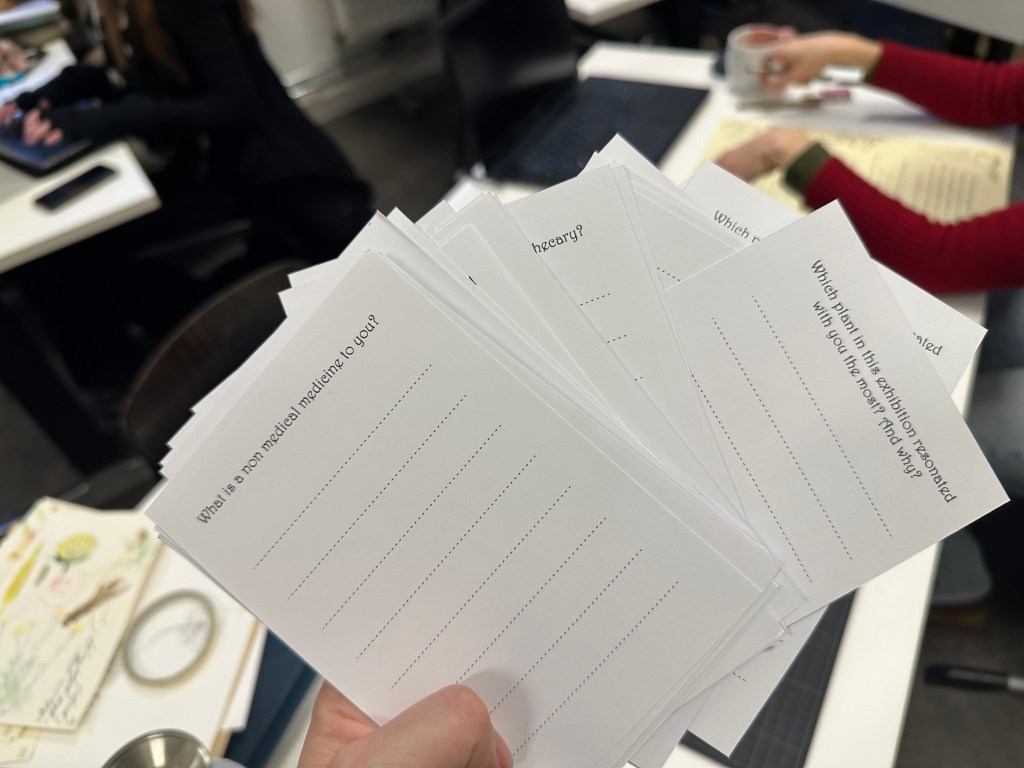
Later in the week, we moved back inside the university and transformed a classroom into an apothecary.
We challenged assumptions:
What should an apothecary look like?
Who is it for?
Who benefits?
Who pays?
No design without:
- Value creation
- Cost analysis
- Ethical reflection
Because design is never neutral.
The Experience They Built
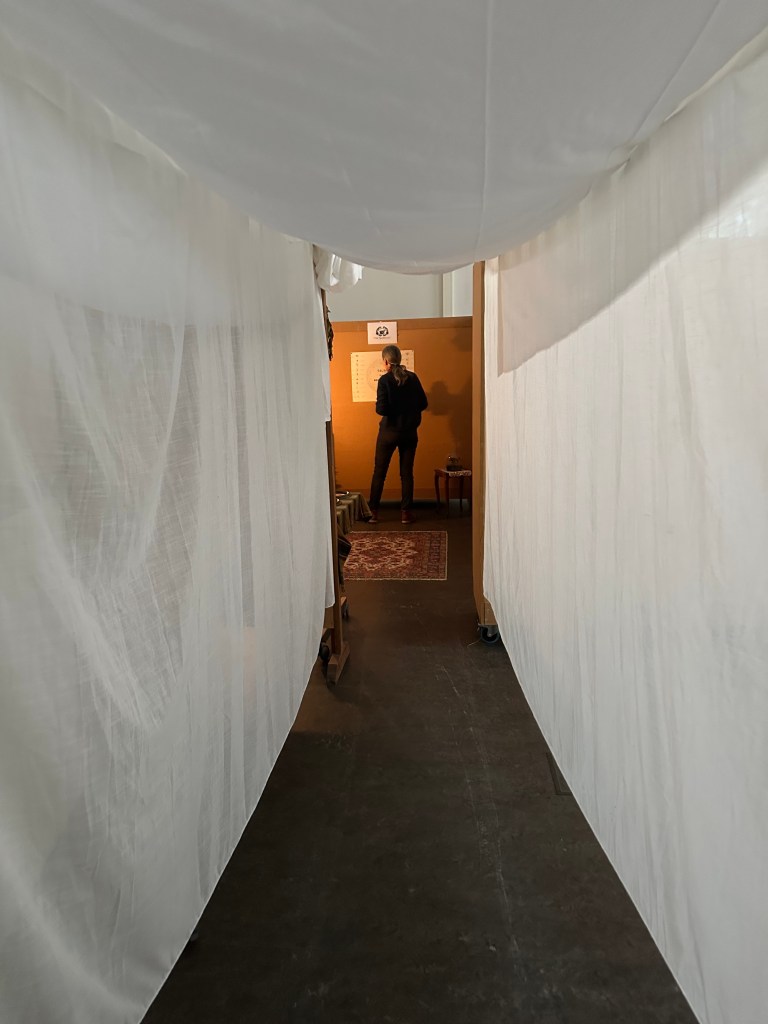
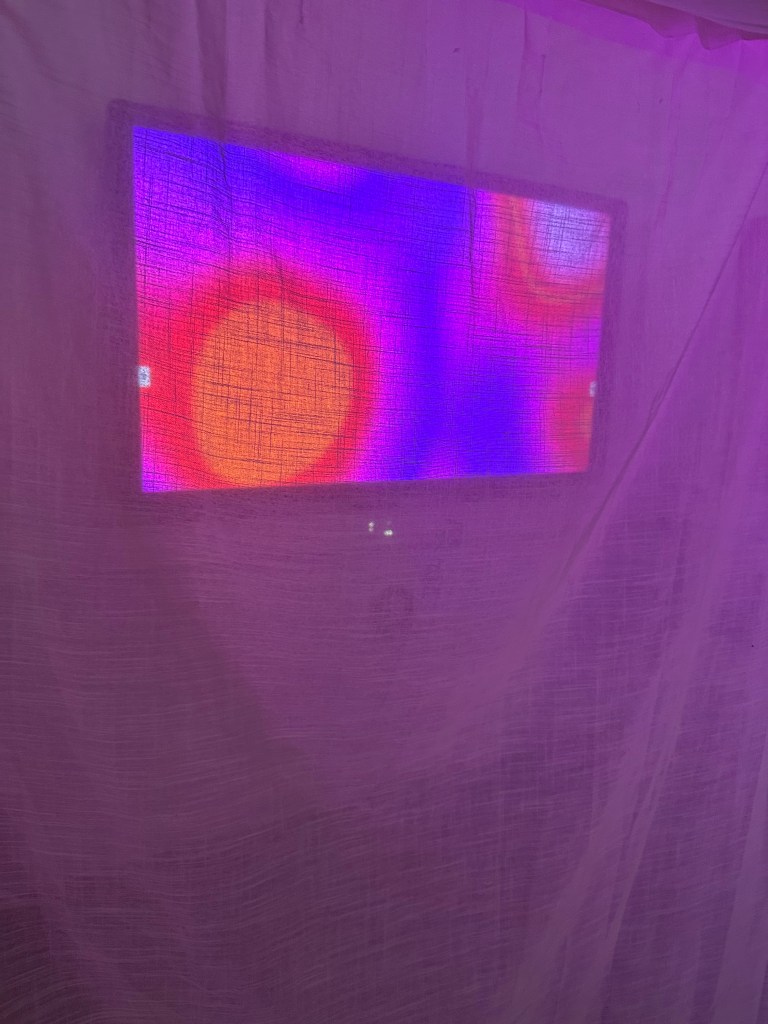
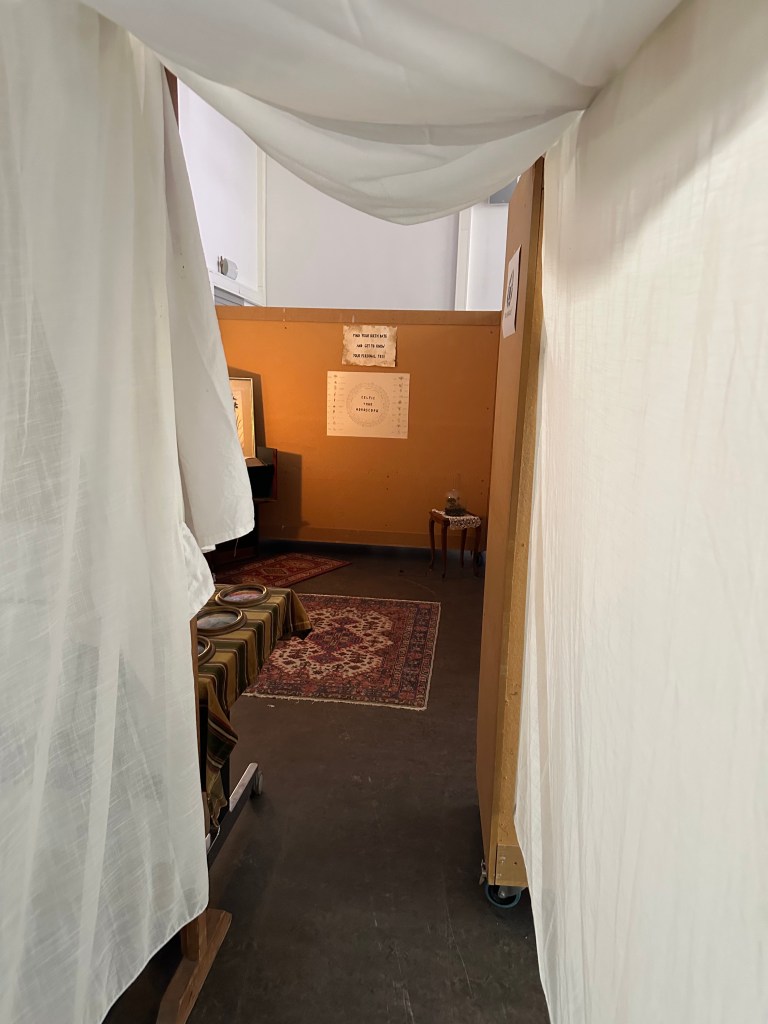
After a week of co-creation, the students built an immersive space.
Visitors described feeling:
- “Zen”
- “Like I’m at my grandparents’ home”
- “I wish we had a room like this at university to de-stress.”
Among hundreds of visitors, we became known as “the room with free halal cookies and tea.”
I’ll take that as a compliment.
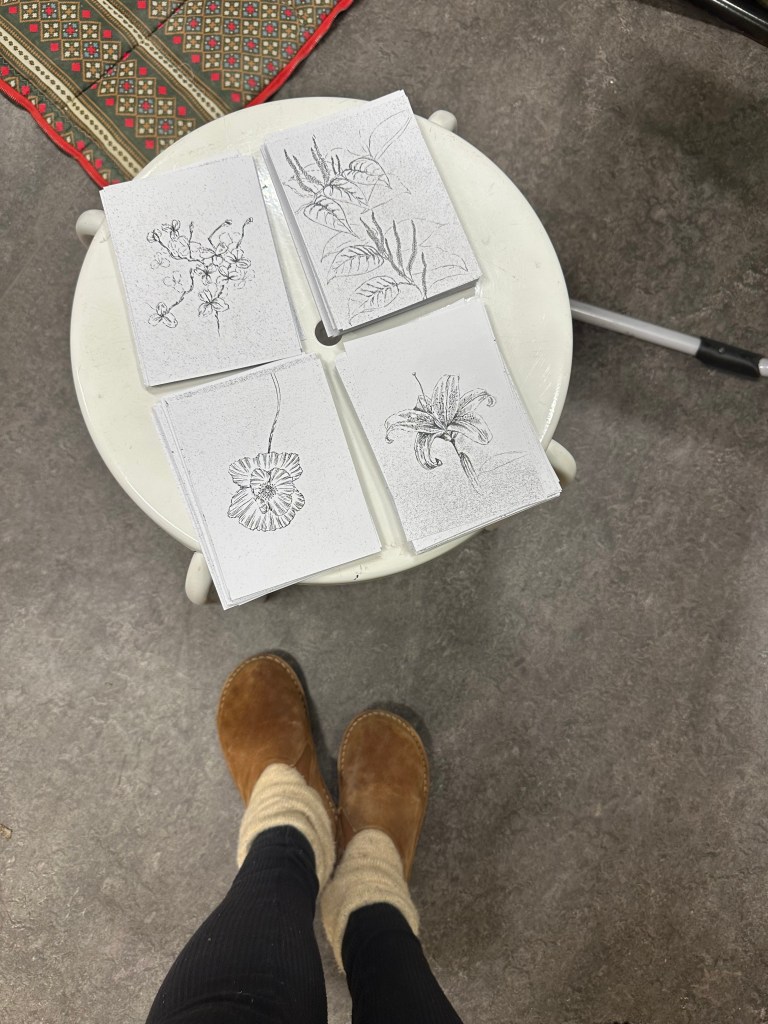
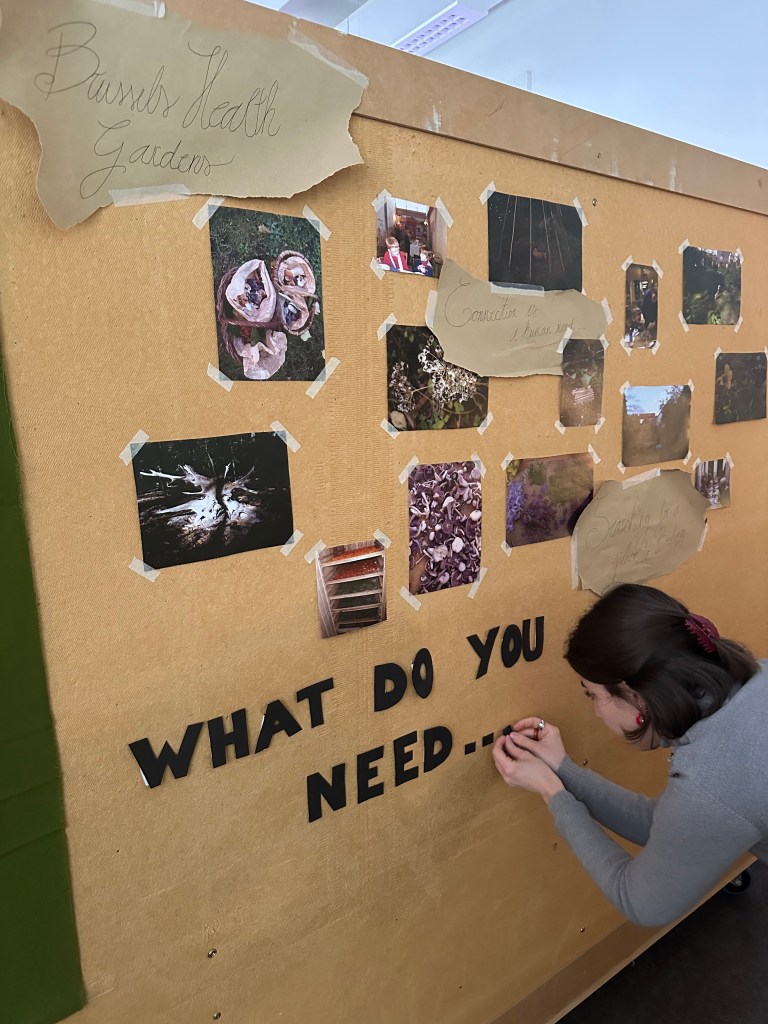
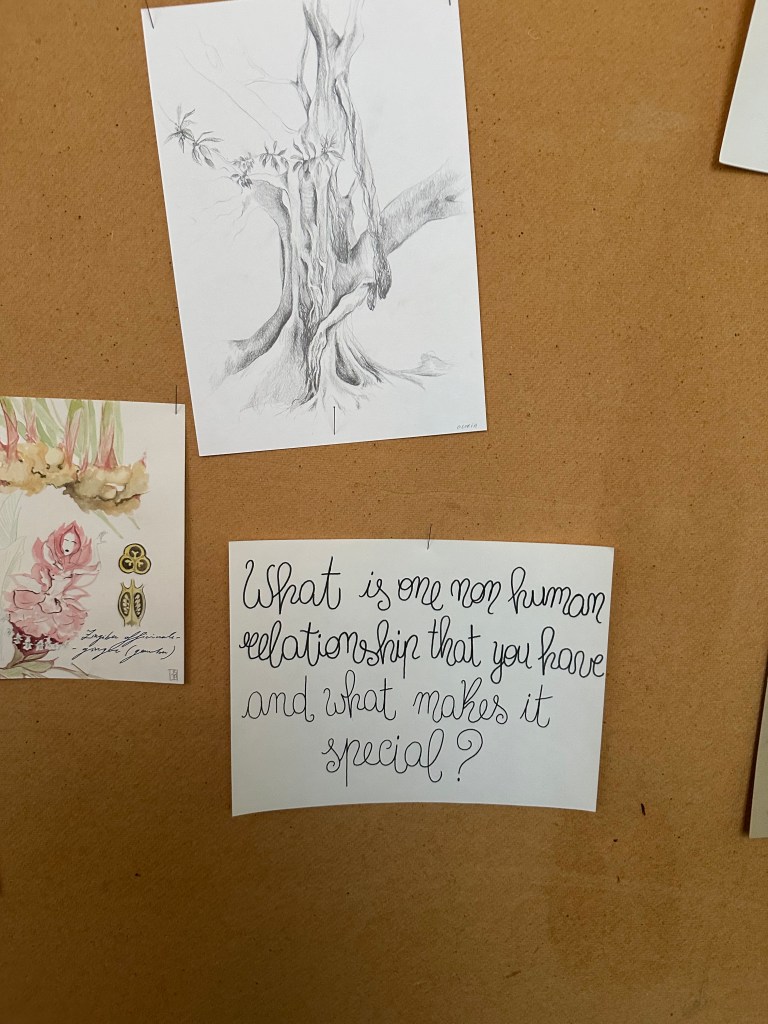
The walls were covered with drawings, notes about plants, reflections on affordable medicine. A layered story emerged.
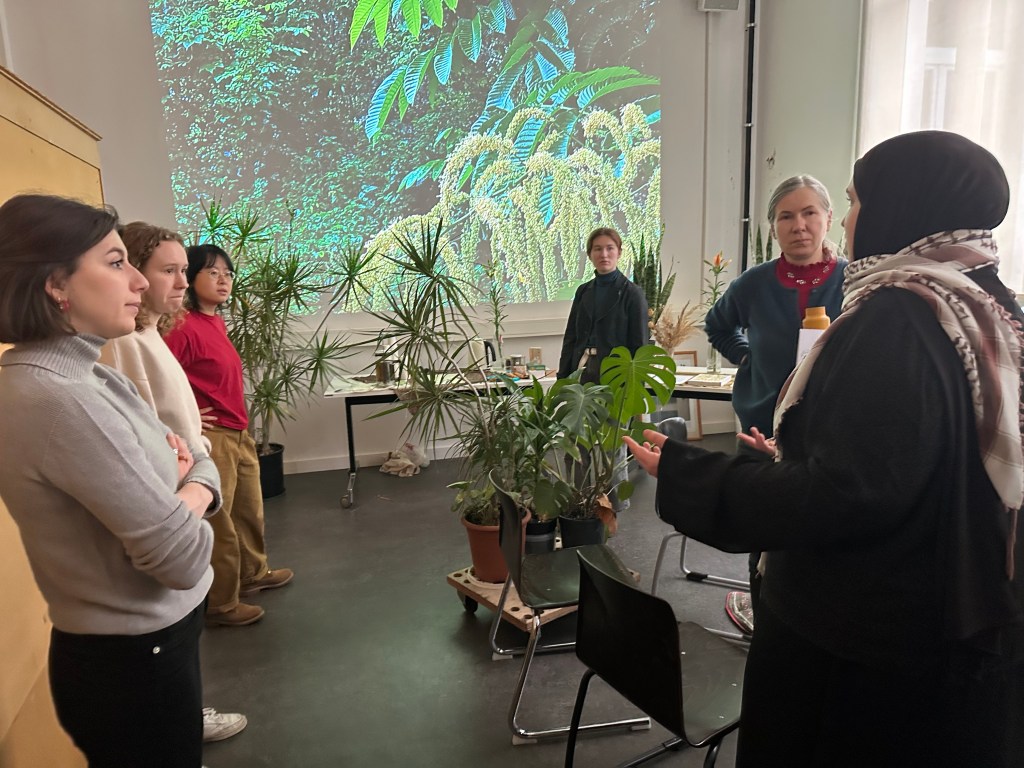
Beyond the Binary: White Pharmacy vs. Alternative healing Space
One key tension we explored was spatial narrative.
Visitors entered a “white” pharmacy, which looks clean, sterile, clinical.
Then they moved into alternative rooms focused on plants, tea, and embodied learning.
One student raised a critical concern:
Are we unintentionally creating a binary?
White pharmacy = bad.
Alternative healing = good.
That question mattered.
We do not want to villainize sterile pharmaceutical spaces. They save lives. They matter. There is a value in these spaces.
Instead, we aimed to raise awareness about diversity, invisible infrastructures, and logistics. About complexity rather than opposition.
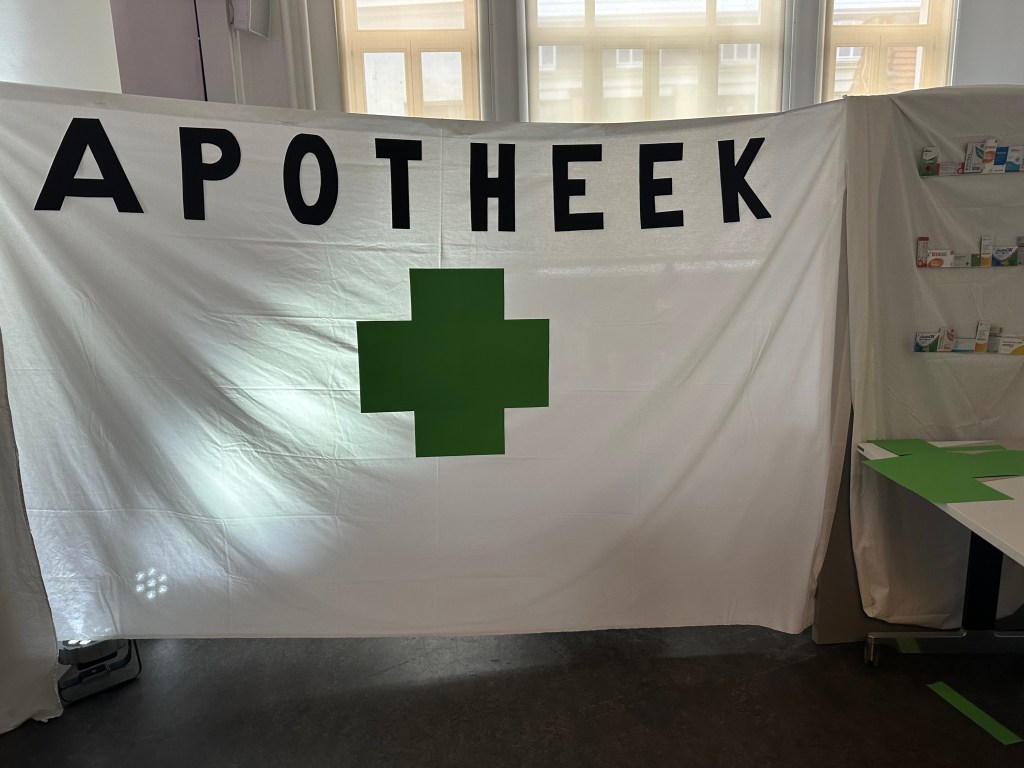
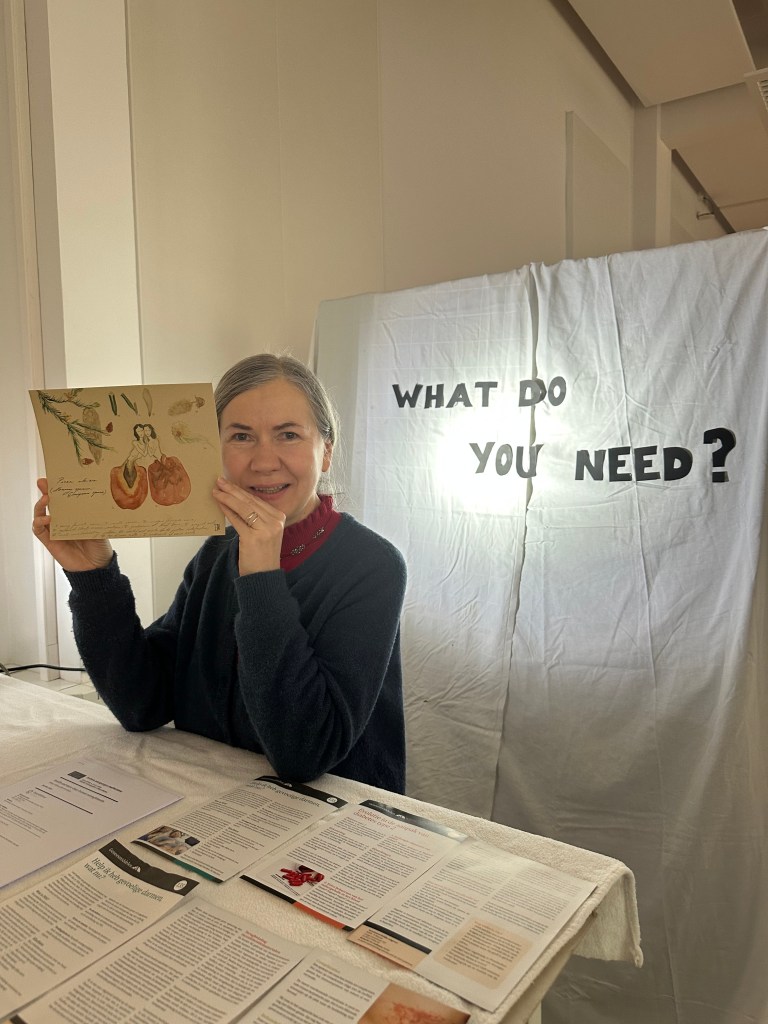
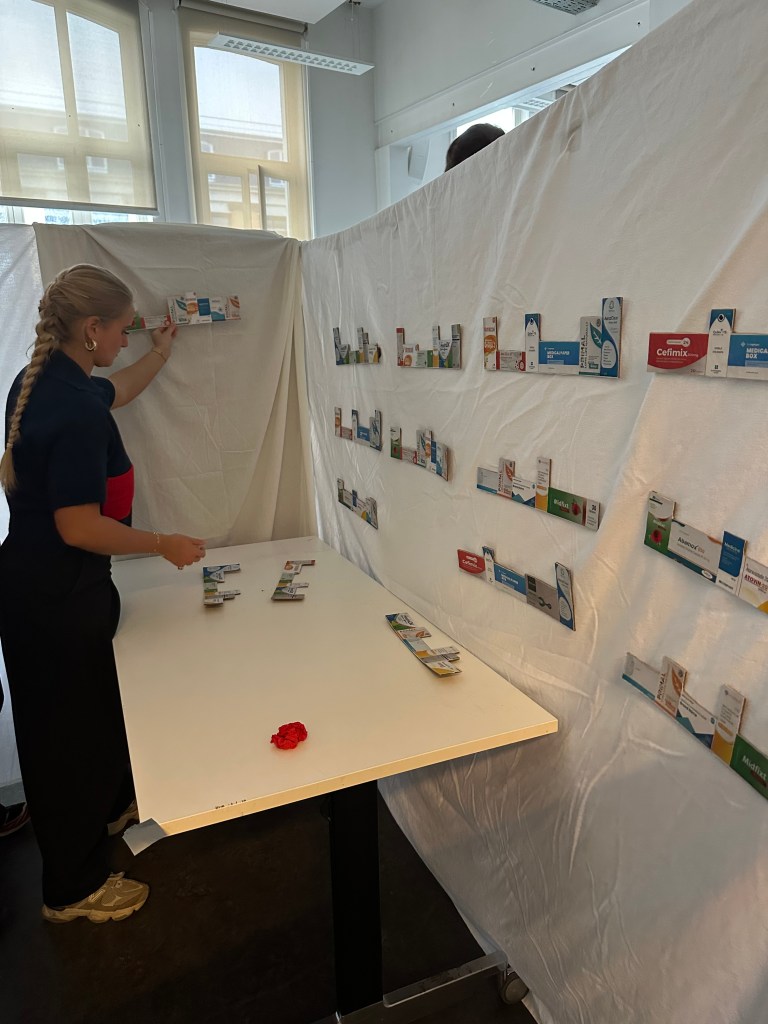
We also played with the ancient idea of pharmakon:
medicine that can become poison.
Romanticizing nature can be as problematic as blindly trusting sterile modernity.
Financial Literacy, Volunteers, and the Self-Help Society
We talked openly about budgets. Exhibition costs. Real-world sustainability.
What would such a space cost outside the university?
Who maintains it?
Volunteers? Paid staff? NGOs competing for limited resources?
I’m skeptical of simplistic calls for “more volunteers to care for green spaces.” In a hustle culture, profit-oriented economy, and self-help society, where does that time come from?
We discussed privilege. Care work. Infrastructure.
As a millennial speaking with Gen Z students, I asked:
Who here has children? (None.)
Then we discussed:
- Caring for elderly parents
- Caring for children
- Earning income
- Maintaining green sanctuaries
- Supporting community mental health
How do we manage all this?
Discomfort was part of the learning.
Experts, Plants, and Responsibility
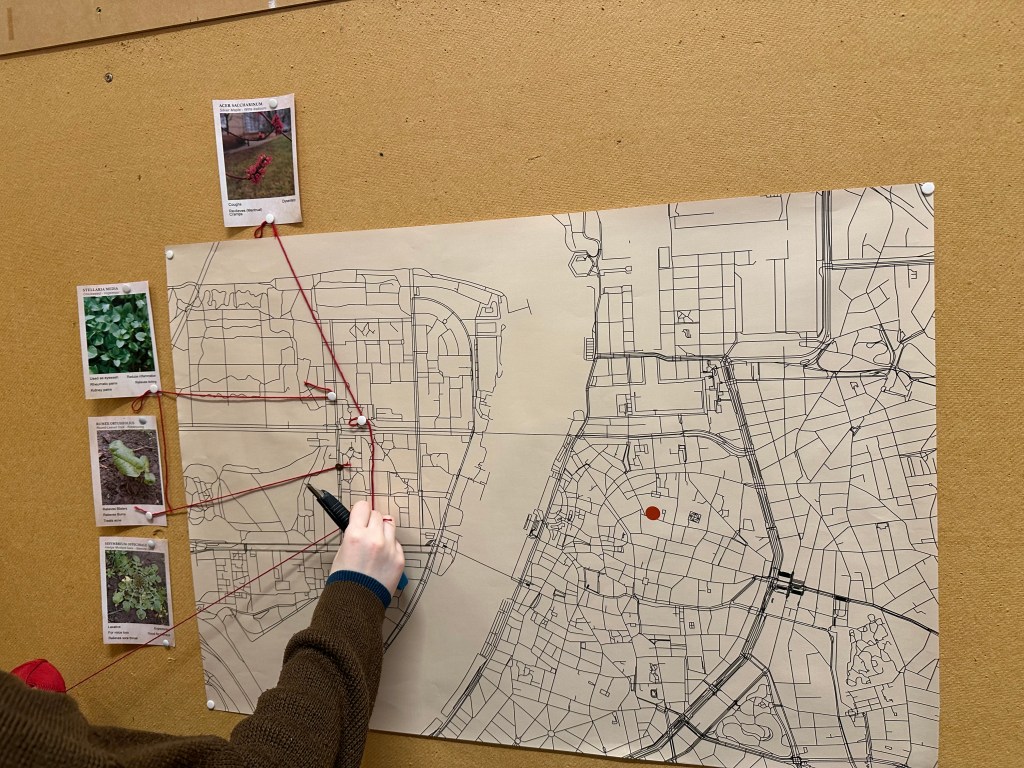
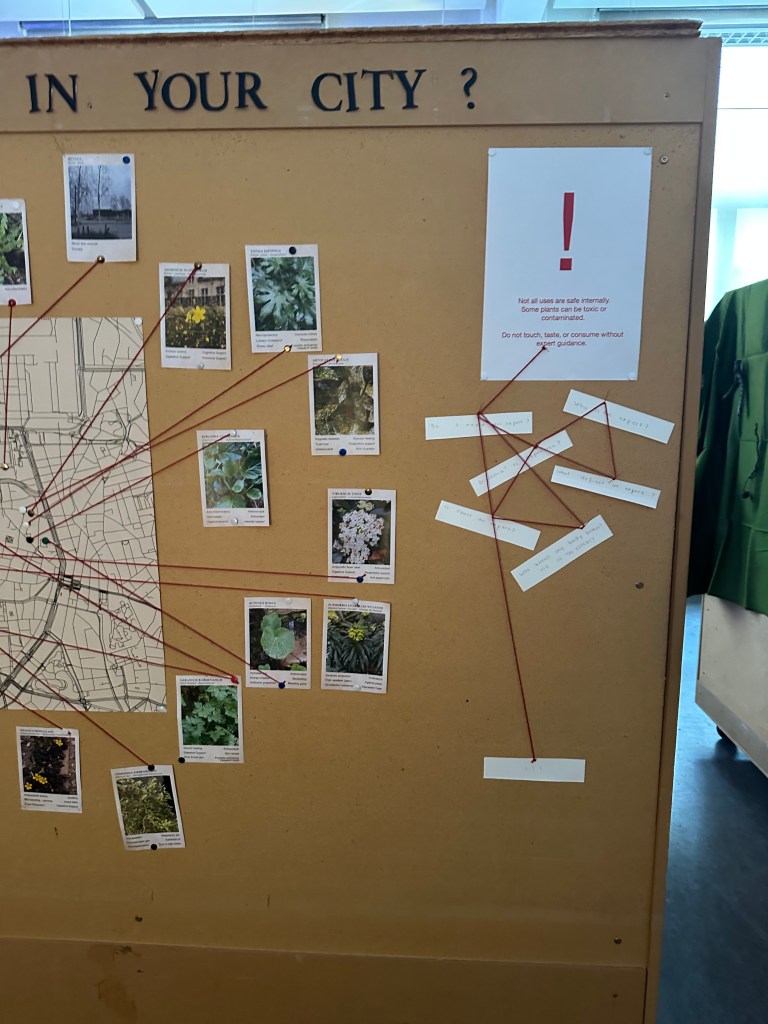
Midweek, students, inspired by Vitalija’s medicine plant walk, mapped central Antwerp, went into the streets, and used a plant-identification app to photograph urban flora.
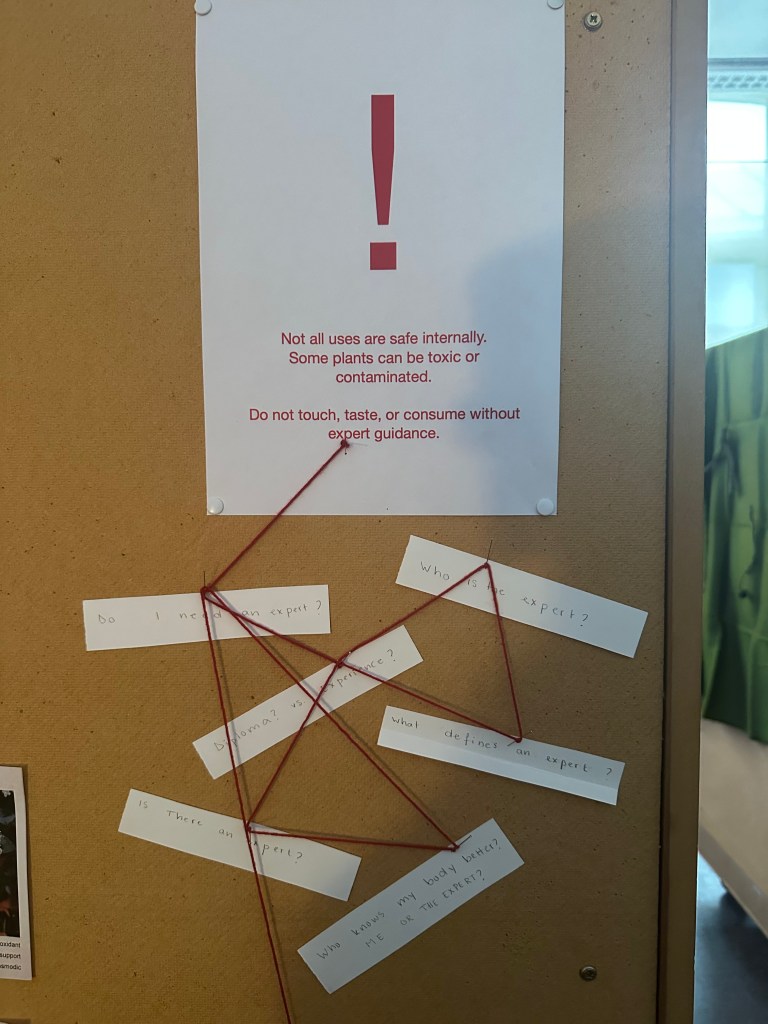
I asked them to add a disclaimer, just in case someone decided to ingest a plant without caution.
They wrote something like:
“Please consult an expert.”
Which immediately led to another question:
Who counts as an expert?
The pharmacist?
The herbalist?
The grandmother?
The app?
The academic?
The lived-experience practitioner?
Again: more questions than answers.
Exactly as intended.
Belonging as Practice
At the end of this week, I feel grateful.
Grateful to the students.
Grateful to the plants.
Grateful for confusion.
Belonging is not a fixed state.
It is a practice.
It asks us to observe more carefully.
To judge less quickly.
To think systemically.
To remain humble.
And perhaps to occasionally sit with a tree and ask it what health really means.
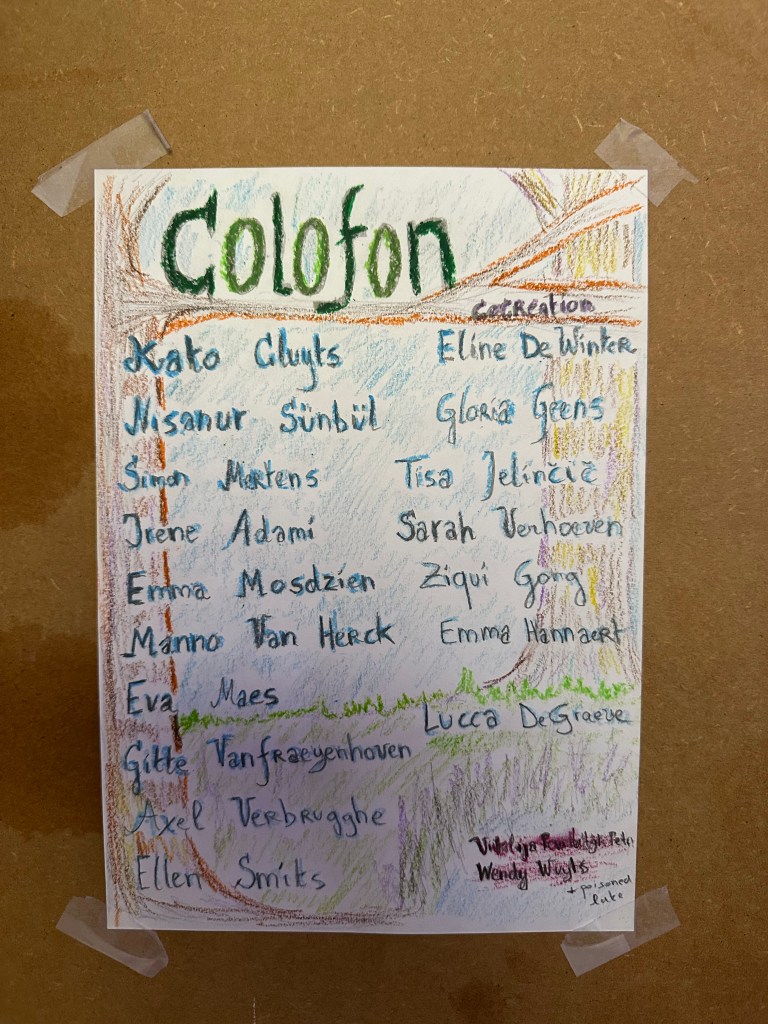
Note: I wrote the original text in two LinkedIn posts during the week. ChatGPT (unpaid version) assisted me in language improvement for this blogpost. I took the photographs.
This workshop was part of IDW2016. IDW is the annual International Design Workshop week for master students of the Faculty of Design Sciences of the University of Antwerp (architecture, interior architecture, product development, heritage studies, urbanism and spatial planning) as well as for master students of the Royal Academy of Fine Arts of the AP University of Applied Sciences and Arts Antwerp.
The International Design Workshop week is open to radical pedagogical experiences, which open the eyes, change sides and widen thinking. It stimulates crossing disciplinary boundaries. The week is jointly curated by a team of students and faculty. It provides a forum for international exchange; simultaneously, it is an informal platform for discussing design education and its agency.
If you are interested in our facilitation skills for your next project on the intersection of nature, health and knowledge, contact us to discuss a collaboration.
Discover more from Stories from the Wood Wide Web
Subscribe to get the latest posts sent to your email.
 Stories from the Wood Wide Web