I am not a trained Warm Data Lab host, although I have participated in several labs. I don’t consider myself an expert. However, I often collaborate with trained Warm Data hosts in larger learning and co-creation processes, especially in projects where we explore how to co-create with the more-than-human world.
In this post, I would like to share some background on the method, along with my own perspective and reflections how this method can help in this bigger interest of transformations and (un)learning with the more than human world. I will also draw on insights from an interdisciplinary design studio that I co-facilitated with Vitalija, a Warm Data host.
The studio brought together 18 international students from architecture, interior design, product development, and the arts, within an objective of (re-thinking and) co-creating an apothecary for belonging with plants. I will write later a blogpost with a synthesis of the bigger workshop itself (and the idea of apothecary). This blogpost is more about the practice of warm data labs.
from cold data to warm data
I value mixed, data-informed research, perhaps especially what is often referred to as “cold data.” Numbers and statistics are frequently treated as objective and neutral, yet they can easily be misinterpreted when separated from their context. In fields such as industrial ecology, I have witnessed extensive number-crunching. While I appreciate the importance of quantitative data, I have also felt frustrated by how numbers can flatten complexity.
Some years ago, someone called Nora Bateson proposed to work more with warm data. Warm data are specific stories that go about relationships. To understand a place, for example, we must consider not only the present human and nonhuman beings within it, but also the relationships between them. These relationships, the patterns of interaction and interdependence, are what Warm Data seeks to illuminate.
Warm data labs
Warm Data Labs, developed by Nora Bateson and hosted by trained collaborators, are rooted in systems thinking and relational practice. Warm Data Labs are typically held as in-person group sessions.
The “People Need People” sessions are the online format. I have often heard the Warm Data hosts I work with speak about organizing “People and Plants” sessions, and perhaps online writing-with-plant sessions could be understood in a similar way. In this blog post, however, I focus primarily on the physical Warm Data Labs.
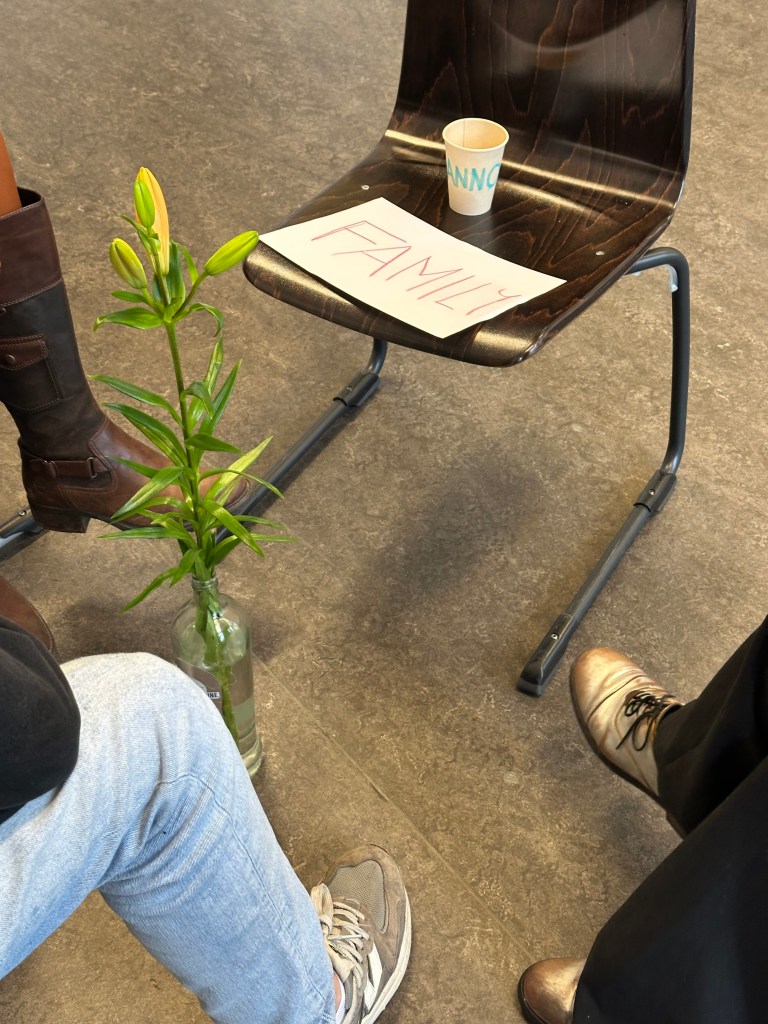
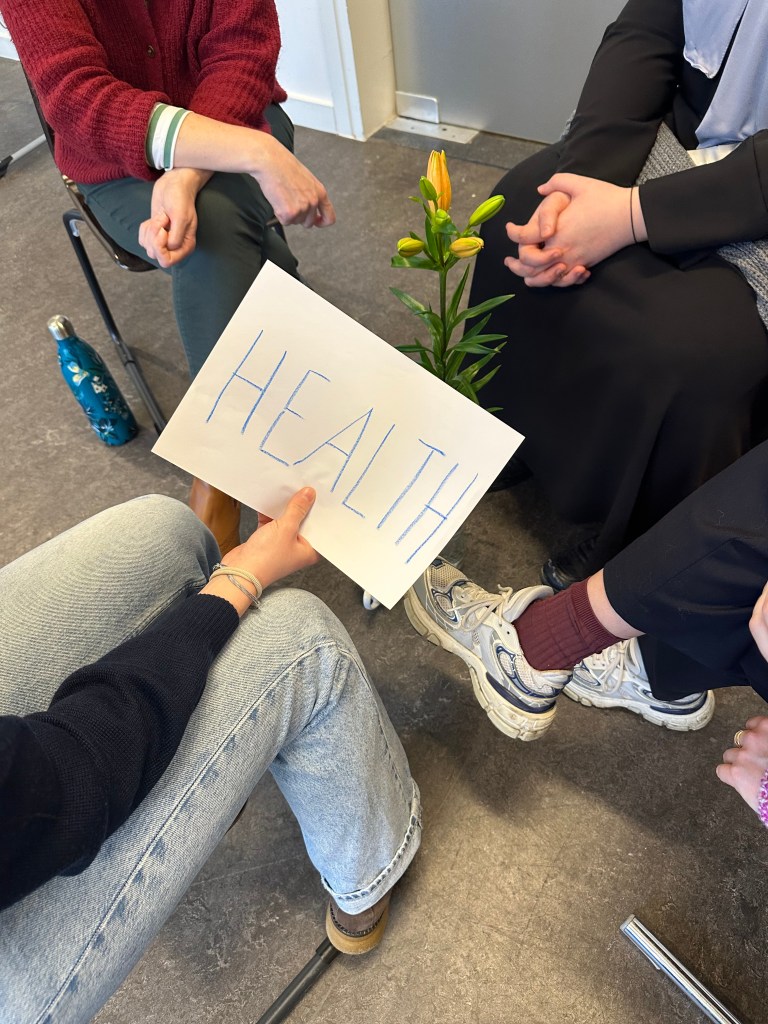
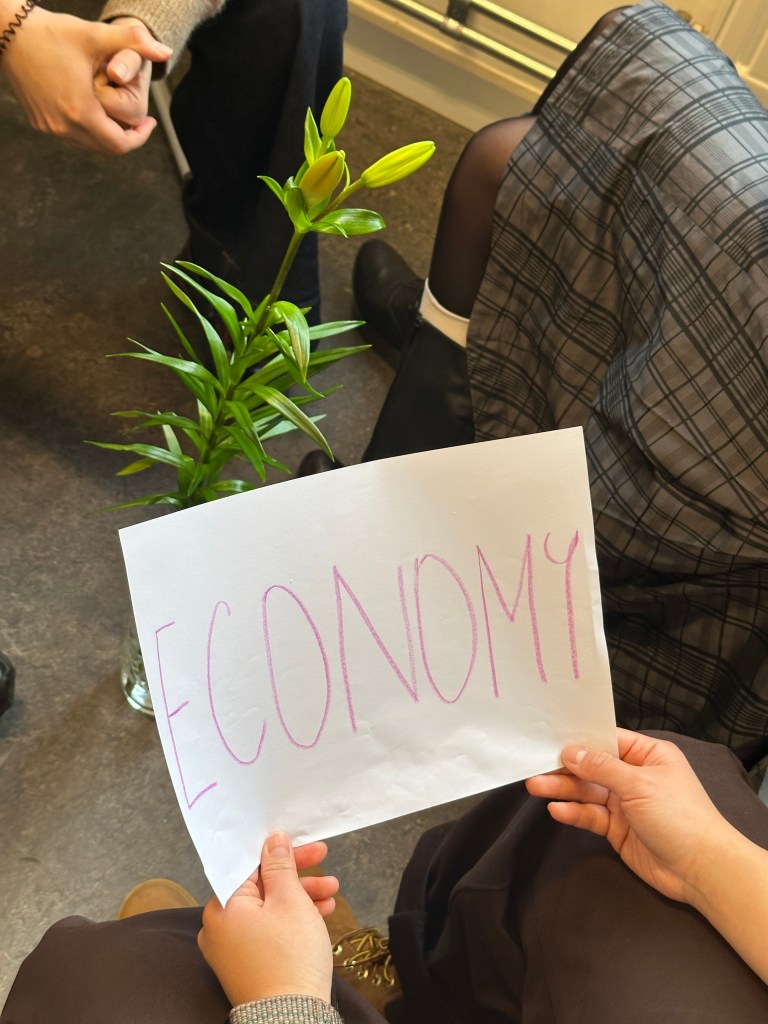
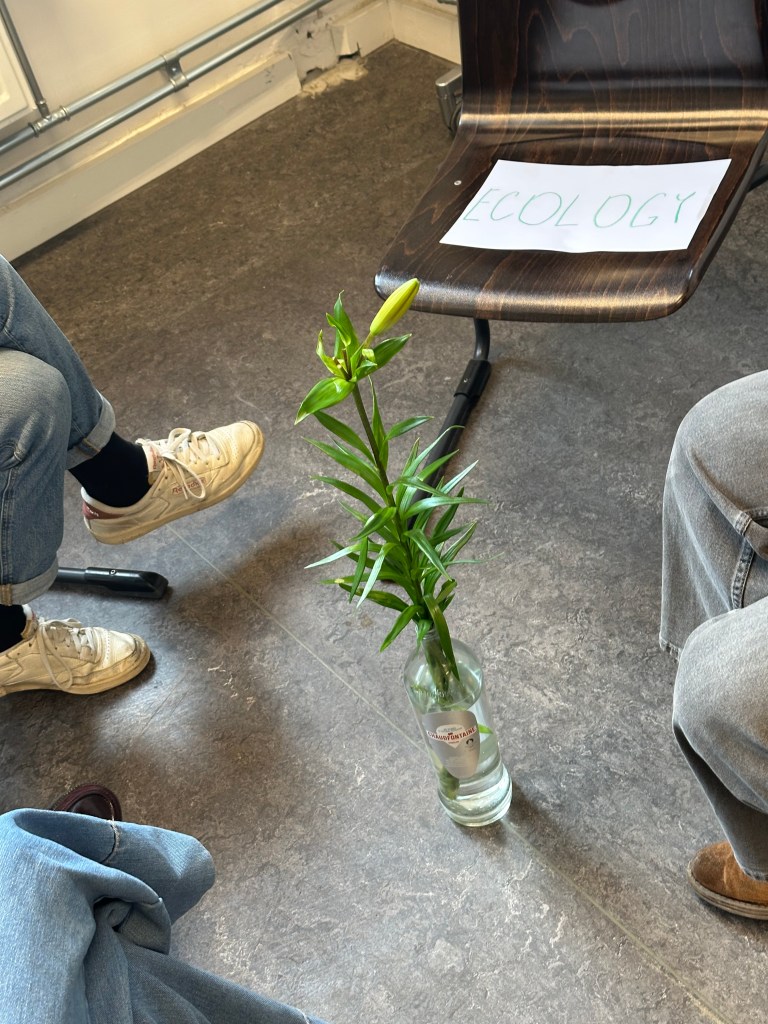
As a participant, I have noticed that a Warm Data Lab generally unfolds in three parts. It begins with an introduction in the form of an unresolved story. This opening typically ends with a question drawn from a list developed by Nora Bateson and other Warm Data Lab hosts. Participants then move into small groups, each organized around a particular context, such as health, economy, ecology, media, religion, or family. Within these groups, they share reflections and stories that emerge in response to the initial story and question. A warm data lab concludes with the host reading a poem, often, in my experience, one from Nora Bateson’s book Combining.
the story
Vitalija opened the Warm Data Lab with a story. She began by reflecting on how she often finds herself wondering where a story truly begins. When she traces her own stories back, through relational thinking, they often lead to her childhood.
She shared parts of her journey, from growing up in Soviet Lithuania to moving to Brussels. She spoke about belonging, a key theme of the larger event in which we offered this five-day workshop, and about what it means to live and work as a foreigner in different countries. She described gradually finding a sense of home in Brussels, and then encountering public green space management decisions that triggered her.
I had encouraged her to tell this particular story, as I felt we needed a narrative that explicitly included plants – as we try to foreground plants as much as possible in our workshop of co-creating an apothecary.
We had exchanged messages about a certain observation o the public green space management months earlier. It is not a resolved story… and perhaps that was precisely why it was fitting for a Warm Data Lab.
The plant presence
Although Vitalija’s opening story raised questions about public green space management (the summer plants that had to make space, the winter plants arriving from greenhouses) and connected to the broader theme of co-creating an apothecary with plants, I am not sure that all the stories I overheard during the Warm Data Lab were actually about plants.
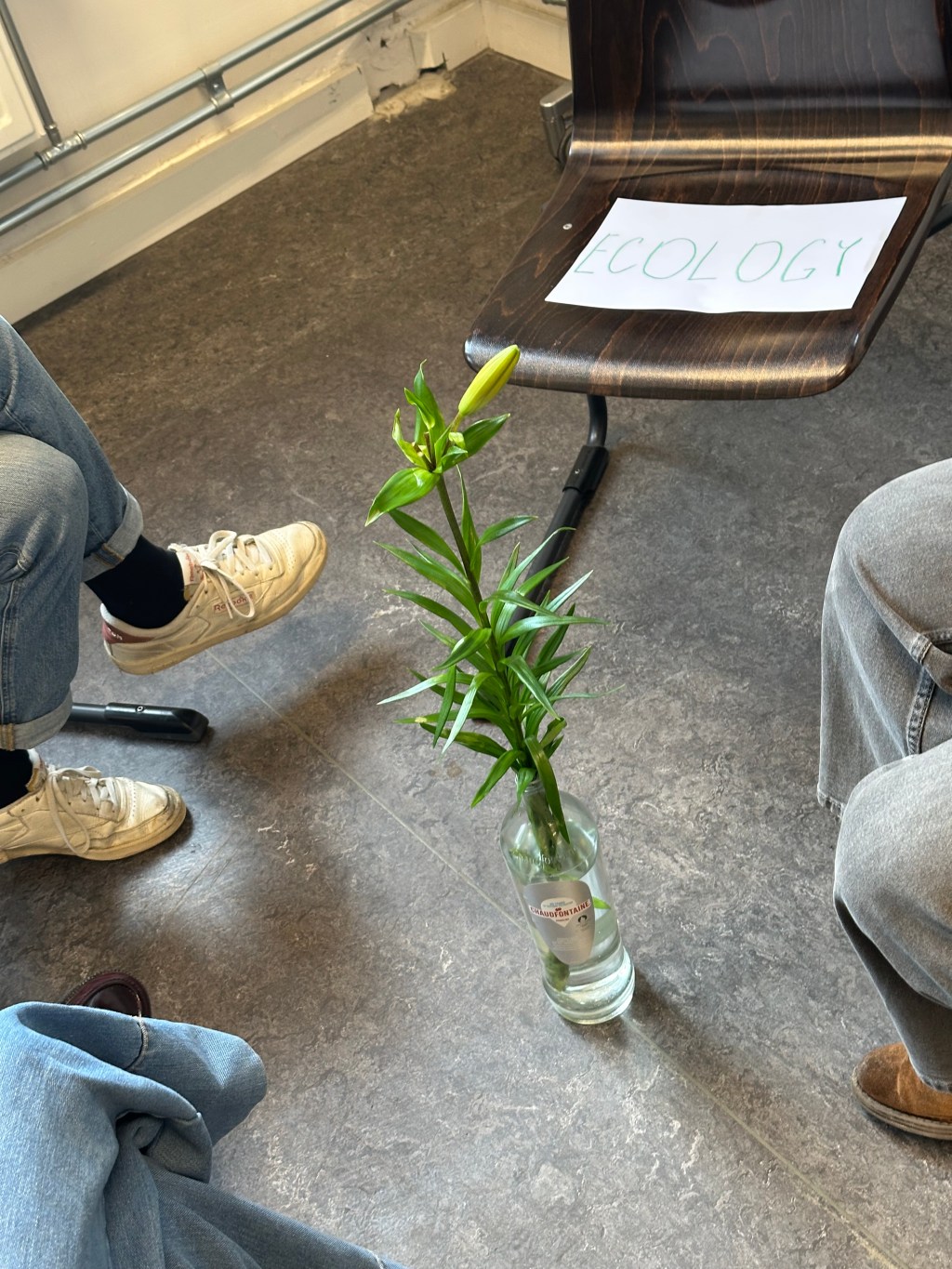
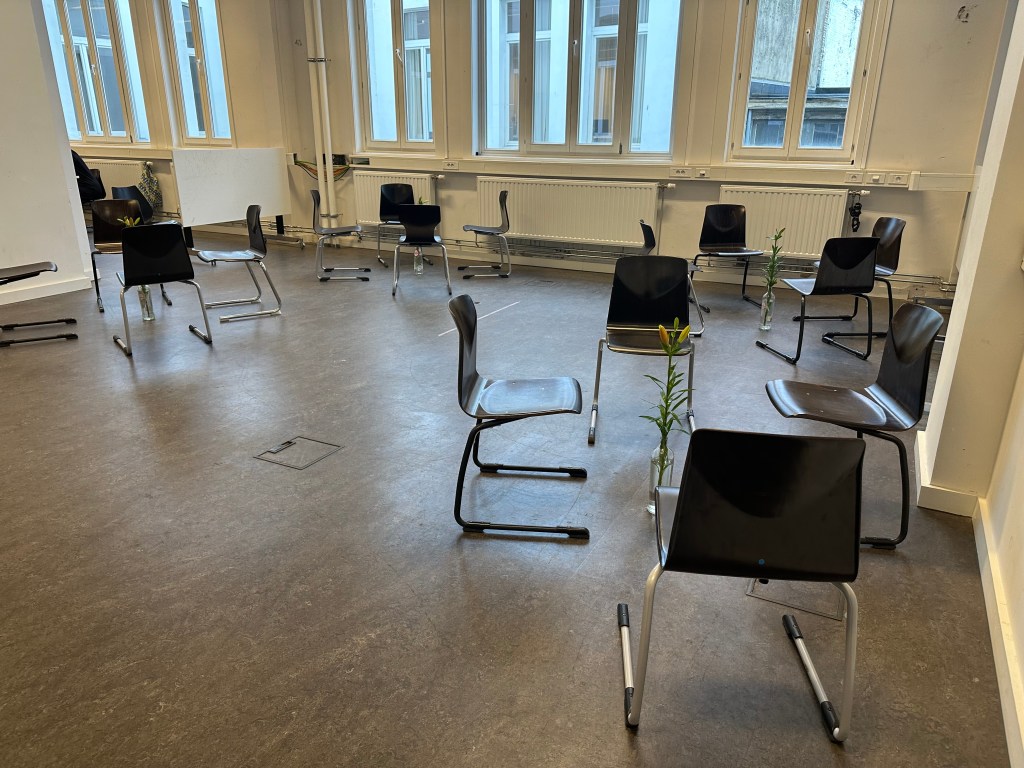
Vitalija had placed a large lily in the center of each group. Yet I am unsure whether the plant itself became part of the conversations, or whether it remained more of a silent presence.
In this studio, we had to remind ourselves repeatedly that we were not working with participants deeply immersed in critical plant studies, as some of our colleagues are, nor with members of the NSU study circle on learning with and within the more-than-human world.
Many of the students were encountering these perspectives for the first time. I often asked whether they were familiar with terms such as othering, ecofeminism, or diverse knowledge systems, and I realized I needed to explain these concepts carefully and patiently.
At the same time, the students openly acknowledged that they did not know many plants. They showed genuine curiosity and interest in learning more. They started to research local plants in Antwerp during the workshop, they did not hesitate to taste plant-based infusions, and they listened attentively to one another’s stories.
Still, I am left with a recurring question: how do we invite others, especially within a short time frame, to begin thinking differently about plants? How do we encourage a shift from seeing plants as passive objects, valued only for their usefulness to humans, to recognizing them as agents in shared worlds? And how do we do this without sounding judgmental or imposing our own framework onto the students?
In the end, the Warm Data Lab was perhaps most valuable as one link in a larger and more complex learning process with the more than human world.
Small conclusion
For me, Warm Data Labs are a method, not a goal in themselves, but a tool. Their value becomes especially apparent when they are embedded within a larger workshop or studio process. In that context, they can serve as a powerful form of training in storytelling and systems thinking, skills that are essential in co-creation, design processes, and many other professional and collaborative settings.
If you are interested in this method or even trainings, please contact Vitalija via the contact form of her website: https://medicinalplantsinbelgium.com
Resources
- Bateson, N. (2023). Combining. Triarchy Press.
- Ecology of Mind: A Cybernetic Approach To Planetary Problems, Hans Busstra talks to Nora about her work and that of her father Gregory Bateson, https://www.youtube.com/watch?v=3ekzHzRMjOk
- Bateson, N. (2022). New worlds to hold the invisible world of possibility: Warm data, symmathesy and aphanipoiesis. Unpsychology, 8. https://www.unpsychology.org/
- Bateson, N. (2021). Aphanipoiesis. Journal of the International Society for the Systemsm Sciences: Proceedings of the 64th Annual Meeting of the ISSS, 1(1).https://journals.isss.org/index.php/jisss/article/view/3887
- Bateson, N. & Explorers of liminality (2020). Warm data and iced lemonade: A deeply human response to complexity is possible. https://thesideview.co/articles/warm-data-and-iced-lemonade/
Discover more from Stories from the Wood Wide Web
Subscribe to get the latest posts sent to your email.
 Stories from the Wood Wide Web