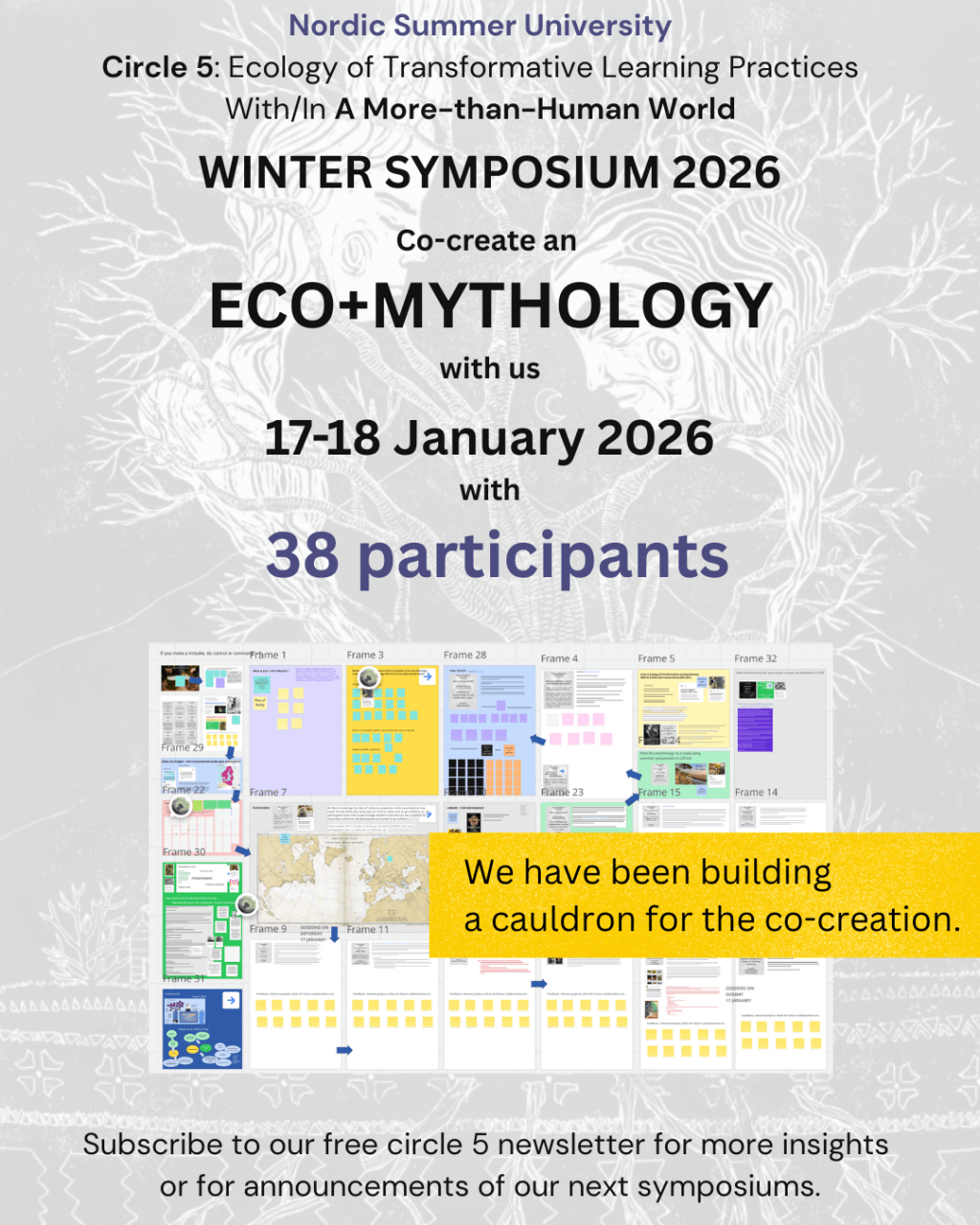
During the weekend of 17–18 January 2026, we hosted an online Winter Symposium for our study circle Ecology of Transformative Learning Practices With/In a More-than-human World. This gathering marked the third of six symposia taking place between 2025 and 2027.
The central theme was eco+mythology. We intentionally chose to make at least one symposium fully online, opening the space to participants who may not have the time or resources to travel to a physical location in the Nordic–Baltic region, yet are eager to explore theories and practices of transformation with plants and other-than-human animals.
A winter symposium felt just right for this focus on storytelling, listening, and attentive watching. Participants joined from their own homes, perhaps wrapped in blankets, perhaps still in pyjamas, while outside the world was freezing and snowing (or at least, in Northern Europe. We had also participants from India, where there was no snow). From these warm, intimate spaces, we gathered to share stories and explore eco-mythological practices together, across distance but deeply connected.
The full program can be found here. The outcomes of this symposium are primarily shared within our circle of 38 participants and our wider community of120 newsletter subscribers. However, we want to share a short story and a tool that you can use for some online magic in your own events and activities.
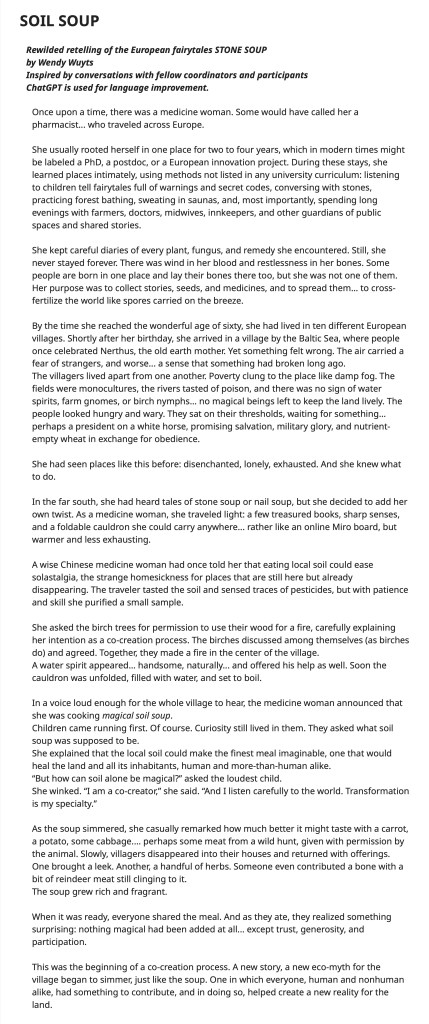
soil soup
I read this story in the welcome session of our symposium:
… before I introduced them to the cauldron, a MiroBoard that we have been building in the week before the symposium.
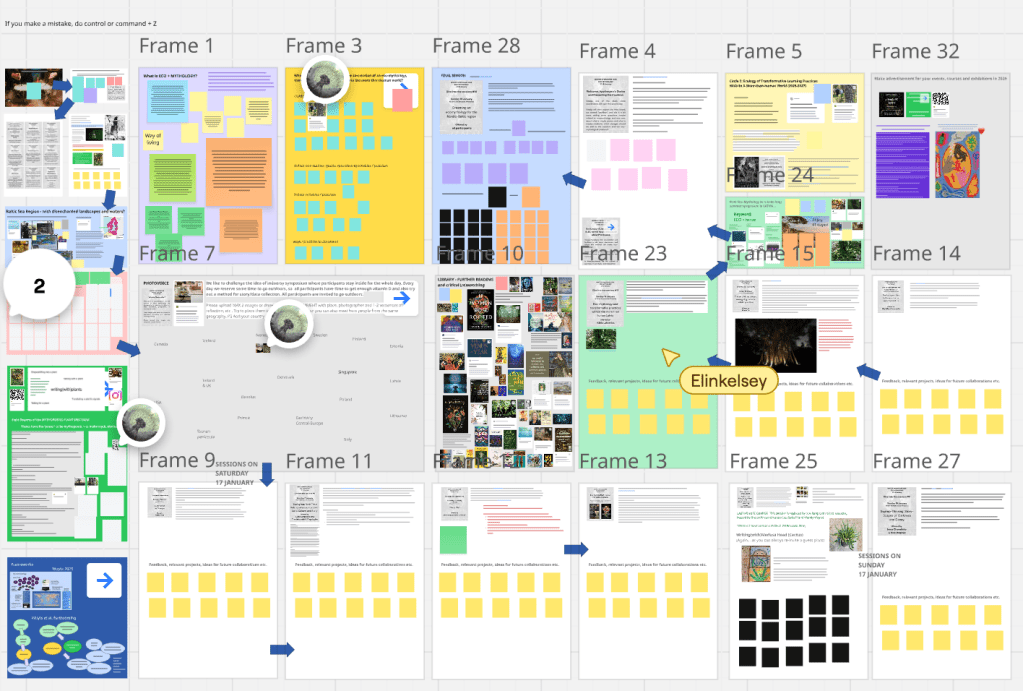
MiroBoard as a cauldron
Miro boards can turn online symposia into genuinely interactive experiences. By offering a shared digital canvas for real-time collaboration, brainstorming, and visual thinking, they invite participants to actively shape the conversation. Features such as sticky notes, voting, timers, and ready-made templates for icebreakers and activities help sustain engagement, while also creating a visual record that can be revisited asynchronously.
We opted for a one-month Miro Business plan, which costs around 25 euros. Since participants were asked for a small contribution, this expense (along with the Belgian truffles we enjoyed while building the board with all the frames) fit easily within the budget.
For each session, we worked with a simple framework that gently nudged participants to leave comments, reflections, or ideas on digital post-its. After each session, I downloaded the relevant frames and shared them with the session facilitator. Other frames were repurposed for our newsletter, allowing insights from the symposium to continue circulating beyond the live gatherings.
As storytelling is all about thickening the soup, some participants and presenters have been referring back to our soil soup story.
Looking for Facilitators of Shared Screens and Shared Sense-Making?
If you are looking for hosts who can facilitate and synthesize wood wide web–like experiences, creating spaces of connection, exchange, and sense-making across disciplines and species… we would love to hear from you.
We are available for collaborations, symposia, and experimental learning formats in both Europe and North America. Feel free to reach out and start a conversation.
If you are interested in our physical symposiums in Baltic-Nordic Europe (2026-2027), sign up to our newsletter. Subscribers get the first announcements. You can find other blogposts from this 3-year long project here: NSU circle: Learning with the More-than-human.
Discover more from Stories from the Wood Wide Web
Subscribe to get the latest posts sent to your email.
 Stories from the Wood Wide Web