
The Word of 2026 will be Eco+mythology (home+narrative).
Co-create an eco-mythology with us in the weekend of 17-18 January 2026
Hosted by the Nordic Summer University Study Circle: Ecology of Transformative Learning Practices with/in the More-than-Human World
In the northern hemisphere, winter marks a threshold in the yearly cycle, a time of stillness, reflection, and renewal. After the twelve silent nights around midwinter, when traditions like Burns Night in Scotland and apple wassailing in England remind us of our deep entanglements with lands, seasons, and stories, we warm ourselves with myths and imaginations.
The timing of this gathering is no coincidence: it is a moment to listen for other stories that might guide us into futures of mutual learnings, becomings and belongings.
This online symposium asks:
- Why do we need new myths—or renewed myths—for living well together with the more-than-human worlds?
- How can eco-mythology inform our practices?
- Which learnings and practices contribute to the co-creation of an eco-mythology?



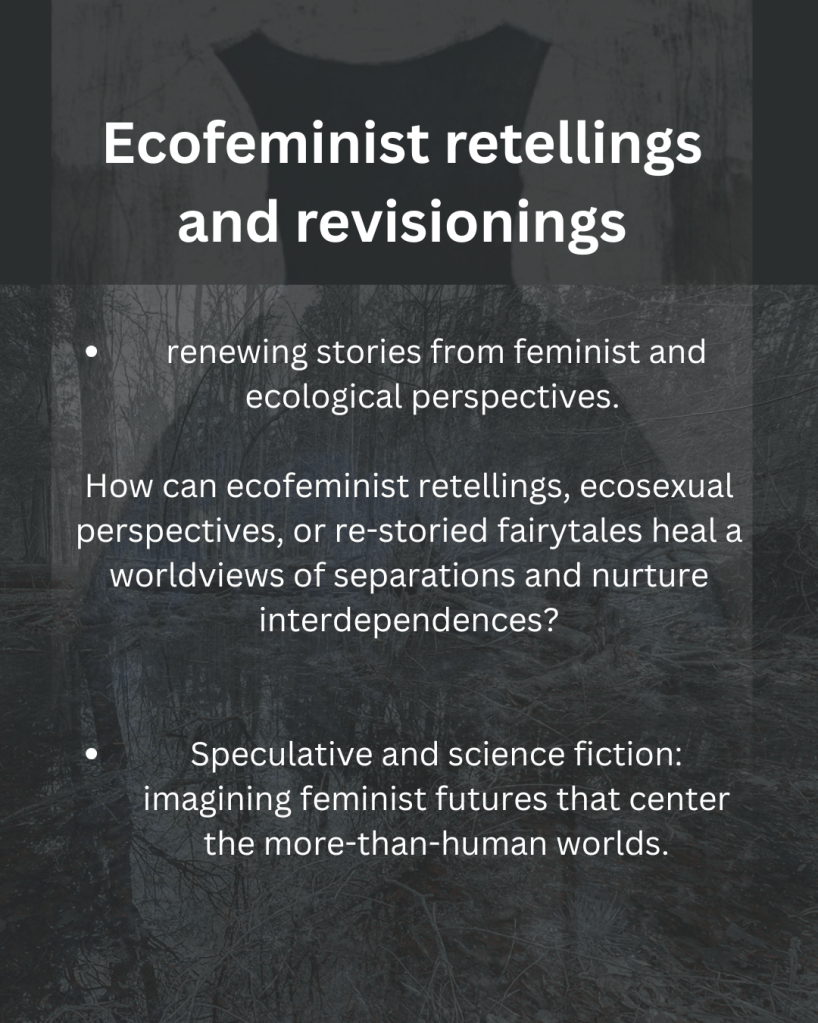
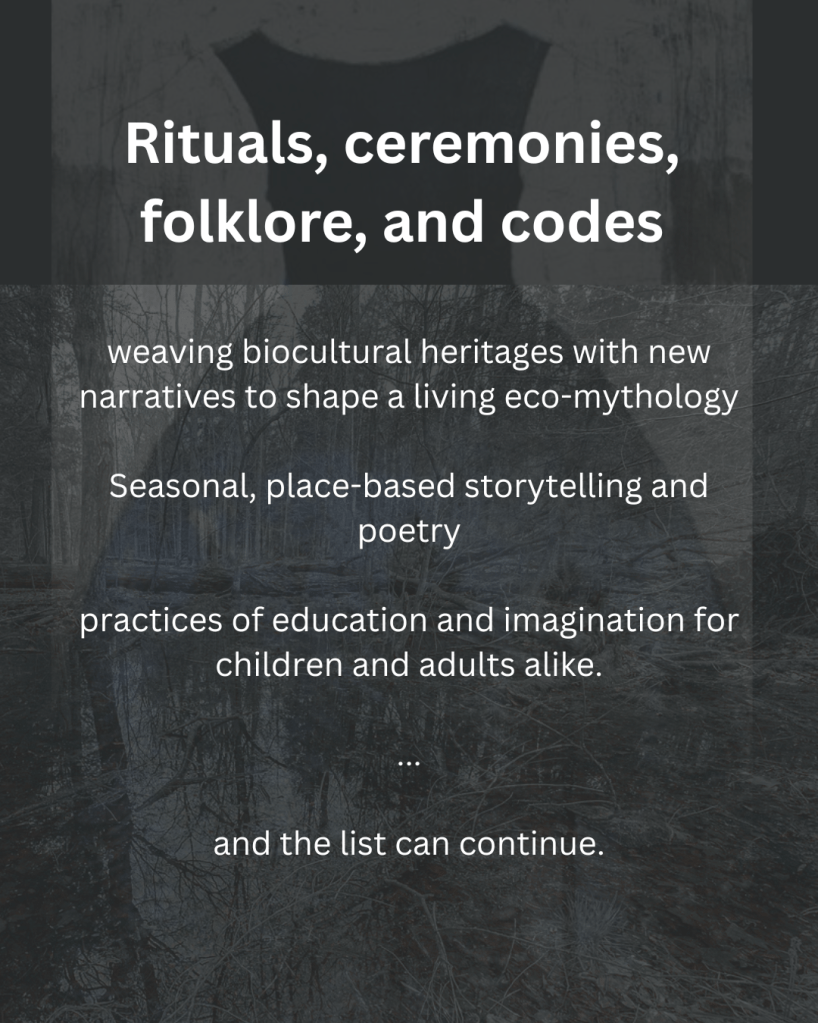
not a CONVENTIONAL online academic symposium
This symposium will be online, in contrary to the five other NSU symposia. As we are aware that not all people can attend live events, especially in winter, we decided to do this online, in the darkest time, when we need connection via the world wide web (and the wood wide web).
The symposium invites scholars, artists, educators, and practitioners to join in co-creating an eco-mythology. Through papers, performances, poetry, and dialogue, we will explore how mythic imagination, especially from Nordic and Baltic traditions, can open educational possibilities for futures where all beings may thrive.
Together, we will experiment with collective practices and tools (such as MiroBoard, Photovoice), establish shared goals and rules, and invite mythic thinking as a form of transformative learning and planting seeds for later collaborative autoethographic explorations in the summer symposium 2026 in Latvia.


Tentative programme 17-18 january 2026
Timezone: Brussels time (CET).
Some parts of the programme are already planned. The call is for the bold slots.
| Timeslot | Saturday 17 January | Sunday 18 January |
| 09.00-10.30 | 09.00-09.30: Welcome, soft landing and intro topic, objectives, rules and the cauldron – by coordinators Heide, Wendy, Lisa, Vitalija 09.30-10.30: Ecomythology: Why, how, what? Short presentation of Flowing with Eglė’s Ecomythology: Restor(y)ing the Baltic Sea – by Wendy (coordinator) | CALL FOR 3 presentations of (future) academic papers Focus: Practices and methods for learning and transformation through rewilding self, spaces, language and ecoliteracy research for life supporting economies |
| 11.00-12.00 | Invitation to go outdoors, bring a camera and do photovoice of the word: Eco-mythology | Invitation to go outdoors – Heide and Vitalija (coordinators) – individual walk inspired by social permaculture of Starhawk |
| 13.30-15.00 | Storytelling practice moderated – by Vitalija, Heide and Lisa (coordinators) – Warm Data Lab with more-than-humans – People Need People and Plants (including vegetal) | CALL FOR 1 workshop |
| 16.00-17.30 | CALL for 3 presentations of (future) academic papers Focus: Reimagining education by rewilding Nordic and Baltic folktales and myths and ecofeminist retellings foregrounding the more than human world | Looking into the cauldron and dreaming an ecomythology for the Nordic and Baltic region: everyone (presenters and listeners) is invited to give feedback on presentations, workshops and the photovoice outcomes – moderated by Wendy |
| 19.00-20.00 | Wassailing (Eco-poetry and dreaming) over warm apple cider/tea… – by Anika Spindelman | CALL for Oral storytelling session (poems, short stories, prayers…) |
This means that we look for 6 papers, 1 workshop, and 3-5 shorter performances, or in other words: around 10 contributors. We aim for 30 additional attendees for listening, commenting and joining discussions.
key dates:
- call for proposals:.. 31 October.
- News about acceptance and first programme: 30 November
- Registration presenters and participants Eventbrite: 10 January
- Online symposium: Saturday 17- Sunday 18 January
About the study circle and ephemeral ponds
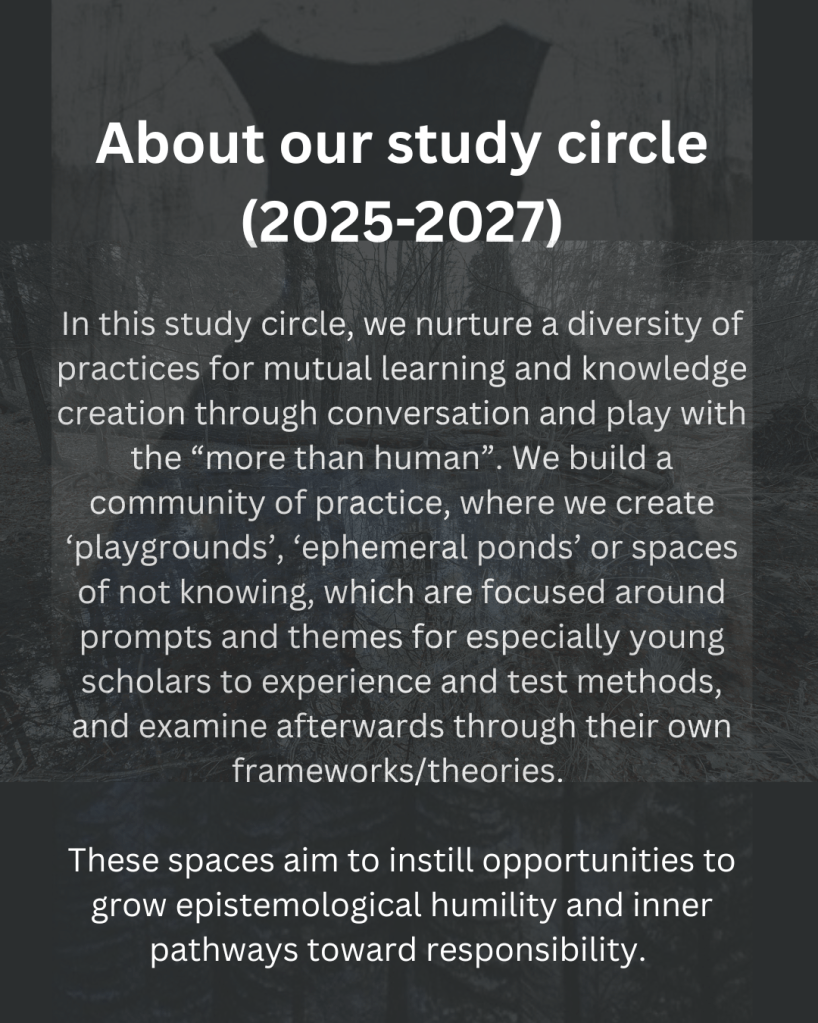
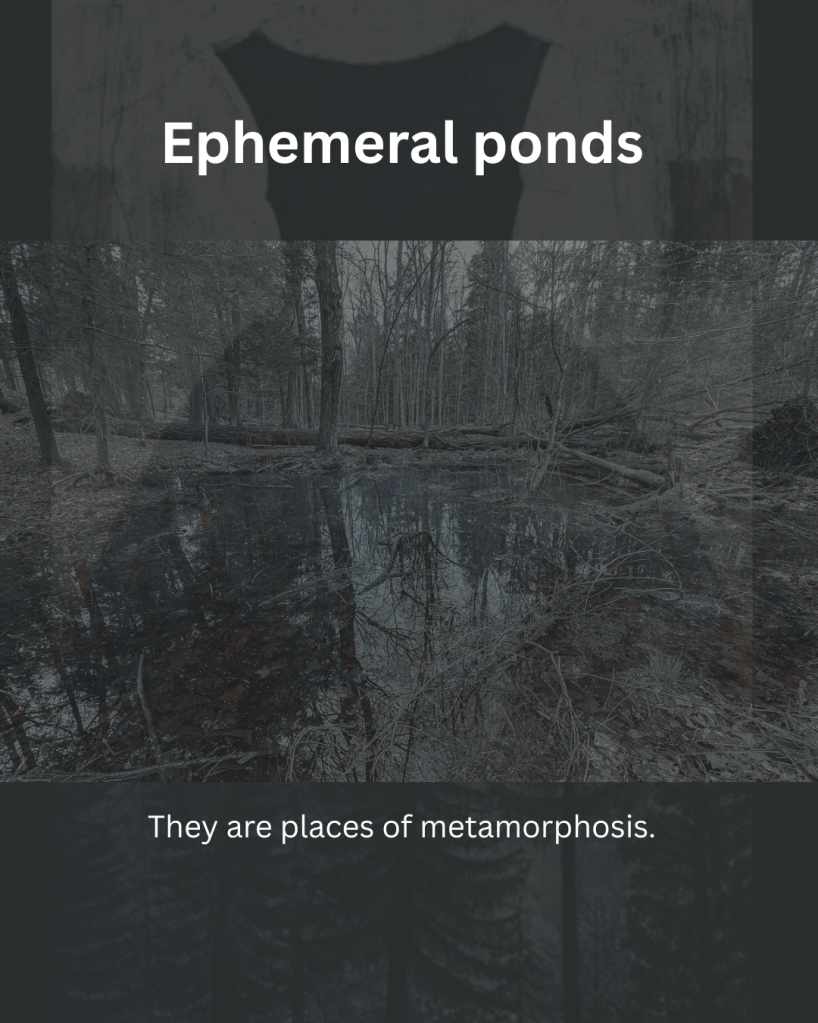
In this study circle, we nurture a diversity of practices for mutual learning and knowledge creation through conversation and play with the “more than human”. We build a community of practice, where we create ‘playgrounds’, ‘ephemeral ponds’ or spaces of not knowing, which are focused around prompts and themes for especially young scholars to experience and test methods, and examine afterwards through their own frameworks/theories. These spaces aim to instill opportunities to grow epistemological humility and inner pathways toward responsibility.

Our mothering plant, Nordic Summer University (NSU), is a Swedish non-profit organisation. Since 1950, NSU has been an independent academic institution, which organises winter and summer symposia that draw international participants across disciplines in the Nordic and Baltic regions. Particular attention has been paid to cross-disciplinary areas not yet targeted by larger research institutions. The practice of NSU addresses two fundamental premises of a knowledge-based welfare state: production of knowledge based on academic freedom and democratic practice of self-governance.
Pricing and scholarships
We work with 3 prices. A ticket needs to be purchased via the NSU webshop (from December onwards):
- 40 euros, for presenters or listeners without an income
- 70 euros, for presenters or listeners with an income
- 100 euros, for listeners who want to support the volunteers
The money will cover …
- NSU membership for 2026: 30 euros. This NSU membership fee is used for paying the NSU website and other overhead costs.
- Miroboard and Zoom costs
- Volunteer reimbursements for the 3 coordinators, contributors and their children (a funding pool to pay the accommodation and meals for a week-long summer symposium in Latvia, end of July 2026)
What do you get?
- Access to a platform, network and collective wisdom for mutual learning
- Free PDF of an upcoming book chapter Flowing with Eglė’s Ecomythology: Restor(y)ing the Baltic Sea
- All participants become a member of NSU and can request a discount of 30 euros when you register for the summer symposium 2026 in Latvia (more information, call for contributions and registration in spring 2026).
Wood wide web stories’ scholarships
We try to keep the price as low as possible. That is why we work with three prices. However, we are working hard (as volunteer) to help the contributors in this study circle and winter symposium. Last weeks, we worked for days on a funding application. If granted, we might be able to pay some performance fees (and travel scholarships) in the symposiums in 2026 and 2027. If we have more news, we will announce via the NSU study circle 5 newsletter (subscribe here).
How to Apply
Send your proposal (max 1000 words / 2 pages, including visuals) and complete the questionnaire by 31 October to: wendywwuyts@gmail.com and vitalija.ppetri@gmail.com .
Please include:
- Title of your presentation / performance / contribution
- Short bio (max 200 words) + reflections of the relations you have with the more-than-human world
- What does eco-mythology mean to you? Add an example of how it shows itself to you or how/when/where you notice it.
- What will you share during the winter Symposium? Description of your transformative learning practice(s) with/in a more-than-human world you propose to experience during Ecomythology2026 symposium. – please fill out the questionnaire, which will help you to formulate your proposal (two-pager).
- Practical details → How much time do you need? (30–90 min, teams of 2–3 welcome)
- Inspiration → Key artistic and/or academic references
Creativity is welcome! Text, drawings, photo images, and poetic formats can all be part of your proposal!
List of blogposts exploring eco-mythology
- An Iberian EcoMythology – book review of Sofia Batalha’s The Sanctuary
- Eco-mythology for the Baltic Sea: Flowing with Eglė – Project
- Njørd – an ecomythology for Copenhagen Architecture Biennial
- Spinning Hemp in Tyrol – bioregionalism, commoning and re-enchantment
- Ecomythology – Facilitating collective imagination of a convivial Spring Ritual and a mythic river monster in Antwerp 2050
Lists of blogposts from our study circle
- In appley cycles – Tales from the micro orchard
- A fishbowl in Finland: Moomins, queer ecology, decolonizing art practices, whiteness and Sápmi
To read more blogposts, visit the NSU circle: Learning with the More-than-human page.
Looking for more inspiration?
Last week, wood wide web stories published a first English pocket book, with
- an ecofeminist retelling of a Flemish and French fairytale,
- an essay on rewilding fairytales
- a list of invitations and prompts, with some space for you to explore.

You can pre-order the book via Amazon. It will be published on September 17th.
Discover more from Stories from the Wood Wide Web
Subscribe to get the latest posts sent to your email.
 Stories from the Wood Wide Web