Over the past few years, most of our writing sessions were conducted online within plant circles, with participants generally isolated in their rooms. Despite this, we were aware that some participants chose to walk outside during the sessions, which indeed required a certain level of presence. The facilitator, however, always remained indoors.
During a spring equinox gathering at the Nordic Summer University, we chose to hold our session outdoors, seated beside the oak trees. This time, I stepped back from my usual role as facilitator and allowed Heide to lead the session. This blog captures my impressions of being outdoors, as a co-facilitator, co-participant and an observer.
Since this week, we have a separate Instagram page for Writing(with)plants. Everyone is welcome to tag this page and/or invite this page for a collaboration in a post about a next event, the fruits of a past writing(with)plant session. Please follow https://www.instagram.com/writingwithplants/
The setting: a danish castle domain

Sandholt, an old manor house first mentioned in historical records in 1434, is situated in Sandholts Lyndelse Parish within the former Sallinge Herred, Broby Municipality, and is now part of Faaborg-Midtfyn Municipality. Sandholt Estate spans an impressive 441 hectares.
Case study: reflecting on our live session experimentation and the Fusion of Nature and Narrative
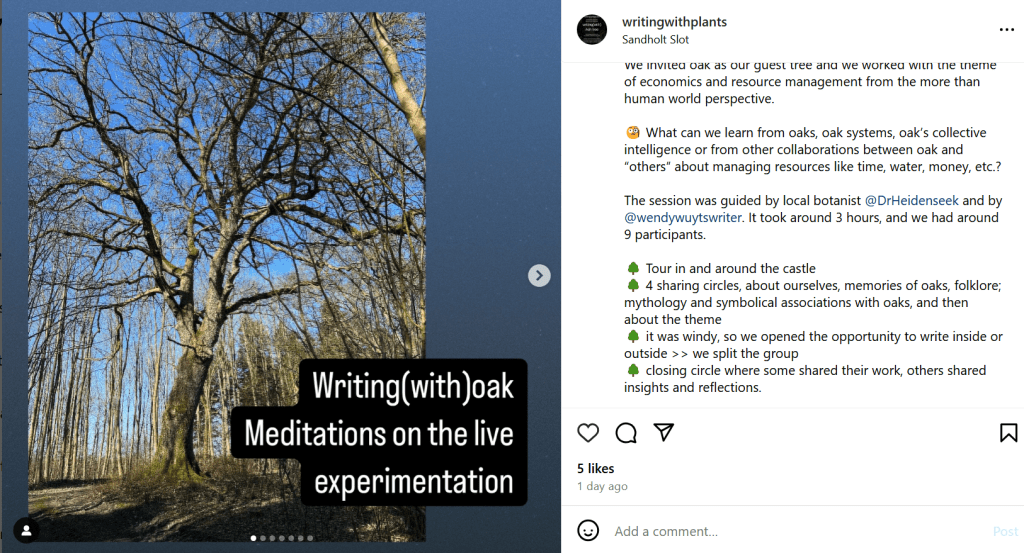
The recent live session of our writing(with)plant workshop held at a Danish castle domain marked a significant departure from our usual online settings. This session integrated elements of forest bathing and local storytelling, providing a rich tapestry of experiences that underscored the unique challenges and revelations of conducting a workshop in a physical setting intertwined with nature.
Objective and Audience Engagement
The primary objective of this session was to explore the relationship between participants and their natural surroundings, utilizing the majestic oaks of the castle grounds as both muse and medium for storytelling. The target audience, comprising individuals interested in deepening their connection with nature through creative expression, encountered a setting that was ripe with historical and emotional resonance. This was evident when one participant, moved by the presence of the oaks, shared childhood memories associated with similar trees and was brought to tears. This powerful moment might highlight the stark difference in emotional engagement between our physical workshops and online sessions.
Challenges in Workshop Design and Execution
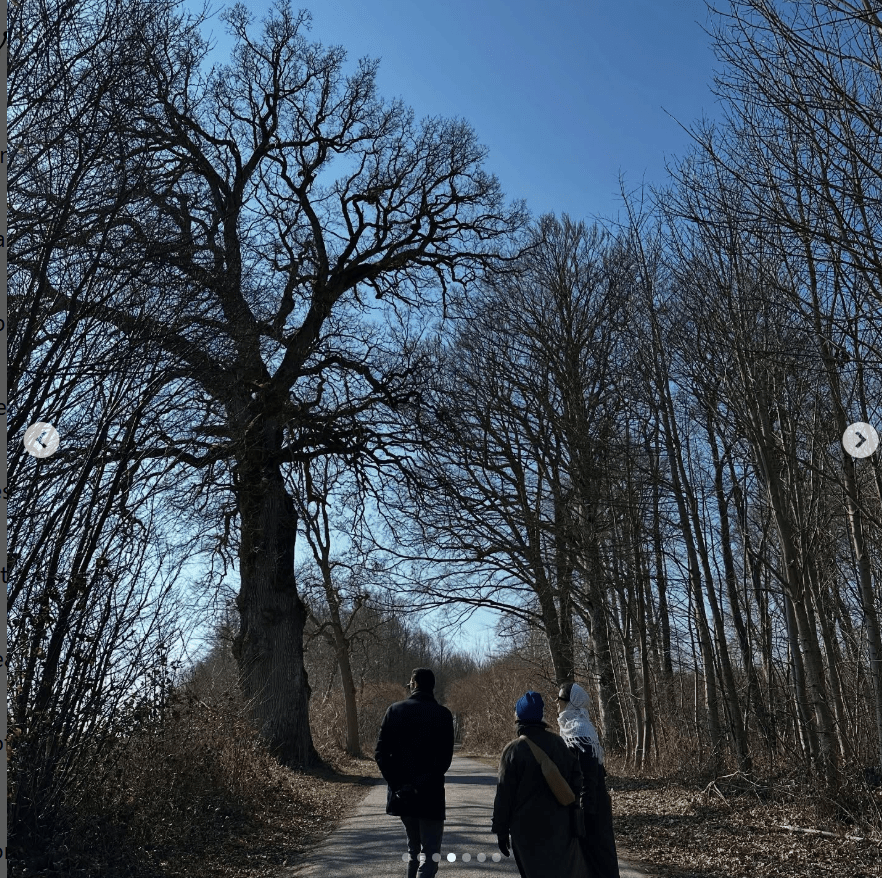
The execution of the workshop, however, faced several logistical challenges. The initial plan for a contemplative walk paired with writing exercises was hindered by a lack of clear structure and overly ambitious scope. The walk proved too lengthy, leaving insufficient time for writing and the crucial sharing sessions that were to follow. This misstep underscored the necessity of adhering to well-defined rules and a structured sequence of activities, which have been hallmarks of our successful online workshops.
Additionally, there were issues of miscommunication regarding responsibilities; my inadvertent oversight in the program led to last-minute preparations that encroached upon personal time. This experience has reinforced the importance of clear communication and thorough preparation, elements that are less critical in the more controlled environment of online sessions.
Integration of Forest Bathing Techniques
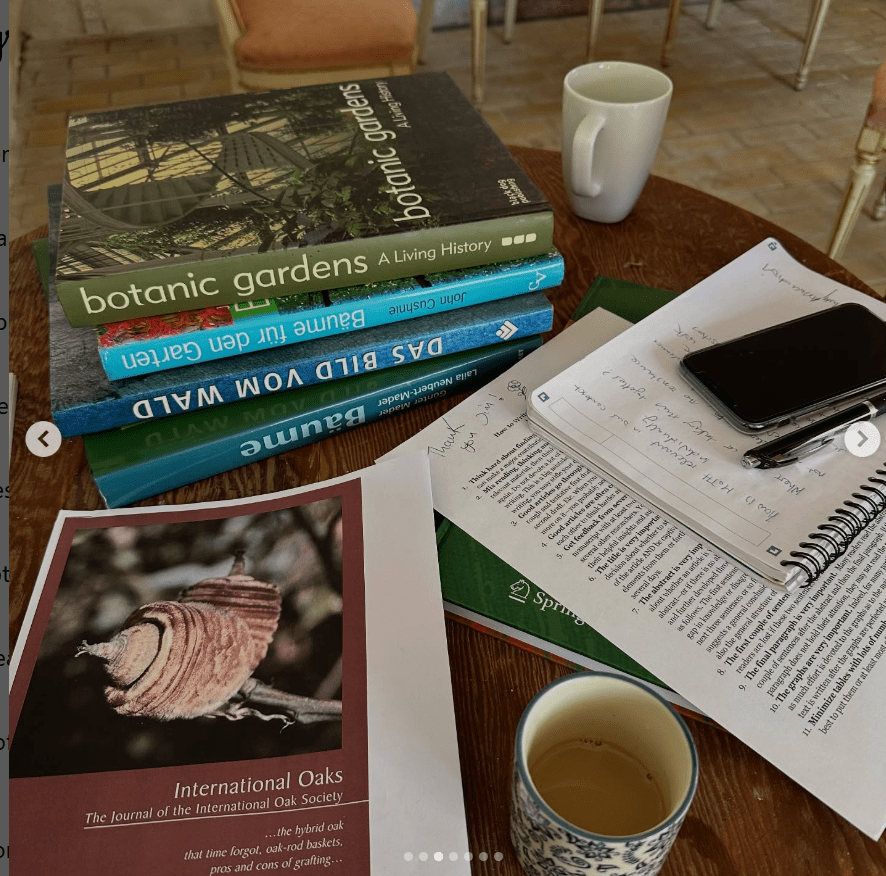
Drawing from my background as a forest bathing guide, I incorporated several techniques from that practice into the workshop. This approach helped in setting a tone that encouraged emotional openness and healing, as demonstrated by the participants’ responses. The session became a space not just for creative expression but also for personal reflection and emotional release, facilitated by the serene environment and the thematic focus on the robust, enduring oak.
Environmental and Seasonal Influences
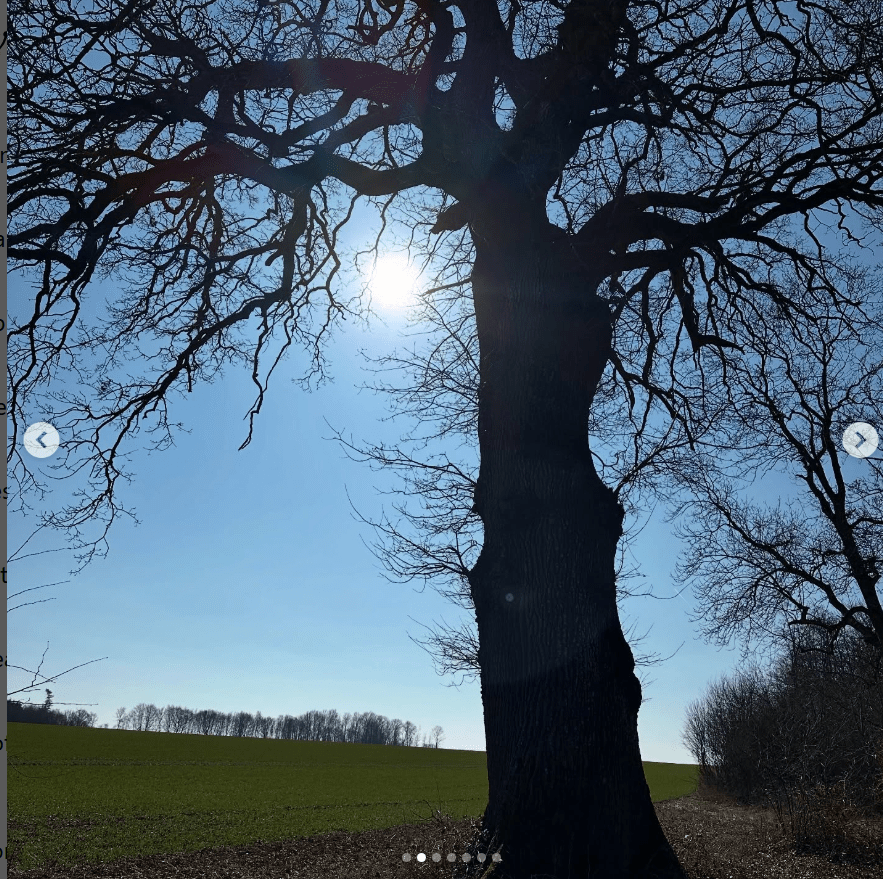
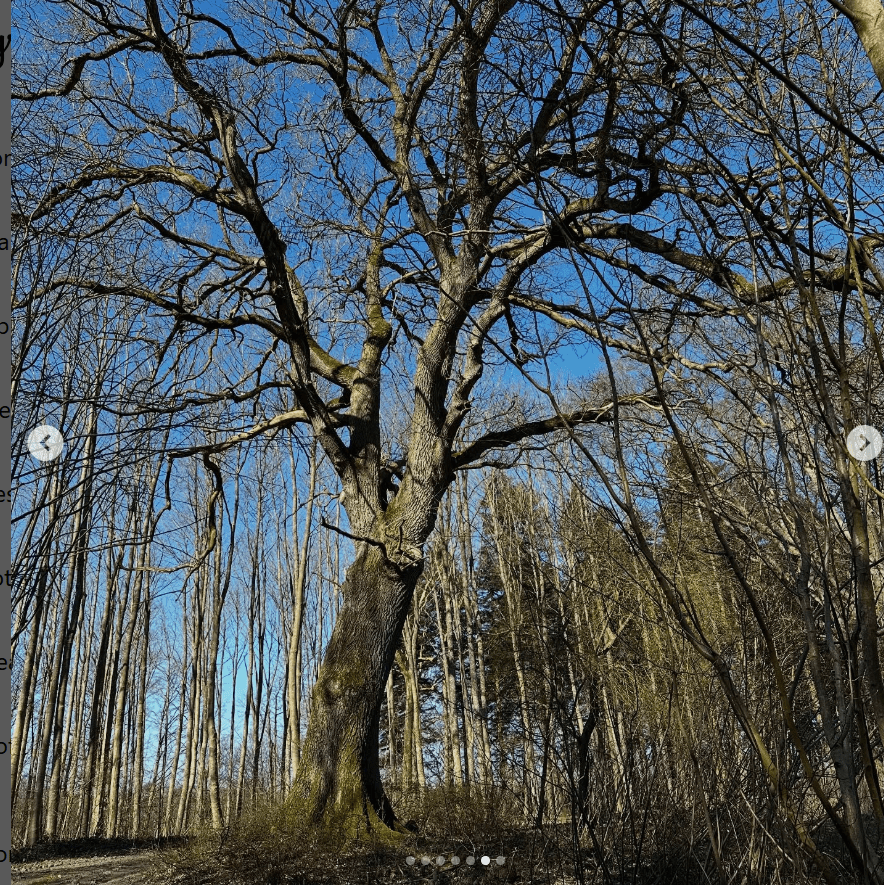
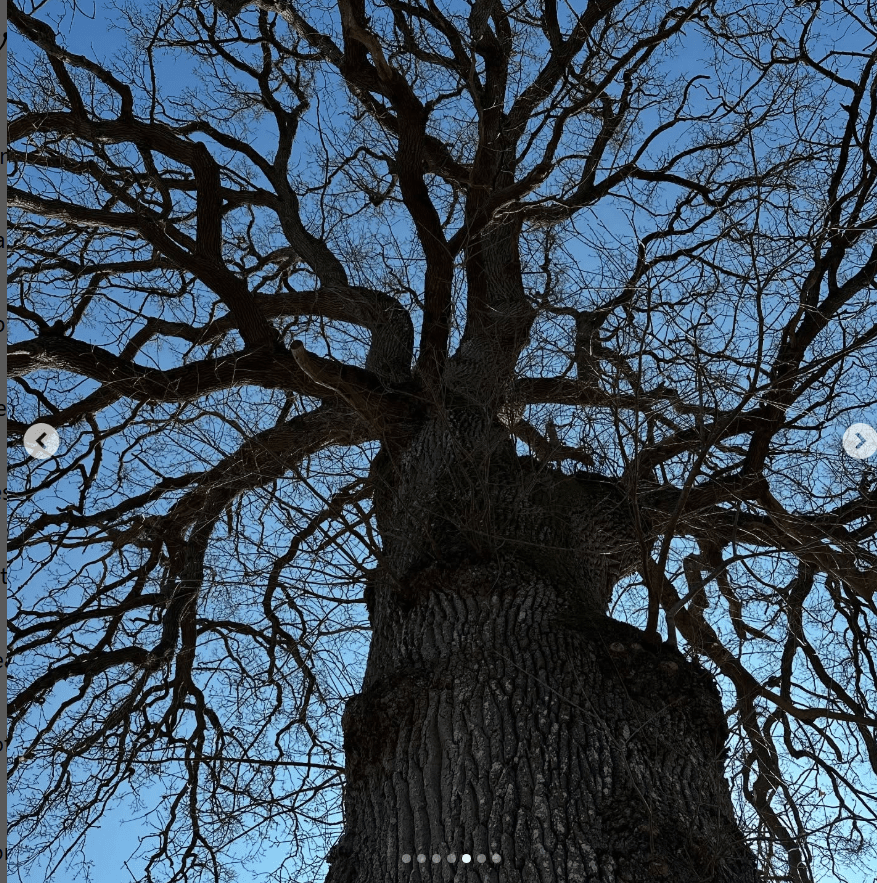
The choice of location and the timing of our workshop during Easter significantly enriched the thematic layers of the experience. During this season, the oak trees, devoid of leaves, revealed their intricate structures—bark and sprawling branches, which stood out starkly against the spring sky. This visibility of the oaks’ robust frames not only highlighted their enduring strength but also beautifully mirrored the seasonal themes of renewal and resilience amidst adversity.
Furthermore, a poignant stop at a tapestry depicting hunting scenes among oaks provided a rich historical and cultural context. This backdrop catalyzed discussions about personal and collective memories.
This careful selection of the setting, accentuated by the raw visibility of the oak’s structures during the leafless season, deepened the participants’ connection to the environment and to each other, fostering a powerful communal narrative journey.
Another extra: digesting(with)oak
Special thanks to one of our participants who ensured that we could enjoy acorn coffee during the last part of our session. ☕️ This thoughtful inclusion aligns with the themes of consuming and engaging with plants, which are prevalent in plant humanities research, art, and practice.
Conclusions and Future Directions
This initial foray into blending physical presence with narrative exploration in a natural setting has shown the profound impact of physical settings on personal expression and highlighted the need for more meticulous planning and structure to balance the spontaneity of such interactions. Future workshops will benefit from a more streamlined approach to integrating walking, writing, and sharing components, ensuring that each element is given adequate space to resonate with participants.
As we continue to collect case studies and refine our practice of Writing (with) plants, the intertwining of natural landscapes with storytelling remains a compelling frontier for creative and personal exploration.

Weaving Regenerative Economics into Creative Expression
In the latest iteration of our writing(with)plant workshops, we delved into the theme of regenerative economics, integrating it seamlessly with the natural symbolism of the oak tree. This thematic exploration was particularly pronounced in the final segment of our creative writing session, where we invited participants to engage in a transformative exercise: imagining themselves as oak trees. This shapeshifting prompt encouraged reflection on several poignant questions, addressing the historical gendering of oaks and their associations with strength and masculinity, and drawing parallels to the often gendered narratives in economics and finance.
Challenging Traditional Narratives
During this exercise, participants pondered why the oak, robust and enduring, is typically gendered as male in many cultures, and how such perceptions extend into the realms of economics and leadership, which are traditionally dominated by masculine attributes. This discussion served as a springboard for me to consider how financial systems and structures might be reimagined through a lens of financial ecofeminism, a field I am increasingly drawn to. Financial ecofeminism advocates for a model of economics that respects both the environment and women’s unique contributions and challenges within the financial sector.
Action Beyond Reflection
In recent years, attending feminist and artivist meetings has highlighted a recurring frustration: the tendency for such gatherings to become echo chambers of grievances rather than catalysts for actionable change. This has sharpened my resolve to shift from passive discourse to active, tangible efforts like entrepreneurship within the ecofeminist space.
The idea of commercializing writing(with)plants is becoming a viable consideration, aiming to create sustainable business models that embody these values.
Practical Applications and Future Endeavors
The intersection of sustainability and finance was further underscored by an inquiry from a participant, who was approached by a bank—using an oak in its branding—to facilitate sessions on sustainable finance.
This opportunity raises practical questions about how to value and price such unique offerings, underscoring the need for clear strategies in monetizing eco-centric workshops.
Looking ahead, my colleague Vitalija and I are planning to pen a handbook aimed at practitioners interested in integrating nature-centric themes into their work, whether for artistic, therapeutic, or strategic business purposes. This guide will illustrate various workshop designs and case studies, providing a roadmap for incorporating themes like regenerative economics into diverse settings.
Sustainability in Practice and Thought
As we move forward, the concept of financial sustainability will also be a key focus, challenging the traditional nonprofit approach that often underpins artistic and eco-friendly initiatives. The need to establish financially sound practices, while still honoring the intrinsic value of our work and its contribution to societal good, is becoming increasingly clear.
This transformation reflects a broader vision where economic systems regenerate and sustain both the environment and the communities they serve. Perhaps the theme of my annual blogs on ecofeminism for 2026 might be financial ecofeminism.
Will we organize an online session with oak?
Yes, definitely. However, the writing(with)ash session (April 16th) will be the last online session in the coming months, because I prefer to be more outside and attend physical gatherings in this period between spring equinox and the first harvest.
More information about new online writing(with)plant sessions will follow after the autumn equinox, via announcements on this website and our new Instagram profile: https://www.instagram.com/writingwithplants/
Discover more from Stories from the Wood Wide Web
Subscribe to get the latest posts sent to your email.
 Stories from the Wood Wide Web