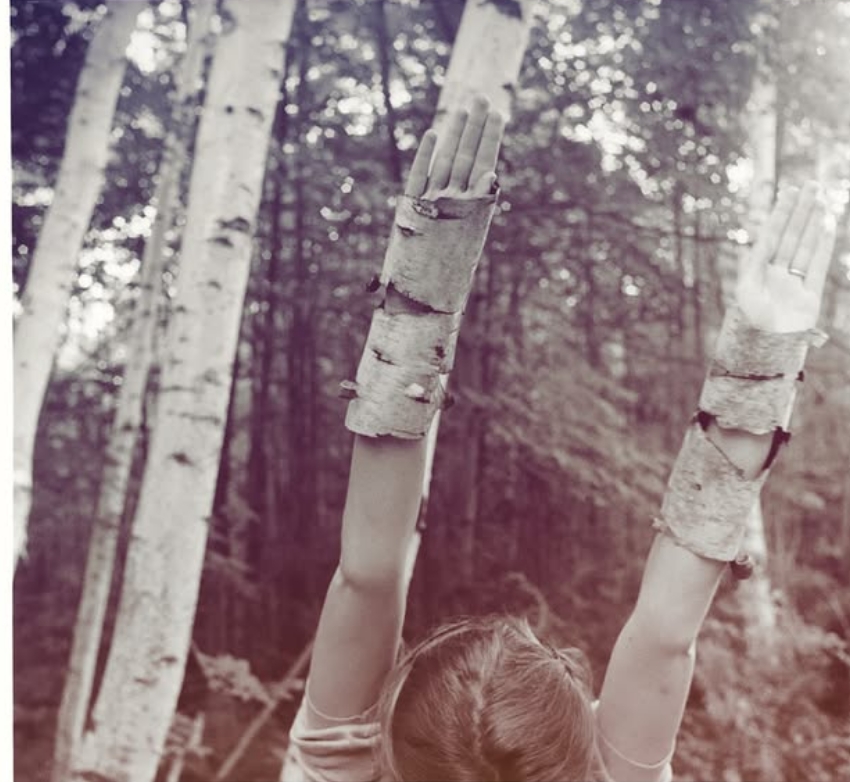
In this winter and spring, we are combining two projects: the Flowing with Eglė – Project and the Writing (with) plants – Project. The myth of Eglė who transforms herself and her four children into trees lends itself to the shapeshifting exercise at the end of each Writing(with) plants circle. We will do five circles, one for Eglė (spruce) and her four children.
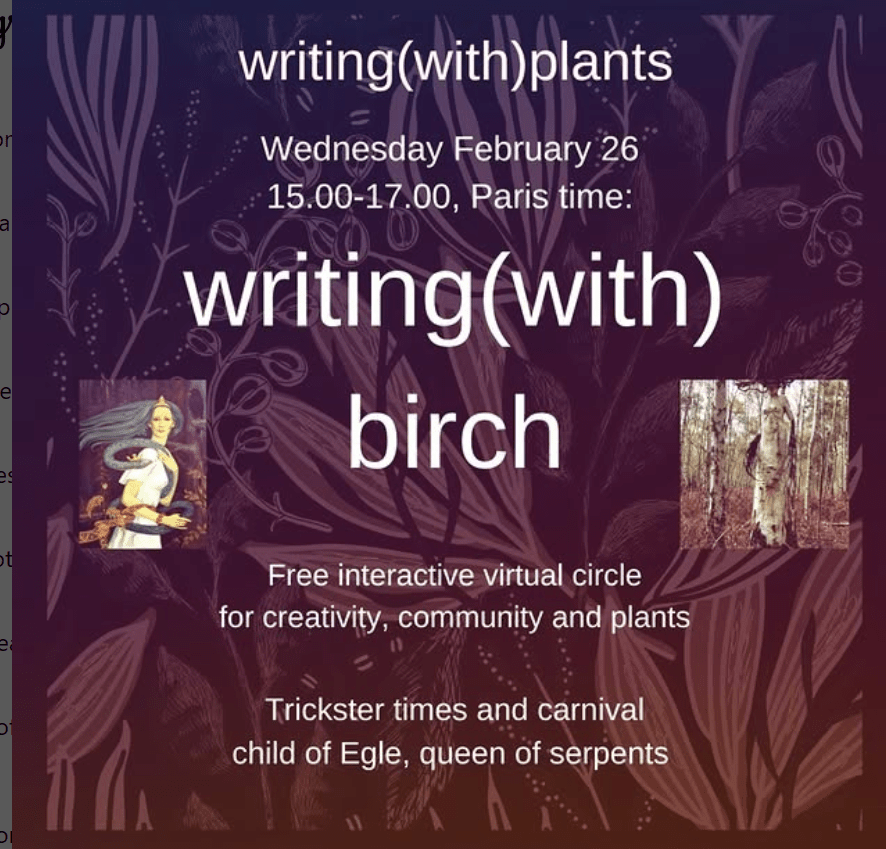
In the end of January 2025, we had a first circle with Eglė (Spruce). As we foreground this queen in many other blogs, I want to focus on one of her children, which will be our guest in the next session, on Wednesday February 26th, 3-5 PM Brussels time.
Meet Birch
There is not so much known about Eglė’s child Birch (Beržas).
For me, it felt strange that Birch is a boy in the myth.
Isn’t Birch a woman? A white lady?

Perhaps … she was a transwoman.
Perhaps she had her own powerful story that could not root in the upcoming patriarchy in the Baltic Sea region. The same patriarchy that slaughtered the snake father…
Why would all the 4 children of Eglė and the snake king be cis? Is the amber castle not a place where everything is fluid? #hydrofeminism
Perhaps her only way out (the patriarchy) was transforming into a birch tree.
Perhaps the transformation from a male human body in a female tree is a good thing for Birch.
Perhaps Eglė did an act of full protection, knowing who her daughter Birch was.
Perhaps Birch was a strong but vulnerable character that had to wear many masks. Perhaps her life on land was a big carnival.
Perhaps in the queer amber castle under the fluid sea, Birch could be who she was.
When her oldest brother, Oak (Ąžuolas), asked their mother Eglė to visit their family on land, Eglė knew that Birch and her other daughter Aspen (Drebulė ) might suffer there.
Perhaps Eglė let Birch wear a mask and let the patriarchy and the storytellers on land believe that Birch was a son. An invisible son.
On land Birch was a woman in a male body, pretending to be a man in a patriarchy that always favors sons.
We do not have many queer stories in (nationalist) folklore, so perhaps we should work with the background characters, and make them ambassadors of queer ecology in folktales (again).
In deeper rooted myths we find transgender people. In Old Norse mythology, Loki is a trickster… and a transgender person. Loki changed in a female horse, and gave birth to Sleipnir, for example. See also the amazing feminist retelling ‘The Witch’s Heart’ by Genevieve Gornichec.
By coincidence, I connected Loki and Birch already 15 years ago, in my fiction story De witte droom.

Is it really that strange that Birch is maybe a bit like Loki?
Join writing(with)birch
Join this Writing(with)plant session… to shapeshift in the person we want to be, but cannot be.
This session is online. You can attend for free, but we ask you to preregister via this link.
Welcome to the carnival, the period before the spring.
Discover more from Stories from the Wood Wide Web
Subscribe to get the latest posts sent to your email.
 Stories from the Wood Wide Web