Eglė let me re-member my devastated grandmother in May 1945. The day the war was over and the Red Army on their way west, she decided together with her husband to flee within a matter of hours from their home in Warnemünde – the Baltic Sea port where my grandfather had been building the He111 bomber plane. One reason why he would likely be taken to Siberia. In the port of Kiel en route to Denmark, she apparently almost jumped into the sea holding both my dad and his brother’s hand. The circumstances were unbearable to her. I don’t judge, I understand.

This year, our Baltic Art Research group are flowing with Eglė, Queen of Grass Serpents1. This mythical tale has many versions, parts of which we are set out to update and retell in this project, and all of which are deeply symbolic.
Although the tale was written down in 1837 for the first time, one of the contexts heavily implicated today is the liberation of profound (eco-) grief that comes with our current-day form of Earth governance. The war against life, contentment and abundance.
As the story goes, after her loving grass snake husband is brutally murdered by Eglė’s twelve brothers, she transformed herself into a spruce. Before she changed, she transformed her four children. Oak, ash, birch and aspen.
Why would you pull your children into it/OUT?
Of course one might think now was this necessary, to remove her children with herself? Is it not, kind of, infanticide? Why not simply leave them to grow up and get over it, if leave she must? I am convinced that Eglė did not feel that her children could be left behind in the world full of such violence. Maybe I consider this to make sense of what possibly went through my grandmother’s mind.
caring for children, caring for childcarers
This morning I woke up with the thought that my systems transformation work is really focused on the well-being of children, our next generations.
It was my first night home after returning from the Nordic Summer University’s Summer Symposium2 in Løgumkloster, Denmark. For one week, people met holding an academic conference where there was (… for precaution of falling over, maybe sit down when you read this:) complimentary childcare (!) and thus a buzzing and intermingling of parenthood with keynote quests. Completely organic. In my thirty years in the academic world, this was a first.
But only now I finally even think far enough to ask: How is it that universities are devoid of children? Thirty years an academic, I used to not think anything of it. It took walking into an inclusive space to open my eyes to what is possible outside of the patriarchy. The usually marginalized next generation being granted its rightful place at the Heart of the Community.
Caring for children in patriarchal spaces
How is life supposed to be present(ed) in an artificially, one may even say, a violently exclusive environment? Does Eglė turn her children into trees so that their souls are safe from slow violence? As an academic of thirty years’ work within the patriarchal structures, can I turn a page and put my academic experience into the service of Eglė, into the service of our violently excluded youth by creating a space within which their well-being takes center stage, in collaboration with the academy?
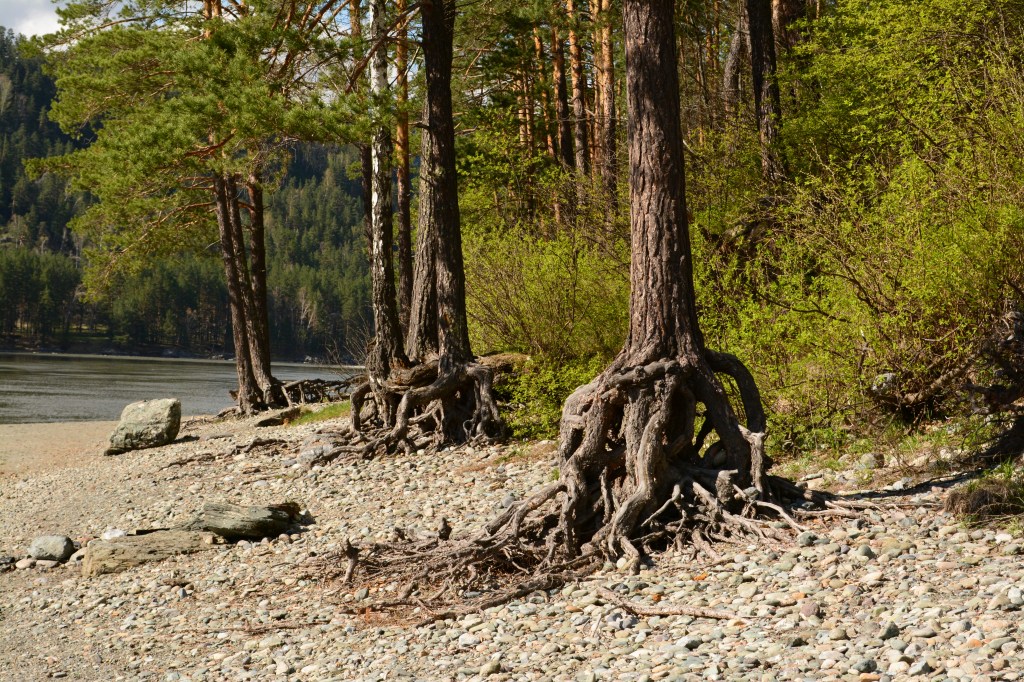
Why transforming in trees? // Death by trees
Reciprocity, giving and receiving. Trees are taken care of by Earth economy. Simultaneously, trees are also the caretakers. The climatologist Millan Millan spoke of vegetation as the midwife (Lewis 2023)3. Being the forest is not an exclusive endeavour. Being the forest means there is space for everyone’s participation. Because there is space for maturity, death and transformation.
When the academy begins being inclusive, it will turn toward listening, and then toward being, in service of our whole – and with/in more-than-human community, locally, regionally, and globally. And may it be compost we are making4, together, while academia transforms herself, through these partnerships, in the process of becoming a part in a truly dynamic living system.
Maybe we can compost the residue of entitlement in late stage patriarchy and from it with a pinch of care and responsible leadership embark on Regrowing a Living Culture5 as Dougald Hine calls the process of transformation and with it contribute to everyone’s well-being in reciprocity.
HOW TO EMBARK on becoming relational?
It takes epistemic and cultural humility to get it. Are we ready to step back from the know-it-all exclusive ivory tower, embrace the unknown, the source of our sacred curiosity, and let parts of our very entitlement be compost transformed with the warmth of that unfathomable complexity we shall never fully understand? Let mystery guide us?
This transformation of Eglė’s family into trees contains an element of shapeshifting into invisibility, disappearing into nowhere, as narrated in Elvira Wilk’s Death by Landscape6, where a woman momentarily parts with her co-walking friend to relieve herself behind a tree and doesn’t come back. She is nowhere to be found ever again.
To me, Eglė’s leaving the scene of horror for friendlier shores rings true. It happened – could only have happened – in cahoots with the trees. Miles and miles of walking along the river behind my home on the Isle of Fyn in Denmark, the rivers that feed the Baltic Sea’s South Denmark Archipelago, my practice began flowing with integrity, honesty, vulnerability toward spaces that could host my (inner child’s) own telling of bidding the patriarchy farewell. I am not saying that it’s done. Transformation is a gift that keeps on giving. At the river’s edge, we weave new cosmologies together with the trees, the grass, the snakes, and the children.
Grief – as a gate for leaving the patriarchy
Really, to me, Eglė the Queen of Grass Serpents is a story of triumph, spiritual transformation and the full acceptance of being swept into the river of tears. Grieving what might have been, then embracing what is – instead – the now – in all its glorious wordlessness.
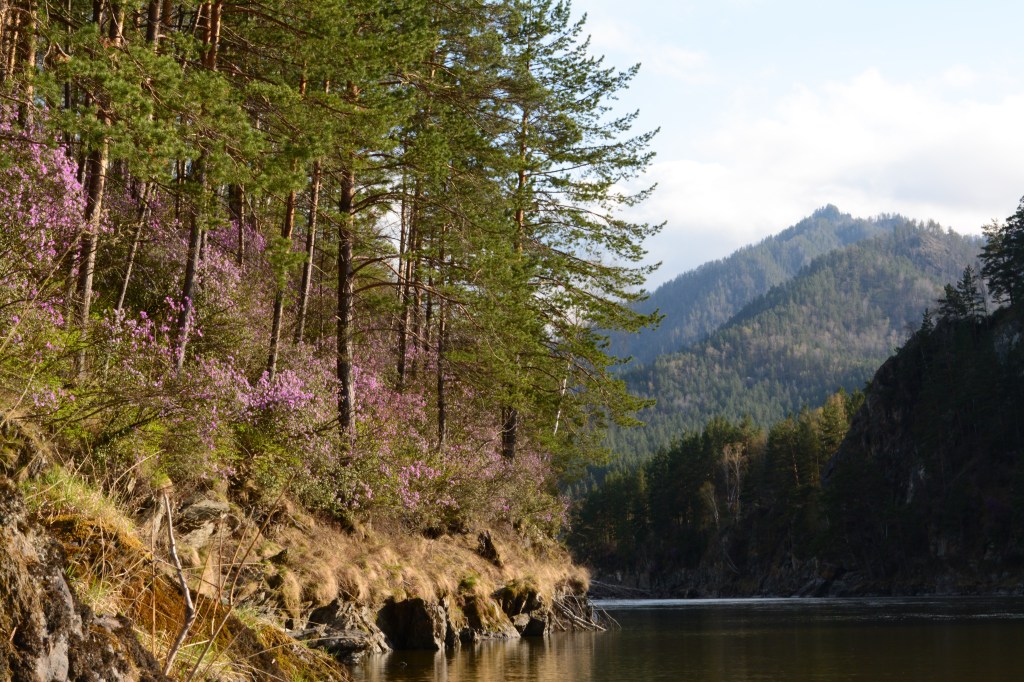
It is the celebration of the silence (through which trees speak). It is embracing the stillness, the rootedness, the not being able to move awayness that the trees live by example – and yet their ubiquity through time speaks of victory, their participation in the natural processes of succession a testimony to non-violence, the letting go of pollen, seed, and individualism granting a quasi immortality.
Maybe, through facing the grief, Eglė simply reached a level of connectedness with the entire world that cannot be better expressed than through the symbology of becoming tree. They’ve got the roots, they’ve got the leaves, they’ve got the vascular cambium in full flow with the atmospheric rivers.
Eglė and her children entered a queendom where they flow with life.
Let me end with a citation, this time short, but it runs deep. Eglė would agree.
“The way out is in” – Thich Nhat Hanh
- https://en.wikipedia.org/wiki/Egl%C4%97_the_Queen_of_Serpents ↩︎
- https://www.nsuweb.org/nsu-summer-session-2024-blog/ ↩︎
- Lewis, R. (2023). A Walking Reflection on Millan Millan and the Mystery of the Missing Mediterranean Storms. Originally published by Resilience.org. August 8, 2023. https://www.resilience.org/stories/2023-08-08/a-walking-reflection-on-millan-millan-and-the-mystery-of-the-missing-mediterranean-storms/ ↩︎
- Vanessa Andreotti and Nora Bateson’s conversation at the Auntie’s kitchen table last month puts this endeavor of making compost at the heart of their yarn; https://www.youtube.com/watch?v=WrKZAvOMZ14 ↩︎
- Dougald Hine, An Introduction to the online course Regrowing a Living Culture; https://www.youtube.com/watch?v=M8rHYtViT68, in which I took part last year. ↩︎
- Wilk, E. (2022). Death By Landscape. Essays. Soft Skull Press, New York, NY. ISBN.9781593767150 ↩︎
Discover more from Stories from the Wood Wide Web
Subscribe to get the latest posts sent to your email.
 Stories from the Wood Wide Web