This is a female text, a mix of an account of observations, thoughts and fragments of a fiction story-to-become on an inhabited island in the Stockholm Archipelago. This story happens on a coastline of the Baltic Sea and is connected with the Flowing with Eglė – Project. This reimagining mythology project is all about understanding Eglė by engaging with places where she potentially could have lived or visited. This might seem absurd. Was Eglė not a mythic figure? Not based on a historical figure? However, what is absurd in a world where many female stories have been erased in the last thousands of years? How do we know she was only a mythical figure, and perhaps not based on many deeper female experiences?
Who was Eglė at the beginning of her story/journey?
This post centers on the beginning of the story, or even what happened before. What happened before the story starts? Was she close to nature already? Did the grass snake prince notice her before – because she was already so special, different, or weird enough for him? Was she already living at the edge? When she went bathing at the beginning of the story, was it her first time that she realised her body was actually made mostly from water? When did she started to see the world as water and less as land? When did she started to see we are all aquateous beings?
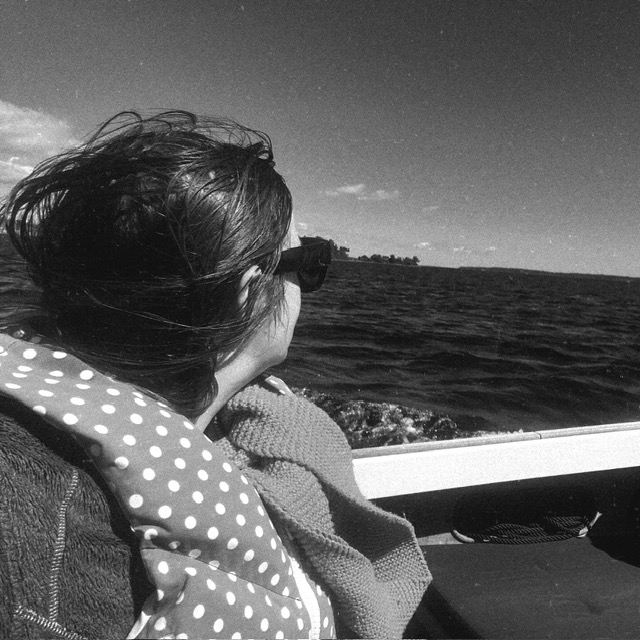
My arrival at this uninhabited island of flowers and rocks, 2024 july 11th
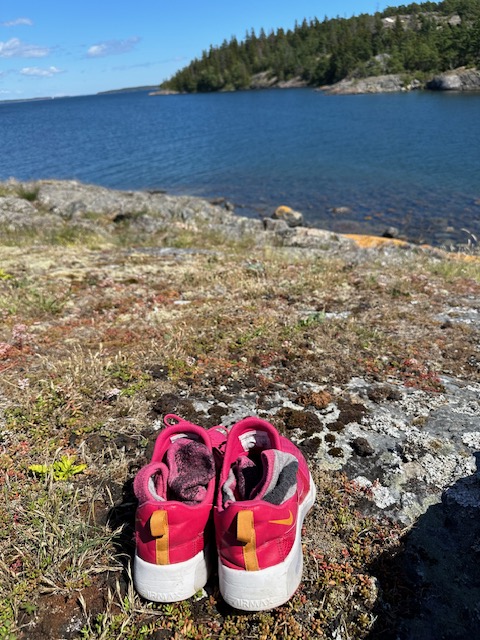
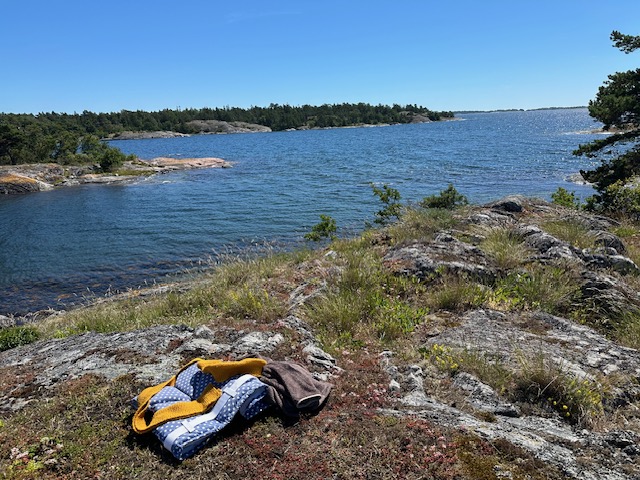
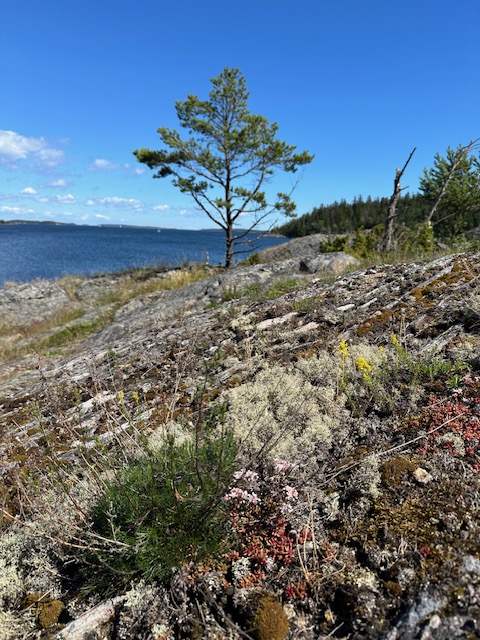
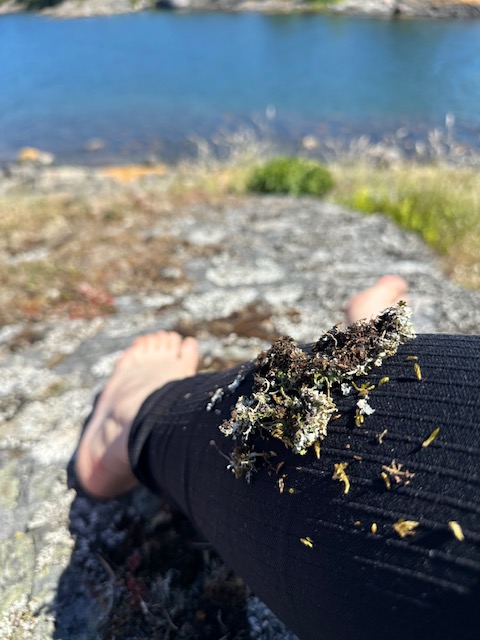
The teenage son of one of us took us by boat from their summer house in Ornö to an uninhabited island that they called the island of flowers. When we embarked we decided to spend some hours on our own and how we wanted. While the others explained the whole island, I barely moved. I felt I was in need for long sitting spots. I observed the colors, the algae, the blue dark shimmers in the sea, the seaweed. I re-read Eglė’s story (more precise: various variants of her story) on wikipedia. I let it sink. The beginning was very short. Too short. And then I started to dream her beginning and how she became ready.
The re-telling – fragment 1
It was a day of sunshine and dark glimmers in the mostly quiet water. Seaweed was washing the rocks. The pink flowers were in full bloom.
She was shy of the water. She didn’t dare. Eglė was afraid of the chaos of the water. Everything became so transparent. Would all her colours fade in the water? Would she also become transparent?
Then something would happen. Was it a calling? Or a hunch? Or one of the other women who gave her the courage. If it was someone else, it had to have been a woman. Probably an older woman who had lived at the water’s edge for years. An older woman who said she was a naive child. You are already water. You are already an animal. You are already fluid. Already all the time.
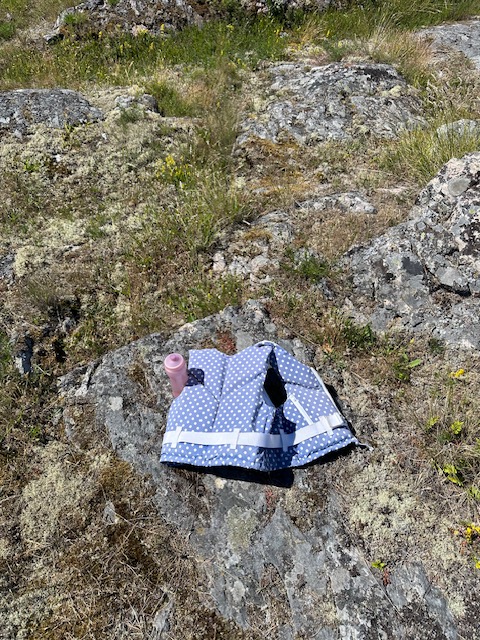
Finally, Eglė took off her colours and clothes. Each garment she slowly and reverently laid on the mossy rocks. It felt like a ritual. Like Inanna, that Mesopomatic goddess, who took off a garment every time she passed a gateway on her way to the underworld. She had to sacrifice something if she wanted to experience love.
Slowly, Eglė descended from the rocks into the water. She was finally ready to be united with the chaos within her.
About ready-ness and ready-ing
Only a week later, after I had already announced I would write a post on Eglė’s readiness, I heard that Nora Bateson, the scholar who inspires my tribe members, had written “(a)n essay on ready-ing: Tending the prelude to change” (also available via Medium). Unfortunately, I cannot read the full essay, but only the abstract:
“Complexity of living systems is characterized by multicontextual, constant responsive change. This creates continuation of some patterns and discontinuation of others. While change is predictably constant, it is unpredictable in direction and often occurs at second and nth orders of systemic relationality. So what makes a living system ready to change? This is a theory of change that changes a theory of change. Before the change there is a coalescence of factors and experiences that produce a undeterminable ready‐ing instead of action. What if, instead thinking of a theory of change being produced from an identified preferred goal or outcome, the focus instead was placed on the way in which a system becomes ready for undetermined change? Can unforeseen ready‐ness be nourished? While linear managing or controlling of the direction of change may appear desirable, tending to how the system becomes ready allows for pathways of possibility previously unimagined.” (bateson, 2022)
This reminds me that both the factors and experiences (e.g. weather, water condition) in which Eglė found herself that day, at the beginning of her myth, or the factors and experiences (e.g. weather, water condition) where I found myself, are not replicable. How did I decide to embark on this Flowing with Eglė – Project? I know that I got ready as I undergo a spiraling learning journey as human/woman, as forest therapy guide, as writer, as reader, as walker, as organiser of shared circles such as the (Re)*Rooting Circles.
But I am not in the same stage as Eglė. She was going to meet the grass snake, the underworld and go through a big transformation. Who was she and what and who had tended her ready-ness? To be continued, for sure.
Readiness is acknowledging fluidity
The beginning was already her first passage. Hydrofeminists study so-called boundaries, like death, weather fronts, membranes, artificial administrative borders. Especially the latter is all about control and management. As Astrida Neimainis, the scholar who coined hydrofeminism said, we should embrace untethering. That means to surrender to what has always been there, like the water and weather and not trying to control it to much. However, notice it. To start your own story, a new passage, you have to let the universe (or your diary) know that you are ready. How?
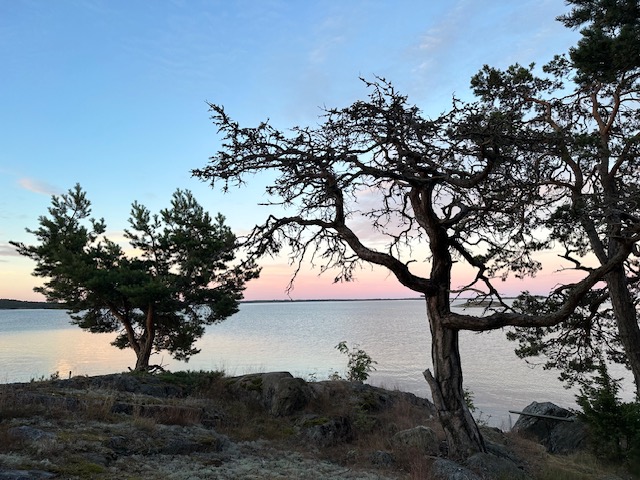
Start with acknowledging the waters and the weather where we are.
Are you ready for some baltic mythic imagination?
Send me a message via the contact form if you live or visit the Baltic Sea region in the coming year and want to join some dreaming, wandering, forest bathing, mindful photography, writing(with)plant, reimagining and storytelling sessions to get to know Eglė and the region in a deeper way. As this is a self-funded project, all engagements are volunteer work and there are no refunds. However, sometimes, we can provide free accommodation and food – but do not expect the highest luxury. In addition, in the ancient resource-full north, they used to say that guests often start to smell after 3 nights. I am also interested to visit you if you live near the Baltic Sea and talk about Eglė, ecology and mythology. You can read more about planned events/travels on the project page (which will be updated monthly in 2024 and rest of 2025): Flowing with Eglė – Project.
Discover more from Stories from the Wood Wide Web
Subscribe to get the latest posts sent to your email.
 Stories from the Wood Wide Web